
Endocrine testing service

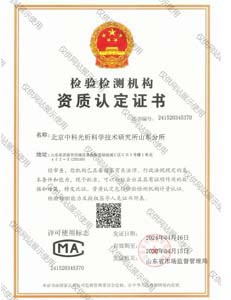
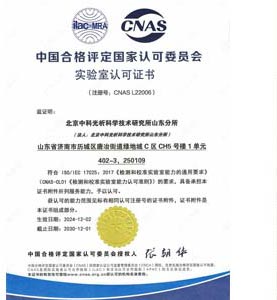
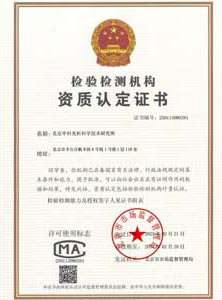
Commitment: Our testing process strictly follows international standards and specifications to ensure the accuracy and reliability of results. Our laboratory facilities are fully equipped with the latest instruments and leading analytical methods. We strictly control every step, from sample collection and processing to data analysis, to ensure clients receive trustworthy test results.


Endocrine Testing Service – Comprehensive Hormone and Biomarker Analysis for Clinical Diagnostics, Drug Development and Population Health
As an ISO/IEC 17025 accredited contract testing laboratory, we provide comprehensive endocrine testing services to pharmaceutical and biotechnology companies, clinical research organisations (CROs), academic research groups, diagnostic manufacturers, and healthcare providers. Endocrine testing – encompassing the measurement of hormones, growth factors, and metabolic biomarkers – is essential for diagnosing endocrine disorders (e.g., diabetes, thyroid dysfunction, adrenal insufficiency, reproductive disorders), monitoring therapeutic interventions, and conducting large‑scale epidemiological and population health studies. Our testing platform integrates validated immunoassays (ELISA, ECL, Luminex), mass spectrometry (LC‑MS/MS, GC‑MS), and automated clinical chemistry analysers to deliver accurate, reproducible, and clinically actionable results across a wide range of matrices. All methods are aligned with CLSI (Clinical and Laboratory Standards Institute) guidelines, ICH Q2(R1), FDA Bioanalytical Method Validation Guidance, EMA Guideline on Bioanalytical Method Validation, and WHO International Reference Reagents. Our reports are recognised by the National Medical Products Administration (NMPA), the U.S. Food and Drug Administration (FDA), the European Medicines Agency (EMA), and the World Health Organization (WHO) for clinical trial submissions, product registration, and population health monitoring.
Sample Types and Endocrine Panels We Analyse
Our laboratory handles a broad variety of biological samples and offers both comprehensive endocrine panels and custom analyte selection. Typical test articles include:
- Clinical and preclinical specimens – serum, plasma (EDTA, heparin, citrate), urine, saliva, cerebrospinal fluid (CSF), dried blood spots (DBS), tissue homogenates, and cell culture supernatants
- Steroid hormones – cortisol, aldosterone, testosterone, oestradiol, oestrone, progesterone, DHEA‑S, androstenedione, 17‑OH‑progesterone, and synthetic steroids
- Thyroid function markers – TSH (thyroid‑stimulating hormone), free T3, free T4, total T3, total T4, anti‑TPO, anti‑TG, and reverse T3
- Metabolic and diabetes biomarkers – insulin, C‑peptide, proinsulin, glucose (fasting and OGTT), HbA1c, glucagon, GLP‑1, leptin, adiponectin, and ghrelin
- Gonadal and reproductive hormones – LH (luteinising hormone), FSH (follicle‑stimulating hormone), prolactin, inhibin B, anti‑Müllerian hormone (AMH), human chorionic gonadotropin (hCG), and sex hormone‑binding globulin (SHBG)
- Adrenal and stress markers – urinary and salivary cortisol, cortisone, catecholamines (adrenaline, noradrenaline, dopamine), metanephrines, and DHEA‑S
- Growth and neuroendocrine factors – growth hormone (GH), IGF‑1, IGF‑BP3, vasopressin, oxytocin, and melatonin
- Bone and mineral metabolism – PTH (parathyroid hormone), vitamin D (25‑OH and 1,25‑(OH)₂), calcitonin, calcium, phosphate, and bone turnover markers (CTX‑1, P1NP, osteocalcin)
- Custom panels – for pharmacokinetic (PK) and pharmacodynamic (PD) studies in drug development, toxicology, and reproductive toxicology
Analytical Platforms – Immunoassay, Mass Spectrometry and Automated Chemistry
We use a multi‑platform approach to match the required sensitivity, specificity, throughput and regulatory compliance of your project:
- High‑sensitivity immunoassays – ELISA, ECL (MSD) and multiplex bead‑based assays (Luminex) – For routine and high‑throughput measurement of protein hormones and small molecules, we use fully validated sandwich and competitive immunoassays. The platforms deliver sensitivity in the low pg/mL to ng/mL range, with typical intra‑assay CVs of 5‑10 % and inter‑assay CVs of 10‑15 %. For ultra‑low abundance analytes (e.g., aldosterone, TSH, insulin), we offer electrochemiluminescence (ECL) and Simoa (single‑molecule array) detection for sub‑pg/mL sensitivity.
- Liquid chromatography‑tandem mass spectrometry (LC‑MS/MS) – for steroid hormones and small molecules – We use state‑of‑the‑art triple‑quadrupole LC‑MS/MS (e.g., Sciex 6500+) for the quantification of steroid hormones, vitamin D metabolites, catecholamines, and synthetic hormones. The assay provides high specificity (minimal cross‑reactivity), a wide dynamic range (from low pg/mL to µg/mL), and the ability to measure multiple analytes in a single 10‑30 minute run. Deuterated internal standards are used to correct for extraction and ionisation variability.
- Gas chromatography‑mass spectrometry (GC‑MS) – for steroid profiling and urinary markers – For comprehensive steroid profiling (e.g., the urinary steroid metabolome), we use GC‑MS after hydrolysis and derivatisation. The method provides excellent separation and identification of structurally related compounds, which is essential for complex diagnostic cases and for doping control applications.
- Automated clinical chemistry analysers – for glucose, HbA1c, calcium, phosphate and routine biomarkers – For high‑volume clinical samples and standard metabolic markers, we use fully automated analysers (e.g., Roche Cobas, Abbott Architect, or Beckman Coulter) with standardised reagents and calibrators, delivering high throughput, robust performance, and immediate turnaround time.
- Automated immunoassay analysers – for TSH, T4, T3, reproductive hormones and tumour markers – We also offer fully automated chemiluminescent immunoassay (CLIA) and electrochemiluminescent immunoassay (ECLIA) platforms for routine endocrine markers, providing rapid results with minimal manual intervention.
Method Validation – Ensuring Accuracy, Precision and Traceability
All endocrine assays are validated according to the latest regulatory guidelines (FDA 2018, EMA 2011, ICH M10, CLSI EP). The core validation parameters are assessed for each assay:
- Calibration curve and range – For immunoassays, we use a 4‑parameter logistic (4‑PL) or 5‑parameter logistic (5‑PL) model; for LC‑MS/MS, we use weighted linear regression (1/X or 1/X²). The lower limit of quantification (LLOQ) and upper limit of quantification (ULOQ) are defined, and the accuracy of the back‑calculated standards must be within ± 15‑20 % of the nominal concentration.
- Precision (intra‑assay and inter‑assay) – For each QC level (low, medium, high), the within‑run CV is typically < 10 % (immunoassay) or < 5 % (LC‑MS/MS), and the between‑run CV is < 15 %.
- Accuracy and recovery – We perform spike‑and‑recovery experiments by adding known amounts of the target analyte to the test matrix. The recovery must be within 80‑120 % of the expected value. For LC‑MS/MS, the accuracy of the calibration standards (and QCs) must be within ± 15 % (± 20 % at LLOQ).
- Specificity and cross‑reactivity – For immunoassays, we test the cross‑reactivity with structurally related compounds; the cross‑reactivity is typically < 1 %. For LC‑MS/MS, we ensure that there is no interference from isobaric compounds or matrix components.
- Matrix effect and parallelism – We test the effect of the sample matrix (e.g., serum, plasma, urine) on the assay performance by performing dilution linearity experiments; the observed concentration should be proportional to the dilution factor (deviation ≤ 20 %).
- Stability – sample, reagent and calibrator stability – We conduct stability studies for: (a) sample stability under storage conditions (‑20 °C, ‑80 °C, and room temperature), (b) freeze‑thaw stability (typically 2‑5 cycles), (c) processed sample stability (extracted or diluted samples), and (d) reagent stability (batch‑to‑batch and in‑use stability).
Quality Control and Sample Management – Ensuring Data Integrity
- Reference materials and traceability – We use certified reference materials (e.g., WHO International Standards, NIST standards, or commercial calibrators traceable to international references) for calibration and validation, ensuring that our results are comparable across different studies and laboratories.
- Internal QC and control charts – We include three levels of QC samples (low, medium, high) in each analytical run. The QC results are plotted on Levey‑Jennings control charts, and we apply the Westgard multi‑rule system for run acceptance.
- External quality assessment (EQA) and proficiency testing – We participate in EQA schemes (e.g., UK NEQAS, WHO, CDC, and College of American Pathologists – CAP) to monitor and verify the accuracy and reproducibility of our endocrine assays against peer laboratories.
- Sample handling and processing – pre‑analytical factors – We evaluate the effect of pre‑analytical variables (collection tube type, time to centrifugation, clotting time, storage conditions) on the measured concentration of each analyte, and we provide standardised protocols to minimise variability.
Clinical Reference Ranges and Interpretation – Supporting Clinical Decision‑Making
We provide clinical reference ranges (and age‑ or sex‑stratified ranges where applicable) for each analyte, based on the WHO, Endocrine Society, and local clinical guidelines. For clinical diagnostics, we also offer interpretive comments on abnormal findings and suggestions for follow‑up tests.
- Thyroid function tests – We provide interpretive comments for TSH, free T4, and free T3, including assessment of subclinical and overt hypothyroidism/hyperthyroidism, and monitoring of levothyroxine therapy.
- Reproductive and fertility hormones – We provide cycle‑day‑specific reference ranges for oestradiol, progesterone, LH, FSH, and testosterone, and we interpret the results in the context of menstrual cycle, menopause, and fertility treatment.
- Adrenal function – We provide interpretation of cortisol (serum, salivary, urinary) and aldosterone, including the assessment of adrenal insufficiency, hypercortisolism, and primary aldosteronism.
- Growth hormone and IGF‑1 – We provide interpretation of GH and IGF‑1, with appropriate cut‑offs for the diagnosis of acromegaly and growth hormone deficiency.
- Bone metabolism – We provide interpretation of PTH, vitamin D, calcium and phosphate, including the diagnosis of primary and secondary hyperparathyroidism, and vitamin D deficiency.
Application‑Specific Testing – Drug Development, Clinical Trials and Epidemiological Studies
- Pharmacodynamic (PD) monitoring in drug development – We measure endocrine biomarkers (e.g., insulin, glucagon, cortisol, testosterone, oestradiol) as PD markers for metabolic, endocrinological, and oncology drug candidates. The results are used to support dose selection, proof‑of‑concept, and to demonstrate target engagement.
- Clinical trial sample analysis – for Phase I‑IV studies – We provide high‑throughput analysis of endocrine samples from multicentre clinical trials, including sample management, batch analysis, and data transfer in CDISC/SDTM format for regulatory submission.
- Population health and epidemiological studies – We measure endocrine biomarkers (e.g., TSH, vitamin D, testosterone, HbA1c) in large‑scale population cohorts (> 10 000 samples) to investigate the prevalence and risk factors for endocrine disorders, and to establish population‑specific reference ranges.
- Reproductive toxicology and developmental toxicity studies – We measure key hormones (e.g., hCG, progesterone, testosterone, oestradiol) in reproductive toxicology studies to assess the effect of drug candidates on fertility and embryo‑foetal development.
- Endocrine disruptor screening – environmental and chemical toxicity – We provide targeted and untargeted screening for endocrine‑active chemicals (EACs) using reporter gene assays (e.g., ER, AR, TR) and LC‑MS/MS‑based quantification of hormone levels in exposed animal models or in vitro systems.
Regulatory Compliance and Documentation – Supporting Global Submissions
All endocrine testing is performed under our ISO/IEC 17025 accreditation and in compliance with ICH M10, FDA Guidance for Industry, and EMA Guideline requirements. Our final reports include a complete description of the sample, the analytical platform, the validated assay parameters (LLOQ, ULOQ, precision, accuracy, recovery, matrix effect), the raw and calculated data (concentration values, QC results), clinical reference ranges (where applicable), and a clear interpretation of the results. These reports are accepted by the National Medical Products Administration (NMPA), the U.S. Food and Drug Administration (FDA), the European Medicines Agency (EMA), and the World Health Organization (WHO) for clinical trial submissions, product registration, and population health monitoring. Bilingual (Chinese/English) versions are available to facilitate submissions to national and international regulatory bodies.
Note: Due to business adjustments, we do not accept individual client testing requests.
The above is an introduction about Endocrine testing service. For further questions, please consult our online engineer.
Laboratory Instruments


Partner Clients

Related Projects
 Hydrogen sulfide corrosion testing service
 Pressure relief valve hydraulic burst testing service
 Freezing experiment
 Ultimate impact torque testing service
 Corrosion resistance testing service
 20℃ impact energy testing service
 Pressure leak testing service
 AC dielectric testing service
 Vibration testing service
 Housing pressure testing service