
Vibration testing service

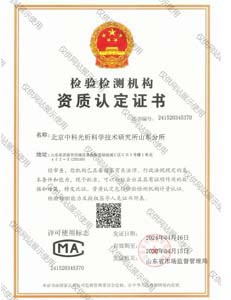
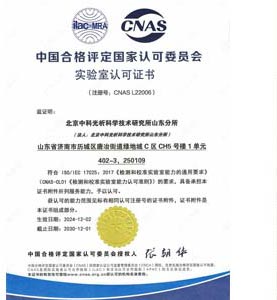
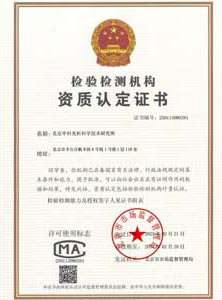
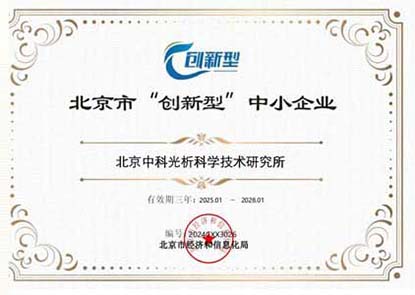
Commitment: Our testing process strictly follows international standards and specifications to ensure the accuracy and reliability of results. Our laboratory facilities are fully equipped with the latest instruments and leading analytical methods. We strictly control every step, from sample collection and processing to data analysis, to ensure clients receive trustworthy test results.


Vibration Testing Service – Comprehensive Environmental Qualification and Mechanical Integrity Assessment for Industrial, Electronics, Automotive and Aerospace Applications
As an ISO/IEC 17025 accredited independent testing laboratory, we offer comprehensive vibration testing services to manufacturers, engineering firms, and regulatory bodies across the electronics, automotive, aerospace, defence, medical device, industrial equipment, and consumer goods sectors. Vibration testing is a critical environmental qualification method that evaluates the structural integrity, functional performance, and fatigue resistance of components, assemblies, and complete systems when subjected to controlled mechanical vibrations. By replicating the vibration environments encountered during transportation, operation, and storage – including sinusoidal vibration, random vibration, and shock pulses – we identify design weaknesses, validate structural margins, and ensure that your products can withstand real‑world dynamic loading conditions. Our test protocols are executed in accordance with IEC 60068‑2‑6 (Test Fc: Vibration – Sinusoidal), IEC 60068‑2‑64 (Test Fh: Vibration – Broadband random), ISO 16750‑3 (Road vehicles – Environmental conditions and testing for electrical and electronic equipment – Part 3: Mechanical loads), MIL‑STD‑810 (Environmental engineering considerations and laboratory tests), ASTM D3580 (Vibration testing of products), GB/T 2423.10 (Sinusoidal vibration test), and GB/T 2423.56 (Random vibration test). Our inspection and test reports are recognised by the National Medical Products Administration (NMPA), the State Administration for Market Regulation (SAMR), the Ministry of Industry and Information Technology (MIIT), and international certification bodies for product registration, type approval, and quality assurance.
Test Articles and Equipment Types We Assess
Our vibration test facilities accommodate a wide range of product sizes, weights, and configurations. Typical test articles include:
- Electronic assemblies and circuit boards – PCBs, power supplies, control modules, and avionics units
- Automotive components – sensors, ECUs, instrument panels, headlamps, and interior trim
- Aerospace and defence equipment – avionics, navigation systems, communication units, and flight control assemblies
- Medical devices – portable monitors, diagnostic equipment, implantable devices, and surgical instruments
- Industrial equipment – pumps, valves, motors, compressors, and control cabinets
- Consumer electronics – smartphones, tablets, laptops, wearables, and portable audio devices
- Packaging and transportation systems – shipping containers, pallets, and protective packaging
- Structural components and assemblies – brackets, housings, frames, and welded structures
Vibration Test Systems and Instrumentation – High‑Performance Electrodynamic Shakers
- Electrodynamic shaker systems – force capacity from 50 N to 100 kN – We operate a fleet of electrodynamic vibration shakers with varying force ratings, allowing us to test a wide range of product sizes and weights. The shakers are capable of generating both sinusoidal and random vibration profiles with a frequency range of 5‑5 000 Hz, displacement up to 100 mm peak‑to‑peak, and acceleration up to 100 g (peak). Each shaker is equipped with a slip table for horizontal testing and a head expander for vertical testing.
- Cooled and high‑force shakers – for extended test durations – For long‑duration vibration tests (e.g., fatigue endurance tests of up to 1 000 hours), we use air‑cooled and water‑cooled shakers that maintain stable performance over extended operating periods, preventing thermal overload and ensuring consistent test conditions.
- Multiple‑axis and six‑degree‑of‑freedom (6‑DOF) vibration systems – for realistic multi‑axis vibration simulation – For testing components that experience multi‑directional vibration in service (e.g., automotive and aerospace components), we offer multi‑axis vibration testing using hydraulically‑driven shakers. These systems can excite the test article in all three orthogonal axes simultaneously, providing a more realistic simulation of field conditions.
- High‑acceleration and high‑frequency testing – for lightweight and small components – For small, lightweight components (e.g., microelectronics, MEMS sensors), we use specialised shakers that can operate at frequencies up to 20 000 Hz and accelerations up to 200 g, replicating the vibration environments found in automotive, aerospace, and industrial applications.
- Calibrated accelerometers and control systems – for precise and repeatable vibration control – We use a combination of piezoelectric and MEMS accelerometers (with sensitivity calibrated to national standards) to measure the response of the test article at multiple points. The control system uses a digital vibration controller with real‑time feedback to maintain the specified vibration profile within the tolerances defined by the test standard (typically ±10 % in the control frequency band).
Vibration Test Methods – Sinusoidal, Random, and Mixed‑Mode Excitation
- Sinusoidal vibration testing – IEC 60068‑2‑6 / GB/T 2423.10 – for resonance identification and endurance testing – We apply a sinusoidal vibration input at a controlled frequency and amplitude (or acceleration) to assess the dynamic response of the test article. Sinusoidal testing is used to identify resonant frequencies, to measure transmissibility, and to conduct endurance (fatigue) testing at identified resonant frequencies. The test can be performed as a frequency sweep (typically at 1‑2 octaves per minute), a dwell at resonant frequencies (for fatigue assessment), or a step‑by‑step frequency test.
- Random vibration testing – IEC 60068‑2‑64 / GB/T 2423.56 – for realistic multi‑frequency excitation – We apply a broadband random vibration input (typically 10‑2 000 Hz) with a defined power spectral density (PSD) profile, replicating the vibration environment encountered during transportation (e.g., truck, rail, aircraft) and operation (e.g., automotive, aerospace). The PSD profile is specified by the applicable standard (e.g., MIL‑STD‑810, ISO 16750‑3) or by the client’s specification. The test is typically performed for 1‑3 hours per axis, and the response is measured using control and monitoring accelerometers.
- Mixed‑mode vibration testing – sinusoidal on random and random on random – for complex excitation – For tests that simulate both deterministic and random vibration components, we perform mixed‑mode testing (e.g., sinusoidal vibration superimposed on a random background, or random vibration with superimposed narrow‑band resonances). This is typically used for aerospace and defence applications to simulate the vibration environment near engines or during rocket launch.
- Resonance search and dwell – for fatigue assessment and design validation – We perform a low‑level resonance search (typically at 0.1‑0.5 g acceleration) to identify the natural frequencies of the test article and to measure the dynamic response (transmissibility) at each resonance. The identified resonances are then used to set the dwell frequency for high‑level endurance testing, which can simulate thousands of operating hours in a fraction of the time.
- Sine‑sweep resonance testing – for frequency response characterisation – For detailed characterisation of the dynamic behaviour, we perform a sine‑sweep test (linear or logarithmic sweep) over the frequency range of interest, measuring the acceleration response at multiple points. The transfer functions and the phase‑angle relationships are computed to characterise the modal behaviour of the assembly.
Shock and Impact Testing – Simulating Sudden Mechanical Stresses
- Mechanical shock testing – IEC 60068‑2‑27 / GB/T 2423.5 – for half‑sine, saw‑tooth, and trapezoidal shock pulses – We subject the test article to controlled mechanical shock pulses (typically 50‑500 g peak acceleration, 1‑30 ms duration) to simulate the stresses encountered during handling, transportation, and operation. The shock pulse is applied in three orthogonal axes (six directions), and the response is measured to verify that the product can withstand the specified shock level without damage or functional failure.
- Drop testing – IEC 60068‑2‑31 / GB/T 2423.7 – for portable equipment – For portable and hand‑held equipment, we perform drop testing (free‑fall drop from specified heights onto a concrete or steel surface) to simulate accidental drops during handling and use. The test is performed on multiple faces, edges, and corners, and the product is assessed for mechanical damage (cracks, deformation, separation) and functional performance.
- Bump testing – IEC 60068‑2‑29 / GB/T 2423.6 – for repeated mechanical shocks – We apply a series of repetitive mechanical shocks (typically 25‑100 g, 6‑10 ms duration) to simulate the repeated shocks experienced during transportation (e.g., rail shunting, road transport over rough terrain). The test is typically performed for 1 000‑10 000 shocks.
Fixture Design and Test Article Mounting – Ensuring Proper Vibration Transfer
- Custom fixture design – for secure and representative mounting – We design and fabricate custom fixtures (using aluminium, steel, or composite materials) to securely mount the test article to the shaker table, ensuring that the vibration is transmitted to the test article in a representative manner. The fixture is designed to have its first resonant frequency well above the test frequency range to avoid fixturing‑induced artifacts in the vibration response.
- Fixture qualification – to ensure correct vibration transfer – Before the main test, we perform a fixture qualification test by mounting a control accelerometer on the fixture plate (near the test article mounting points) and verifying that the vibration amplitude and frequency profile match the specified input profile within the allowable tolerances (±10 %).
- Multiple mounting configurations – for testing different axes and orientations – We provide options for vertical (Z‑axis), horizontal (X‑ and Y‑axis), and 45° angled mounting, using specialised slip tables and custom angle brackets. The test article is mounted in each configuration as required by the test standard or the client’s specification.
- Weight and centre‑of‑gravity considerations – for stable and balanced testing – For large or heavy test articles, we calculate the centre of gravity and the total weight to ensure that the test load is within the shaker’s capacity and that the mounting is balanced. Any eccentricity is corrected to avoid unintended moments that could damage the shaker or produce non‑representative vibration profiles.
Test Execution and Monitoring – Ensuring Test Validity
- Pre‑test functional check – to establish baseline performance – Before the vibration test, we perform a functional check (including electrical, mechanical, and optical testing, as applicable) to verify that the test article is fully functional and to establish baseline performance data. Any pre‑existing defects are documented.
- In‑process monitoring – continuous monitoring of acceleration, velocity, and displacement – During the vibration test, we continuously monitor the vibration response at the control point (on the shaker or fixture) and at multiple monitoring points (on the test article itself) using a multi‑channel data acquisition system. The acceleration, velocity, and displacement data is recorded for post‑test analysis.
- Post‑test functional check – to detect any degradation or damage – After the completion of the vibration test, we perform a post‑test functional check (identical to the pre‑test check) and compare the results to the baseline data. Any deterioration in performance (e.g., increased electrical resistance, reduced optical output, mechanical play) is recorded and attributed to the vibration exposure.
- Visual and dimensional inspection – to detect mechanical damage – After the vibration test, we perform a thorough visual inspection (under magnification, when required) and dimensional measurement to detect any cracks, deformation, loosening of fasteners, or evidence of fretting wear.
Failure Analysis and Root‑Cause Identification – Understanding Failure Mechanisms
- Vibration‑induced failure mechanisms – fatigue, resonance, and loosening – We analyse the failure modes observed during or after testing (e.g., fatigue cracks at stress concentration points, resonance‑induced excessive displacement, loosening of threaded fasteners) and correlate them with the measured vibration responses to identify the root cause of the failure.
- Modal analysis – for identifying resonance‑induced failures – Using the frequency response data from the resonance search, we construct a modal model of the test article, identifying the mode shapes and the natural frequencies that contributed to the failure. This allows targeted design modifications to shift the resonance frequencies out of the operating frequency range.
- Fracture surface analysis – for fatigue crack initiation and propagation assessment – For components that fail during vibration testing, we examine the fracture surfaces using a stereomicroscope (and, where required, SEM) to identify the fatigue crack initiation site, the propagation direction, and the presence of beach marks (indicative of progressive crack growth). This information is used to determine the fatigue life and the factor of safety.
- Accelerated life testing – for estimating the service life under vibration – By applying a vibration profile with increased amplitude (or a shortened duration) and correlating with field vibration data, we estimate the expected service life of the product under the specified vibration environment.
Test Standards and Specification Compliance – Supporting Regulatory and Contractual Requirements
Our vibration testing is performed in accordance with a wide range of national and international standards. The most commonly requested include:
- IEC 60068‑2‑6 – Test Fc: Vibration (sinusoidal) – for electronic and electrical equipment
- IEC 60068‑2‑64 – Test Fh: Vibration, broadband random – for electronic and electrical equipment
- ISO 16750‑3 – Road vehicles – Mechanical loads – for automotive electrical and electronic equipment
- MIL‑STD‑810 – Environmental engineering considerations and laboratory tests – for defence and aerospace equipment
- ASTM D3580 – Vibration testing of products – for industrial and consumer products
- GB/T 2423.10 – Sinusoidal vibration test – for Chinese national standard compliance
- GB/T 2423.56 – Random vibration test – for Chinese national standard compliance
- EN 61373 – Railway applications – Rolling stock equipment – Shock and vibration tests – for railway equipment
- RTCA DO‑160 – Environmental conditions and test procedures for airborne equipment – for aerospace equipment
Report Acceptance and Regulatory Recognition
All vibration testing is performed under our ISO/IEC 17025 accreditation and in accordance with the applicable national and international standards. Our final test reports include a complete description of the test article, the test method and conditions (vibration profile, frequency range, acceleration levels, duration), the instrumentation and calibration records, the test results (including control and response data, resonant frequency identification, and any failures observed), and a clear pass/fail verdict against the specified acceptance criteria. These reports are accepted by NMPA, SAMR, MIIT, and international certification bodies for product registration, type approval, and quality assurance. Bilingual (Chinese/English) versions are available to facilitate submissions to domestic and international regulatory authorities.
Note: Due to business adjustments, we do not accept individual client testing requests.
The above is an introduction about Vibration testing service. For further questions, please consult our online engineer.
Laboratory Instruments


Partner Clients

Related Projects
 Hydrogen sulfide corrosion testing service
 Pressure relief valve hydraulic burst testing service
 Freezing experiment
 Ultimate impact torque testing service
 Corrosion resistance testing service
 20℃ impact energy testing service
 Pressure leak testing service
 AC dielectric testing service
- Vibration testing service
 Housing pressure testing service