
Pressure leak testing service

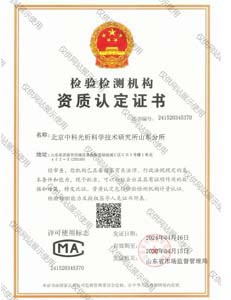
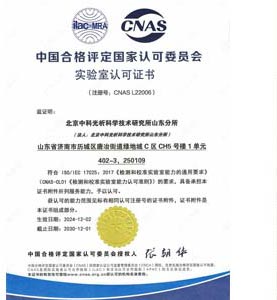
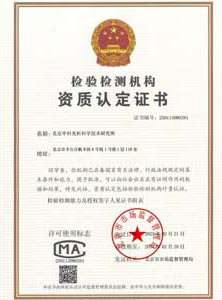

Commitment: Our testing process strictly follows international standards and specifications to ensure the accuracy and reliability of results. Our laboratory facilities are fully equipped with the latest instruments and leading analytical methods. We strictly control every step, from sample collection and processing to data analysis, to ensure clients receive trustworthy test results.


Pressure Leak Testing Service – Comprehensive Leakage Detection and Integrity Assessment for Industrial, Medical and Electronic Components
As an ISO/IEC 17025 accredited independent testing laboratory, we offer comprehensive pressure leak testing services to manufacturers, engineering contractors, and regulatory bodies across the oil and gas, petrochemical, medical device, aerospace, automotive, electronics, and refrigeration sectors. Pressure leak testing – including pressure decay, vacuum decay, tracer gas, mass spectrometry, and bubble emission methods – is a critical quality assurance procedure for verifying the leak‑tightness and hermeticity of components, assemblies, and complete systems. Undetected leaks can lead to product failure, safety hazards, environmental contamination, and significant financial losses. Our test protocols are executed in accordance with ASTM E1003 (Bubble leak testing), ASTM E493 (Helium leak testing), ASTM E1211 (Acoustic leak detection), ISO 20486 (Hydrogen tracer gas leak detection), ISO 10658 (Leak detection by pressure change), GB/T 15823 (Helium leak testing), and GB/T 18910 (Leak testing of industrial components). Our inspection and test reports are recognised by the National Medical Products Administration (NMPA), the State Administration for Market Regulation (SAMR), the Ministry of Industry and Information Technology (MIIT), and international certification bodies for product registration, type approval, and quality assurance.
Test Articles and Component Types We Assess
Our leak testing facilities accommodate a wide range of product sizes, materials, and sealing configurations. Typical test articles include:
- Hermetically sealed electronic enclosures and housings – for sensors, implantable medical devices, and aerospace electronics
- Pipe joints, flanges and fittings – welded joints, threaded connections, and flanged assemblies
- Pressure vessels, storage tanks and pipelines – for gases, liquids, and cryogenic fluids
- Valves, actuators and control devices – gate valves, ball valves, pressure relief devices, and solenoids
- Refrigeration and air‑conditioning components – evaporators, condensers, compressors, and tubing assemblies
- Medical devices and implantable components – pacemakers, drug delivery pumps, and sterile packaging
- Fuel systems and hydraulic components – fuel injectors, pumps, accumulators, and hose assemblies
- Semiconductor and vacuum equipment – vacuum chambers, load locks, and gas distribution systems
- Battery packs and energy storage modules – sealed battery cells and battery management enclosures
Test Methods – Pressure Decay, Vacuum Decay and Tracer Gas Detection
- Pressure decay leak test – ASTM E2930 / ISO 10658 – for rapid and cost‑effective leakage assessment – We pressurise the test article to a specified test pressure (typically 50‑700 kPa above atmospheric) with dry air or an inert gas, isolate the test volume, and monitor the pressure drop over a defined period (typically 1‑10 minutes). The pressure decay rate (ΔP/Δt) is calculated and compared to the acceptance limit. A pressure drop exceeding the specified limit (typically 0.5‑2 % of the initial pressure per minute) indicates a leak. The method is suitable for leak rates in the range of 10⁻³‑10⁻⁶ std cm³/s.
- Vacuum decay test – ASTM E2930 / ISO 10658 – for hermetically sealed housings and vacuum‑tight components – We evacuate the test article to a specified vacuum level (typically 1‑10 kPa absolute) using a vacuum pump, isolate the test volume, and monitor the pressure increase over a defined period (typically 1‑5 minutes). The pressure rise rate is calculated and compared to the acceptance limit. A pressure rise exceeding the specified limit indicates a leak. The method is suitable for leak rates in the range of 10⁻⁴‑10⁻⁷ std cm³/s.
- Tracer gas leak testing – helium leak detection (mass spectrometry) – ASTM E493 / GB/T 15823 – for ultra‑high sensitivity (10⁻⁸‑10⁻¹¹ std cm³/s) – We pressurise the test article with helium (or place the test article in a helium‑filled chamber) and use a calibrated helium mass spectrometer (detector) to detect any helium that escapes from the test article. The leak rate is quantified in std cm³/s (or mbar·L/s), and leak localisation is achieved by scanning the external surface with a sniffer probe or by employing a vacuum chamber configuration (for small components). The method is the most sensitive technique available and is used for hermetically sealed components, medical devices, and semiconductor equipment.
- Hydrogen tracer gas leak testing – ASTM E3093 / ISO 20486 – for cost‑effective sensitive leak detection (10⁻⁵‑10⁻⁷ std cm³/s) – We use a nitrogen‑hydrogen mixture (5 % H₂ in N₂) as the tracer gas and a hydrogen‑sensitive detector (e.g., a hydrogen sniffer) to locate and quantify leaks. The method is cost‑effective, offers a detection limit of 10⁻⁵‑10⁻⁷ std cm³/s, and is particularly useful for field applications and large components where helium testing would be costly or impractical.
- Bubble emission testing (bubble test) – ASTM E1003 / GB/T 18910 – for gross leak detection (≥ 10⁻⁵ std cm³/s) – We pressurise the test article with air or an inert gas and submerge it (or a specific area) in a water bath or soap‑solution. The formation of gas bubbles indicates the presence of a leak. The test is simple, visual, and used for rapid screening and for detecting gross leaks. For enhanced detection, we use a fluorescent dye in the immersion fluid and inspect under UV light.
- Acoustic emission leak detection – ASTM E1211 – for real‑time monitoring and leak localisation – We install acoustic emission sensors on the test article and monitor for high‑frequency acoustic signals generated by the turbulent flow of gas through a leak. The signals are analysed in real time to detect and locate leak sources, providing an additional layer of assurance during pressurisation or evacuation.
Specialised Leak Detection Techniques – For Complex and High‑Integrity Systems
- Helium mass spectrometry leak testing with dynamic vacuum (vacuum‑based method) – for hermetically sealed components – We place the test article in a vacuum chamber, evacuate the chamber, and then spray helium on the external surface of the test article (or use a helium‑pressurised bell jar). Helium that enters the chamber through a leak is detected by the mass spectrometer, and the leak rate is quantified. The method is used for components that cannot be internally pressurised (e.g., closed electronic enclosures) or for testing internal seals.
- Helium mass spectrometry leak testing with sniffer probe – for localising leaks in large components – We pressurise the test article with helium and then scan the external surface with a sniffer probe connected to the mass spectrometer. The probe detects helium that escapes from leaks, and the leak rate is quantified. The method is used for large components (e.g., pipelines, storage tanks) where vacuum chamber testing is not feasible.
- Fluorocarbon leak testing – for small, sealed components (e.g., implantable devices, electronic modules) – We pressurise the test article with a fluorocarbon tracer gas (e.g., SF₆ or perfluorocarbon) and then place it in a vacuum chamber equipped with a fluorocarbon‑sensitive detector. The detector measures the amount of tracer gas released from the component, providing a quantitative leak rate.
- Pressure‑vacuum testing – for double‑wall enclosures and containment systems – For double‑wall vessels and containment systems, we pressurise the inner chamber and evacuate the annular space, monitoring the pressure change in the annular space to detect any communication between the inner and outer walls. The method can detect leaks as small as 10⁻⁴ std cm³/s.
- Residual gas analysis (RGA) – for detecting moisture and contaminants in hermetically sealed cavities – We use a mass spectrometer (RGA) to analyse the gas composition inside a hermetically sealed component (by breaking the seal in a vacuum chamber). The presence of oxygen, moisture, or other contaminants in the internal atmosphere indicates a leak or a contamination event.
Leak Rate Quantification – Calibration and Acceptance Criteria
- Calibrated reference leaks – for traceable leak rate measurements – We use certified reference leaks (calibrated to national standards) to verify the performance of the leak testing system and to ensure that the measured leak rates are traceable. The reference leaks are used at the start and end of each test run to correct for any drift in the instrumentation.
- Leak rate calculation – for pressure‑decay and vacuum‑decay methods – The leak rate is calculated from the measured pressure change and the known test volume using the equation: Q = (ΔP × V) / Δt, where Q is the leak rate (in std cm³/s), ΔP is the pressure change (in Pa), V is the test volume (in cm³), and Δt is the measurement time (in seconds).
- Leak rate acceptance criteria – based on product specifications and regulatory requirements – The acceptable leak rate is determined by the product specification, the applicable standard, or the client’s quality requirements. Typical acceptance limits: (a) hermetically sealed medical devices: ≤ 1 × 10⁻⁸ std cm³/s; (b) automotive fuel systems: ≤ 1 × 10⁻⁴ std cm³/s; (c) industrial pipelines: ≤ 1 × 10⁻³ std cm³/s; (d) general industrial components: ≤ 5 × 10⁻⁴ std cm³/s.
Environmental and Temperature Effects – Simulating Service Conditions
- Temperature‑conditioned leak testing – for verifying sealing performance under temperature extremes – For components that operate under extreme temperatures, we perform leak testing at specified temperatures (e.g., ‑40 °C, 25 °C, 85 °C, or 125 °C). The test article is conditioned to the test temperature and then subjected to pressure decay or tracer gas leak testing to verify that the seals maintain their integrity over the full operating temperature range.
- Thermal cycling and sealing performance – for assessing seal ageing and fatigue – We subject the test article to multiple thermal cycles (e.g., 10‑50 cycles between the minimum and maximum operating temperatures) and then re‑test the leak rate to assess the effect of thermal fatigue on the seal’s leak‑tightness.
- Pressure‑cycling and sealing performance – for assessing seal relaxation and creep – We subject the test article to repeated pressure cycles (e.g., 100‑1 000 cycles) and then re‑test the leak rate to assess the effect of pressure cycling on the seal’s long‑term performance.
Leak Localisation and Visualisation – For Repair and Diagnostics
- Bubble emission testing with fluorescent dye – for visual localisation of leaks (ASTM E1003) – We add a fluorescent dye (e.g., fluorescein or rhodamine) to the immersion water and inspect the test article under UV light. The fluorescent dye provides a high‑contrast visual indication of the leak, even for micro‑leaks that would be difficult to see with the naked eye.
- Soap‑solution leak detection – for pinpointing leak locations (ASTM E1003) – We apply a soap‑solution (e.g., Snoop™ or a proprietary leak‑detection fluid) to the suspected leak area. The formation of stable bubbles provides a clear visual indication of the leak location, which can then be marked for repair.
- Acoustic leak localisation – for real‑time mapping of leak sources – We use a multi‑channel acoustic emission system to detect and localise leaks in real time. The system processes the time‑of‑arrival of the acoustic signals to triangulate the leak source, providing a mapped indication of the leak location.
- Tracer gas localisation with sniffer probe – for pinpointing small leaks in complex assemblies – We use a sniffer probe connected to a helium mass spectrometer (or a hydrogen detector) to scan the surface of the test article. The probe detects the tracer gas escaping from the leak, providing a precise location of the leak.
Test Standards and Specification Compliance – Supporting Regulatory and Contractual Requirements
Our pressure leak testing is performed in accordance with a wide range of national and international standards. The most commonly requested include:
- ASTM E1003 – Standard test method for bubble leak testing – for gross leak detection (≥ 10⁻⁵ std cm³/s)
- ASTM E493 – Standard test method for helium leak testing – for ultra‑sensitive leak detection (10⁻⁸‑10⁻¹¹ std cm³/s)
- ASTM E1211 – Standard practice for leak detection by acoustic emission – for real‑time leak localisation
- ASTM E1603 – Standard test method for leak testing of evacuated systems – for vacuum‑based leak detection
- ISO 10658 – Leak detection by pressure change – for pressure and vacuum decay testing
- ISO 20486 – Hydrogen tracer gas leak detection – for hydrogen leak testing
- GB/T 15823 – Helium leak testing – for helium leak testing (Chinese national standard)
- GB/T 18910 – Leak testing of industrial components – for general industrial leak testing (Chinese national standard)
Field and In‑Service Leak Testing – On‑Site Verification
- Field pressure decay testing – for pipelines, storage tanks and large vessels – We perform pressure decay testing on‑site using portable pressure sources, calibrated pressure gauges, and data logging equipment. The test is conducted in sections (for pipelines) or for the entire volume (for vessels), with the pressure held for 30‑60 minutes while the pressure drop is monitored.
- Field tracer gas leak testing – for large area scanning and leak detection – Using a nitrogen‑hydrogen mixture (5 % H₂ in N₂) as the tracer gas, we scan the test area with a hydrogen‑sensitive detector to locate leaks in pipelines, flanges, and other components. The method is suitable for large and complex installations.
- In‑service leak monitoring – for continuous leak detection during operation – For critical assets, we provide continuous leak monitoring using acoustic emission sensors and pressure transducers. The data is transmitted to a central monitoring station, and an alert is triggered if a leak is detected.
Report Acceptance and Regulatory Recognition
All pressure leak testing is performed under our ISO/IEC 17025 accreditation and in accordance with the applicable national and international standards. Our final test reports include a complete description of the test article, the test method and conditions (test pressure, test time, test temperature, detection limit), the test equipment and instrumentation (with calibration records), the test results (measured leak rate, pressure decay, vacuum rise, tracer gas concentration), and a clear pass/fail verdict against the specified acceptance criteria. These reports are accepted by NMPA, SAMR, MIIT, and international certification bodies for product registration, type approval, and quality assurance. Bilingual (Chinese/English) versions are available to facilitate submissions to domestic and international regulatory authorities.
Note: Due to business adjustments, we do not accept individual client testing requests.
The above is an introduction about Pressure leak testing service. For further questions, please consult our online engineer.
Laboratory Instruments


Partner Clients

Related Projects
 Hydrogen sulfide corrosion testing service
 Pressure relief valve hydraulic burst testing service
 Freezing experiment
 Ultimate impact torque testing service
 Corrosion resistance testing service
 20℃ impact energy testing service
- Pressure leak testing service
 AC dielectric testing service
 Vibration testing service
 Housing pressure testing service