
Hydrogen sulfide corrosion testing service

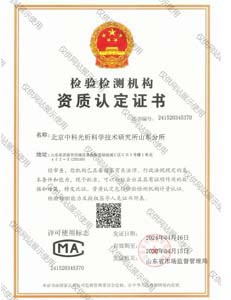
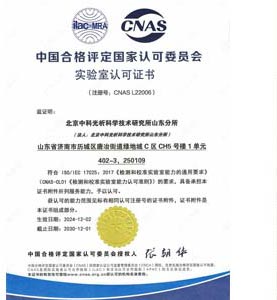
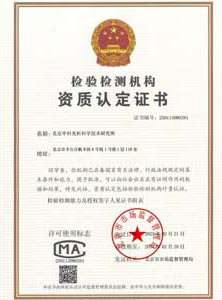
Commitment: Our testing process strictly follows international standards and specifications to ensure the accuracy and reliability of results. Our laboratory facilities are fully equipped with the latest instruments and leading analytical methods. We strictly control every step, from sample collection and processing to data analysis, to ensure clients receive trustworthy test results.


Hydrogen Sulfide Corrosion Testing Service – Comprehensive Evaluation of Material Resistance to Sour Service Environments for Oil, Gas and Chemical Applications
As an ISO/IEC 17025 accredited independent testing laboratory, we provide specialised hydrogen sulfide (H₂S) corrosion testing services to manufacturers, engineering contractors, and asset operators across the oil and gas, petrochemical, refining, and energy sectors. Hydrogen sulfide is a highly corrosive and toxic gas commonly encountered in sour oil and gas production, natural gas processing, and refinery operations. Exposure to H₂S can lead to severe forms of material degradation, including sulphide stress cracking (SSC), hydrogen‑induced cracking (HIC), stress‑oriented hydrogen‑induced cracking (SOHIC), and general corrosion. Our test protocols evaluate the resistance of metallic materials, weldments, and protective coatings to these damaging mechanisms under simulated sour service conditions. All methods are aligned with NACE (National Association of Corrosion Engineers) standards, ISO 15156 (Petroleum and natural gas industries – Materials for use in H₂S‑containing environments in oil and gas production), ASTM, and EN standards, as well as BDS (Bulgarian Institute for Standardisation) requirements. Our reports are recognised by IAМТН (Executive Agency for Metrological and Technical Surveillance), BDS, ANP (National Agency for Natural Resources), and international certification bodies for material qualification, equipment registration, and quality assurance.
Materials and Components We Regularly Test
Our H₂S corrosion testing facilities accommodate a wide range of metallic materials, weldments, and protective systems. Typical test articles include:
- Carbon and low‑alloy steels – pipeline steels (API 5L grades), pressure vessel steels (A516, A537), and structural steels for sour service
- Stainless steels – austenitic (304L, 316L), duplex (2205, 2507), super‑duplex, and martensitic grades
- Nickel‑based alloys – Inconel®, Monel®, Hastelloy®, and other high‑performance alloys for extreme sour conditions
- Corrosion‑resistant alloys (CRAs) – for downhole tubulars, wellheads, and subsea equipment
- Weldments and heat‑affected zones (HAZ) – including weld metal, fusion line, and HAZ for evaluating localised susceptibility to SSC and HIC
- Protective coatings and claddings – metallic and non‑metallic coatings for sour service applications
- Non‑metallic materials – elastomeric seals, gaskets, and polymeric linings for H₂S service
- Fasteners, fittings, and small components – for testing under service‑simulated conditions
Sulphide Stress Cracking (SSC) Testing – NACE TM0177 / ISO 15156
- NACE TM0177 Method A – Tensile test (constant load) – We subject smooth tensile specimens to a constant tensile stress (typically 80‑100 % of the material's specified minimum yield strength – SMYS) in a test solution saturated with H₂S at a specified pH (typically 2.7‑3.3 for acidic environments). The test is conducted at 24 °C for up to 720 hours (or until failure). The time to failure (TTF) is recorded, and the material is classified as resistant or susceptible to SSC based on the presence of cracks or fracture.
- NACE TM0177 Method B – Bent‑beam test (constant strain) – We use a bent‑beam specimen (U‑bend, C‑ring, or three‑point bent beam) to apply a constant strain to the test material. The specimen is immersed in the H₂S‑saturated test solution for 720 hours, and then examined for cracks. This method is suitable for evaluating thin‑walled materials and for screening the resistance of weldments.
- NACE TM0177 Method C – C‑ring test (constant strain) – For tubular products and ring‑shaped components, we use the C‑ring test to apply a constant strain to the specimen. The test is performed in the H₂S‑saturated solution for 720 hours, and the specimen is inspected for cracks. This method is widely used for assessing the SSC resistance of line pipe and casing materials.
- NACE TM0177 Method D – Double‑cantilever beam (DCB) test (KISSC determination) – For assessing the threshold stress intensity factor for SSC (KISSC), we use the DCB test. A pre‑cracked DCB specimen is loaded in a wedge‑opening mode and exposed to the H₂S test solution. The crack growth and the final crack length are measured, and the KISSC value is calculated. This method is used for materials that are required to have a specific resistance to crack propagation.
- ISO 15156‑2 / ‑3 – Material selection and qualification for H₂S environments – We perform SSC testing according to the ISO 15156 standard to qualify materials for use in specific sour service environments, as defined by the partial pressure of H₂S, the pH, and the chloride content. The results are used to establish the material's environmental and stress limits for service.
Hydrogen‑Induced Cracking (HIC) Testing – NACE TM0284 / ASTM G39
- NACE TM0284 – HIC test (for line pipe and pressure vessel steels) – We expose rectangular specimens to an H₂S‑saturated test solution (typically pH 2.7‑4.0) at 25 °C for 96 hours. The specimens are then removed, sectioned, and examined metallographically for the presence of hydrogen‑induced cracks. We measure the crack length ratio (CLR), crack thickness ratio (CTR), and crack sensitivity ratio (CSR), which quantify the severity of HIC. For Bulgarian pipeline applications, a CLR of ≤ 10 % and a CTR of ≤ 3 % are typically required for HIC‑resistant steels.
- HIC test with welding – for evaluating weld HIC susceptibility – For welded line pipe and pressure vessel steels, we perform the HIC test with the weld seam and the HAZ included in the specimen. The crack length and the crack thickness ratios are measured in the weld metal, the HAZ, and the base metal to identify the most susceptible region.
- HIC test at elevated temperatures – for simulating downhole and process conditions – We perform HIC testing at elevated temperatures (e.g., 50 °C, 80 °C, or 100 °C) to simulate the conditions in deep wells and high‑temperature process streams. The test duration and the pH of the solution are adjusted to reflect the service conditions.
- HIC test with chloride and CO₂ – for realistic sour service simulation – To simulate the complex chemistry of sour gas production, we add chlorides (NaCl) and CO₂ to the test solution. The chloride content is typically 5‑25 % (wt), and the CO₂ pressure is adjusted to reflect the partial pressure in the field.
Stress‑Oriented Hydrogen‑Induced Cracking (SOHIC) Testing
- NACE TM0316 – SOHIC test – We evaluate the susceptibility of materials to SOHIC, a form of cracking that occurs when HIC cracks align in the through‑thickness direction under the influence of tensile stress. We use a constant‑load tensile test (similar to NACE TM0177 Method A) with the specimen oriented in the through‑thickness direction. The test is conducted in an H₂S‑saturated solution for up to 720 hours, and the specimen is examined for the presence of SOHIC. A SOHIC resistance is required for materials used in high‑stress and high‑pressure sour service.
- Combined SSC and SOHIC testing – for high‑stress applications – For components that experience both high tensile stress and hydrogen charging (e.g., wellhead equipment), we perform a combined test that evaluates both SSC and SOHIC susceptibility. The test conditions (stress, H₂S partial pressure, pH) are selected to match the service environment.
Galvanic and Localised Corrosion Testing in H₂S Environments
- Galvanic corrosion testing in H₂S environments – ASTM G71 / NACE TM0177 – For assemblies of dissimilar metals in sour service, we measure the galvanic current and potential between the two materials when coupled in a H₂S‑saturated electrolyte. The test determines which material acts as the anode and the magnitude of the galvanic corrosion rate, and the results are used to design cathodic protection systems and to select appropriate insulating materials.
- Pitting and crevice corrosion testing in H₂S‑containing media – ASTM G48 / ASTM G150 – For stainless steels and CRAs, we evaluate the resistance to pitting and crevice corrosion in H₂S‑containing brine solutions using the ferric chloride test (ASTM G48) or the critical pitting temperature (CPT) test (ASTM G150). The presence of pitting or crevice attack is assessed after exposure for 72 hours. For sour service, a CPT of ≥ 40 °C is typically required for duplex and super‑austenitic grades.
High‑Pressure High‑Temperature (HPHT) Corrosion Testing – Simulating Severe Sour Service
- Autoclave testing – for HPHT sour service simulation – NACE TM0186 / ISO 15156 – We use high‑pressure autoclaves (up to 200 MPa, 350 °C) to simulate the extreme conditions of deep sour wells and high‑pressure gas processing. The test specimens are exposed to a H₂S‑CO₂‑chloride mixture at high pressure and temperature for up to 1 000 hours. The corrosion rate (by weight loss), the susceptibility to SSC, HIC, and localised corrosion are evaluated.
- Slow strain rate testing (SSRT) in HPHT environments – ASTM G129 / ISO 7539 – For assessing the susceptibility of materials to stress‑corrosion cracking (SCC) and SSC under slow strain rate conditions, we perform SSRT in a high‑pressure, H₂S‑containing autoclave. The specimens are strained to failure at a slow rate (e.g., 10⁻⁶ s⁻¹), and the reduction in ductility and the fracture surface are compared to tests performed in an inert environment. A significant reduction in ductility (> 30 %) indicates SCC/SSC susceptibility.
- Electrochemical monitoring in HPHT conditions – for corrosion rate monitoring – We use electrochemical techniques (linear polarisation, impedance) to monitor the corrosion rate in real time during HPHT autoclave tests. This provides data on the instantaneous corrosion rate and the effect of test variables (pressure, temperature, H₂S partial pressure) on the corrosion process.
Evaluation and Assessment – Quantifying Corrosion Damage
- Corrosion rate calculation – from weight loss – ASTM G1 / NACE RP0775 – After exposure, the specimens are cleaned of corrosion products (using chemical and/or mechanical cleaning) and weighed. The corrosion rate is calculated using the formula: CR (mm/year) = (Weight Loss (g) × K) / (Density (g/cm³) × Area (cm²) × Time (hours)), where K = 8.76 × 10⁴. The rate is expressed in mm/year or mpy (mils per year).
- Metallographic examination – for cracking assessment – ASTM E3 / NACE TM0177 – We examine the tested specimens for the presence and morphology of cracks (SSC, HIC, SOHIC) using optical microscopy and scanning electron microscopy (SEM). The crack length, crack thickness, and the crack density are measured. The fracture surface is analysed to identify the failure mechanism.
- Hardness testing – for HIC and SSC susceptibility – ASTM E18 / ISO 6508 – We measure the Rockwell or Vickers hardness of the specimens before and after testing, and correlate the hardness with the susceptibility to HIC and SSC. A hardness of > 22 HRC is considered a risk factor for SSC in sour environments.
- Microstructural characterisation – for material quality assessment – We examine the microstructure of the material (grain size, phase distribution, inclusion content) to identify any features that may contribute to corrosion or cracking.
Report Acceptance and Regulatory Compliance
All hydrogen sulfide corrosion tests are conducted under our ISO/IEC 17025 accreditation, using calibrated autoclaves, electrochemical workstations, and analytical instruments, all traceable to BDS and international reference standards. Our comprehensive test reports include: a full description of the test material (grade, heat number, manufacturing process), a summary of the test conditions (H₂S partial pressure, pH, temperature, chloride content, test duration), a detailed description of the test results (corrosion rate, cracking susceptibility, HIC ratios, SSC performance), photographic and microscopic evidence of the corrosion damage, and a clear pass/fail verdict against your specified acceptance criteria or reference standard (e.g., NACE TM0177, NACE TM0284, ISO 15156). We also provide an expanded uncertainty (k=2) for key measurements. These reports are widely accepted by IAМТН (Executive Agency for Metrological and Technical Surveillance), BDS (Bulgarian Institute for Standardisation), ANP (National Agency for Natural Resources), and international oil and gas operators for material qualification, equipment registration, and quality assurance. Bilingual (Bulgarian/English) versions are available to facilitate submissions to domestic and international regulatory authorities.
Note: Due to business adjustments, we do not accept individual client testing requests.
The above is an introduction about Hydrogen sulfide corrosion testing service. For further questions, please consult our online engineer.
Laboratory Instruments


Partner Clients

Related Projects
- Hydrogen sulfide corrosion testing service
 Pressure relief valve hydraulic burst testing service
 Freezing experiment
 Ultimate impact torque testing service
 Corrosion resistance testing service
 20℃ impact energy testing service
 Pressure leak testing service
 AC dielectric testing service
 Vibration testing service
 Housing pressure testing service