
AC dielectric testing service

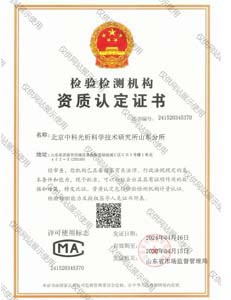
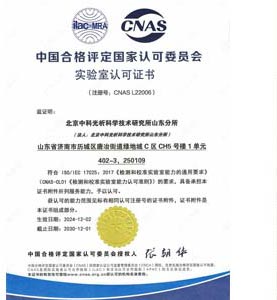
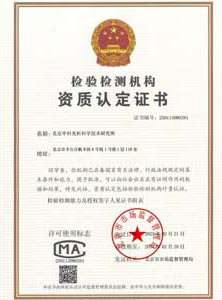
Commitment: Our testing process strictly follows international standards and specifications to ensure the accuracy and reliability of results. Our laboratory facilities are fully equipped with the latest instruments and leading analytical methods. We strictly control every step, from sample collection and processing to data analysis, to ensure clients receive trustworthy test results.


AC Dielectric Testing Service – Comprehensive Electrical Insulation Verification for Cables, Components and High‑Voltage Equipment
As an ISO/IEC 17025 accredited independent testing laboratory, we offer comprehensive AC (alternating current) dielectric testing services to manufacturers, engineering contractors, and regulatory bodies across the electrical power, telecommunications, railway, aerospace, medical device, and industrial equipment sectors. AC dielectric testing – also known as high‑voltage withstand testing, insulation testing, or AC hipot testing – is a fundamental method for verifying the electrical insulation integrity of cables, connectors, transformers, switchgear, and electronic assemblies. By applying a controlled AC voltage (typically 1.5‑3× the rated operating voltage or the specified test voltage) to the insulation system, we can detect weak points, voids, contamination, and manufacturing defects that could lead to electrical breakdown, short circuits, or catastrophic failure during service. Our test protocols are executed in accordance with IEC 60156 (Insulating liquids – Determination of the breakdown voltage at power frequency), IEC 60243‑1 (Electrical strength of insulating materials – Test methods), ASTM D149 (Standard test method for dielectric breakdown voltage and dielectric strength of solid insulating materials), GB/T 1408 (Test method for the determination of the electrical strength of insulating materials), GB/T 1695 (Test method for the determination of the breakdown voltage of insulating materials), and DL/T 474.1 (Guide for insulation test of electrical equipment – High‑voltage tests). Our inspection and test reports are recognised by the National Medical Products Administration (NMPA), the State Administration for Market Regulation (SAMR), the Ministry of Industry and Information Technology (MIIT), and international certification bodies for product registration, type approval, and quality assurance.
Test Articles and Equipment Types We Assess
Our AC dielectric test facilities accommodate a wide range of electrical components, assemblies, and systems. Typical test articles include:
- Cables and cable assemblies – power cables, control cables, coaxial cables, fibre optic cables with metallic strength members, and cable harnesses
- Connectors, terminals and splices – electrical connectors, terminal blocks, junction boxes, and splice kits
- Transformers and inductors – power transformers, distribution transformers, current transformers, and inductors
- Switchgear, circuit breakers and protective devices – distribution panels, switchboards, MCCs, and circuit breakers
- Electrical insulation materials – solid insulating materials, insulating films, varnishes, and compound insulations
- Electronic assemblies and printed circuit boards (PCBs) – populated PCBs, power supplies, and control modules
- Medical electrical equipment – diagnostic equipment, therapeutic devices, and implantable electronics
- Rotating electrical machines – motors, generators, and alternators
- Battery systems and energy storage modules – battery packs, cells, and battery management systems (BMS)
Test Parameters and Voltage Levels – Tailored to the Equipment and Application
- Test voltage level – determined by the rated voltage, the insulation type, and the applicable standard – We apply a test voltage (typically 50 Hz AC) that is either specified by the applicable standard (e.g., 1.5‑3× the rated voltage, depending on the device type and the insulation category) or defined by the client’s specification. The test voltage can range from a few volts (for low‑voltage electronic components) up to 800 kV (for high‑voltage power equipment).
- Ramp‑up and hold time – controlled application to avoid transient overvoltages – The test voltage is gradually increased (ramped up) from zero to the target test voltage at a controlled rate (typically 0.1‑0.5 kV/second) to avoid transient overvoltages that could cause premature breakdown. The test voltage is then maintained (held) for a specified duration (typically 1‑5 minutes, or longer for equipment‑type tests).
- Test duration – from quick screening to endurance tests – For routine quality control, a 1‑minute test is typical. For type tests or for equipment intended for critical applications, longer durations (up to 1 hour) may be required. The test duration is specified by the applicable standard or by the client’s specification.
- Dielectric withstand vs. insulation resistance – complementary tests for comprehensive assessment – We often combine AC dielectric testing with insulation resistance (IR) and polarisation index (PI) testing to provide a comprehensive assessment of the insulation quality. The IR and PI are measured before the AC dielectric test to establish a baseline and to detect early signs of degradation.
Test Methods and Equipment – Precision Voltage Control and Measurement
- AC hipot test (dielectric withstand) – IEC 60243‑1 / ASTM D149 / GB/T 1408 – for solid, liquid and gas insulations – We apply a controlled AC voltage (50 Hz) to the insulation system using a high‑voltage test transformer or an AC dielectric test set with a voltage range of 50 V to 100 kV, and a current measurement resolution of 0.1 µA. The test voltage is applied between the conductor (or the active part) and the ground (or between separate active parts), and the leakage current is measured during the test.
- Dielectric strength measurement – determination of the breakdown voltage of insulating materials – For insulating material samples (sheets, films, varnishes), we determine the dielectric breakdown voltage (BDV) and the dielectric strength (BDV per unit thickness) by applying a continuously increasing AC voltage (at a specified ramp rate) until dielectric breakdown occurs. The breakdown is detected by a sudden increase in current or by the breakdown detection circuit.
- Partial discharge (PD) measurement – for detection of incipient defects in insulation – IEC 60270 / GB/T 7354 – For high‑voltage equipment and cables, we perform partial discharge measurement (PD) during the AC dielectric test to detect localised electrical discharges that occur within voids, cracks, or contaminated areas of the insulation. The PD activity (apparent charge, in pC) is measured at a defined sensitivity (typically 1‑5 pC) using a calibrated PD detector, and the results are used to assess the long‑term reliability of the insulation.
- Dielectric loss measurement (tan δ) – for assessing the quality of cable and capacitor insulations – IEC 60156 / GB/T 1695 – We measure the dielectric loss (loss factor tan δ) and the capacitance of the test object at the test frequency (50 Hz or 60 Hz) using a bridge‑type or digital tan δ measuring system. The measurement provides an indication of the insulation’s polarisation losses, which are indicative of moisture, contamination, or ageing.
- Multi‑channel monitoring – for simultaneous testing of multiple samples – For high‑volume routine testing, we use multi‑channel AC dielectric testers that can test up to 8 samples simultaneously, significantly increasing throughput while maintaining test accuracy and repeatability.
Sample Types and Configurations – Customised Fixturing and Setups
- Cable and harness testing – using a custom test jig and a cable‑specific test panel – We connect the cable under test to a specially designed test panel that matches the cable’s connector configuration, applying the test voltage to each conductor individually (or to all conductors simultaneously) while the other conductors and the shield are grounded. The test is performed for both the conductor‑to‑conductor and conductor‑to‑shield (or conductor‑to‑ground) configurations.
- Transformer and inductor testing – testing the primary‑to‑secondary, primary‑to‑core, and primary‑to‑ground insulations – We apply the test voltage to the primary winding (or the high‑voltage winding) while shorting the other windings and connecting them to ground. The test voltage is gradually increased, and the leakage current and the partial discharge (if required) are monitored.
- Motor and generator testing – testing the winding‑to‑ground and winding‑to‑winding insulation – For rotating electrical machines, we apply the test voltage to the phase windings (in sequence) while the remaining phases and the frame are grounded. The test is performed at a specified voltage, and the insulation resistance is measured before and after the test to detect any degradation.
- Insulating material testing – using standard electrode configurations (e.g., 25 mm and 50 mm diameter spherical or cylindrical electrodes) – ASTM D149 / GB/T 1408 – For insulating material samples (sheets, films, varnishes), we use a standardised electrode setup (e.g., the 25 mm diameter electrode as specified in ASTM D149) to ensure that the test results are comparable across different laboratories and materials.
- Breakdown voltage measurement for insulating liquids – IEC 60156 / ASTM D1816 / GB/T 507 – For transformer oils and insulating liquids, we measure the breakdown voltage (BDV) using a standardised test cell and electrode configuration (as specified in IEC 60156). The liquid sample is stirred (or not, depending on the method), and the breakdown voltage is recorded.
Environmental Conditions and Temperature Control – Simulating Service Environments
- Temperature‑conditioned testing – for insulation verification at elevated and reduced temperatures – For equipment that operates under extreme temperatures, we perform AC dielectric testing at specified temperatures (typically ‑40 °C, 25 °C, 85 °C, or 125 °C) using a temperature‑controlled chamber. The test voltage and the hold time are kept constant while the test temperature is varied, and the leakage current and the breakdown voltage are recorded as a function of temperature.
- Humidity conditioning – for testing insulations in moist environments – For components that are exposed to high humidity (e.g., outdoor equipment, marine electronics), we condition the test article at specified humidity levels (e.g., 95 % RH at 40 °C) for 24‑48 hours, and then perform the AC dielectric test to verify that the insulation resistance is maintained under moist conditions.
- Oil‑temperature and oil‑circulation effects – for transformer and cable testing – For oil‑filled transformers and cables, the AC dielectric test is often performed at the operating temperature of the oil (e.g., 85‑100 °C) to simulate the actual service conditions, where the insulation strength is typically lower than at room temperature.
Test Procedure – Step‑by‑Step Execution and Monitoring
- Preparation and visual inspection – Before the test, we inspect the test article for any visible damage (cracks, contamination, loose connections) and clean the test surfaces. We also verify the correct connection of the test leads and the grounding.
- Pre‑test measurement – insulation resistance (IR) and polarisation index (PI) – IEC 60034‑27 / GB/T 20160 – We measure the insulation resistance (IR) at 500 V DC (or 1 000 V DC, as applicable) and calculate the polarisation index (the ratio of the IR at 10 minutes to the IR at 1 minute). A PI of ≥ 1.5 is generally required for good quality insulation.
- Voltage application – controlled ramp‑up and hold – The test voltage is gradually ramped up to the target level at a rate specified by the standard (e.g., 0.1‑0.5 kV/second). Once the target voltage is reached, the voltage is held for the required duration (typically 1‑5 minutes). During the hold period, the leakage current is monitored continuously, and any increase above the specified limit (typically 5‑10 mA) is recorded as a failure.
- Post‑test measurement – IR and PI after the test – After the test, we re‑measure the IR and PI to detect any permanent decrease in insulation resistance (which would indicate significant degradation). A post‑test IR that is less than 80 % of the pre‑test IR is considered a failure.
- Recording and reporting – comprehensive documentation of the test results – All test parameters (test voltage, test duration, leakage current, pre‑test and post‑test IR, breakdown voltage) are recorded in a test report, along with the test conditions (temperature, humidity, and date).
Test Standards and Specification Compliance – Supporting Regulatory and Contractual Requirements
Our AC dielectric testing is performed in accordance with a wide range of national and international standards. The most commonly requested include:
- IEC 60156 – Insulating liquids – Determination of the breakdown voltage at power frequency – for transformer oils and insulating liquids
- IEC 60243‑1 – Electrical strength of insulating materials – Test methods – for solid insulating materials
- ASTM D149 – Standard test method for dielectric breakdown voltage and dielectric strength of solid insulating materials – for solid insulating materials
- ASTM D1816 – Standard test method for dielectric breakdown voltage of insulating oils of petroleum origin – for transformer oils
- GB/T 1408 – Test method for the determination of the electrical strength of insulating materials – for solid insulating materials (Chinese national standard)
- GB/T 1695 – Test method for the determination of the breakdown voltage of insulating materials – for solid insulating materials (Chinese national standard)
- DL/T 474.1 – Guide for insulation test of electrical equipment – High‑voltage tests – for high‑voltage electrical equipment
- IEC 60270 – High‑voltage test techniques – Partial discharge measurements – for partial discharge measurement
Report Acceptance and Regulatory Recognition
All AC dielectric testing is performed under our ISO/IEC 17025 accreditation and in accordance with the applicable national and international standards. Our final test reports include a complete description of the test article, the test method and conditions (test voltage, ramp rate, hold time, temperature, humidity), the test equipment and instrumentation (with calibration records), the test results (leakage current, breakdown voltage, partial discharge level, pre‑test and post‑test IR), and a clear pass/fail verdict against the specified acceptance criteria. These reports are accepted by NMPA, SAMR, MIIT, and international certification bodies for product registration, type approval, and quality assurance. Bilingual (Chinese/English) versions are available to facilitate submissions to domestic and international regulatory authorities.
Note: Due to business adjustments, we do not accept individual client testing requests.
The above is an introduction about AC dielectric testing service. For further questions, please consult our online engineer.
Laboratory Instruments


Partner Clients

Related Projects
 Hydrogen sulfide corrosion testing service
 Pressure relief valve hydraulic burst testing service
 Freezing experiment
 Ultimate impact torque testing service
 Corrosion resistance testing service
 20℃ impact energy testing service
 Pressure leak testing service
- AC dielectric testing service
 Vibration testing service
 Housing pressure testing service