
20℃ impact energy testing service

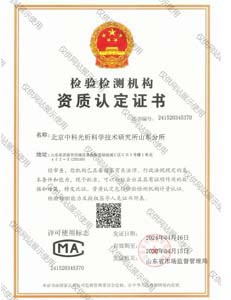
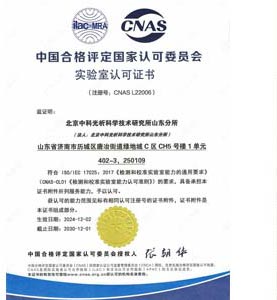
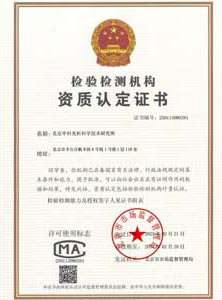
Commitment: Our testing process strictly follows international standards and specifications to ensure the accuracy and reliability of results. Our laboratory facilities are fully equipped with the latest instruments and leading analytical methods. We strictly control every step, from sample collection and processing to data analysis, to ensure clients receive trustworthy test results.


20 °C Impact Energy Testing Service – Charpy V‑Notch and Izod Impact Characterisation for Material Toughness and Quality Assurance
As an ISO/IEC 17025 accredited independent testing laboratory, we offer specialised 20 °C impact energy testing services to manufacturers, engineering contractors, and quality assurance teams across the automotive, aerospace, construction, oil and gas, and general engineering sectors. Impact energy testing at 20 °C (ambient room temperature) is a fundamental method for evaluating the toughness and fracture resistance of metallic materials – particularly steels, aluminium alloys, copper alloys, and cast irons. By measuring the energy absorbed during the fracture of a notched specimen under a high‑strain‑rate impact load, we can assess the material’s susceptibility to brittle fracture, its ductile‑to‑brittle transition behaviour, and its suitability for service at ambient temperatures. Our test protocols are executed in accordance with ASTM E23 (Standard Test Methods for Notched Bar Impact Testing of Metallic Materials), ISO 148‑1 (Metallic materials – Charpy pendulum impact test – Part 1: Test method), ISO 179‑1 (Plastics – Determination of Charpy impact properties), ASTM D256 (Standard Test Methods for Determining the Izod Pendulum Impact Resistance of Plastics), GB/T 229 (Metallic materials – Charpy pendulum impact test method), and GB/T 1043 (Plastics – Determination of Charpy impact properties). Our inspection and test reports are recognised by the National Medical Products Administration (NMPA), the State Administration for Market Regulation (SAMR), the Ministry of Industry and Information Technology (MIIT), and international certification bodies for product registration, type approval, and quality assurance.
Test Specimen Types and Material Classes We Evaluate
Our impact testing facilities accommodate a wide range of specimen geometries and material types. Typical test articles include:
- Metallic materials – carbon steels, alloy steels, stainless steels, cast steels, aluminium alloys, titanium alloys, copper alloys, and nickel‑based alloys
- Ferrous castings and forgings – cast iron, ductile iron, forged steel components, and welded assemblies
- Polymer and composite materials – thermoplastics, thermosets, reinforced plastics, and polymer matrix composites
- Weldments and heat‑affected zones (HAZ) – from welded joints, including the weld metal, fusion line, and heat‑affected zone
- Finished and semi‑finished products – plates, bars, sections, castings, forgings, and machined components
- Production and quality control samples – for batch release testing, material certification, and incoming material inspection
Test Specimen Preparation – Geometry, Notching and Dimensional Accuracy
- Specimen dimensions – Charpy V‑notch (CVN) and Izod specimens – ASTM E23 / ISO 148‑1 / GB/T 229 – For metallic Charpy testing, we use standard specimens with dimensions of 10 mm × 10 mm × 55 mm, with a 2 mm deep V‑notch (45° included angle, 0.25 mm root radius). For Izod testing, the specimen dimensions are 10 mm × 10 mm × 75 mm, with a 2 mm deep notch. For plastics, the specimen dimensions may be smaller (e.g., 4 mm × 10 mm × 80 mm for Charpy, and 3.2 mm × 12.7 mm × 63.5 mm for Izod), as specified by the relevant standard.
- Notch preparation – precision broaching or machining – to ensure consistent and accurate notch geometry – We use a precision broaching machine with a high‑speed steel (HSS) or carbide broach to cut the V‑notch to the specified dimensions. The notch is inspected under a toolmaker’s microscope (or a vision measuring system) to verify the notch angle (45° ± 1°), root radius (0.25 mm ± 0.025 mm), and depth (2 mm ± 0.025 mm). For plastics, the notch is cut using a specialised notch cutter with a specified notch geometry (e.g., V‑notch or U‑notch).
- Surface finish and flatness – to avoid stress concentration artefacts – The specimen surfaces are ground or milled to a specified surface finish (typically Ra ≤ 0.8 µm for metallic specimens) to avoid any surface irregularities that could act as stress raisers and affect the impact energy. The flatness and perpendicularity of the specimen are verified using a surface plate and dial gauge.
- Specimen orientation – the orientation of the specimen relative to the rolling or forging direction – For materials with directional properties (e.g., rolled plates, forgings), we prepare specimens in the longitudinal (L), transverse (T), and through‑thickness (S) orientations, as required by the specification. The orientation is marked on the specimen and included in the test report.
Test Equipment and Instrumentation – Calibrated Pendulum Impact Testers
- Pendulum impact testers – capacities from 15 J to 600 J – ASTM E23 / ISO 148‑1 – We operate a range of pendulum impact testers with varying energy capacities (15 J, 30 J, 50 J, 100 J, 150 J, 300 J, and 600 J). Each tester is equipped with a calibrated pendulum, an anvil, and a striker, with interchangeable striker geometries to accommodate different specimen types (e.g., Charpy V‑notch, Izod, and unnotched).
- Charpy strikers – for standard and instrumented testing – For Charpy testing, we use a striker with a radius of 2 mm (for standard testing) or an instrumented striker with a force‑measuring transducer (for instrumented impact testing). The strikers are calibrated for mass and geometry to ensure accuracy.
- Calibration and verification – ASTM E23 / ISO 148‑2 – The impact testers are calibrated and verified at regular intervals using certified reference specimens (with known impact energy values). The calibration includes checking the pendulum mass, length, and the angle of release, and the repeatability of the impact energy measurement (within ± 1 % of the certified value).
- Instrumented impact testing – for force‑time and energy‑time data acquisition – ISO 14556 / GB/T 19748 – For advanced characterisation, we use instrumented impact testers equipped with a piezoelectric force transducer. The force‑time and energy‑time curves are recorded, and the following parameters are determined: the impact force at yield, the maximum force, the crack initiation energy, and the crack propagation energy.
Test Procedure – 20 °C Impact Testing at Ambient Temperature
- Conditioning at 20 °C – ensuring uniform specimen temperature – The test specimens are conditioned at 20 °C (room temperature) for a minimum of 2 hours (or until thermal equilibrium is achieved) before testing. The ambient temperature is recorded at the start and end of each test session using a calibrated thermometer (accuracy ± 0.5 °C).
- Specimen placement and anvil alignment – to ensure consistent impact – The test specimen is placed in the anvil of the impact tester with the notch facing away from the pendulum (for Charpy testing) or facing the pendulum (for Izod testing). The specimen is centred on the anvil, and the alignment is verified to ensure that the pendulum striker hits the specimen in the correct position (typically at the centre of the specimen).
- Pendulum release and impact – at the specified pendulum energy – The pendulum is raised to the specified height (corresponding to the desired impact energy) and released. The pendulum swings down, strikes the specimen, and breaks it. The impact energy is recorded by the dial or digital readout on the tester.
- Post‑test fracture surface examination – for fracture appearance assessment – After the test, we examine the fracture surface of the broken specimen to: (a) determine the percentage of shear fracture (ductile) versus cleavage fracture (brittle) using visual inspection or a fracture appearance measuring gauge (as specified in ASTM E23). A high percentage of shear fracture (> 50 %) indicates ductile behaviour; a high cleavage percentage indicates brittle behaviour. (b) measure the lateral expansion (the increase in thickness on the compression side of the specimen) to assess the ductility of the fracture.
- Test repeatability – multiple specimens for statistical confidence – For each material and condition, we test a minimum of three specimens (as required by most standards). If any test result deviates significantly from the mean, additional specimens are tested, and outliers are identified and reported.
Test Results – Impact Energy, Shear Percentage and Lateral Expansion
- Impact energy (absorbed energy) – measured in Joules (J) – the primary parameter for toughness assessment – The impact energy is the work required to break the specimen, as indicated by the difference between the initial and final pendulum heights. The impact energy is reported as the average of the three (or more) test results, and the individual values are also included in the report. A high impact energy indicates good toughness; a low impact energy indicates brittleness.
- Shear fracture appearance (percentage shear) – an indicator of ductility – The fracture surface is examined visually (or using an optical comparator) to determine the percentage of the fracture surface that is shear (dull, fibrous) versus cleavage (bright, crystalline). A high shear percentage (> 50 %) indicates that the material failed in a ductile manner, which is generally preferred for structural applications.
- Lateral expansion – an additional measure of ductility – The increase in thickness (or width) on the compression side of the broken specimen is measured using a calliper (or a specially designed gauge). The lateral expansion is a measure of the plastic deformation before fracture and is a good indicator of the material’s ductility.
- Temperature‑dependent behaviour (ductile‑to‑brittle transition) – for assessing low‑temperature toughness – For materials used in cold environments, we perform impact testing at a series of temperatures (typically from ‑40 °C to +20 °C) to establish the ductile‑to‑brittle transition temperature (DBTT). The DBTT is the temperature at which the impact energy drops rapidly and the fracture appearance changes from ductile to brittle. The DBTT is reported, and the material is evaluated against the specified minimum impact energy requirement at the design temperature.
- Instrumented impact data – for assessing crack initiation and propagation energy – ISO 14556 / GB/T 19748 – When instrumented impact testing is performed, we provide the force‑time and energy‑time curves, and we report the crack initiation energy (the energy required to start the crack), the crack propagation energy (the energy required to propagate the crack), and the total impact energy. This data is particularly useful for materials that exhibit a high degree of ductility or that are used in high‑strain‑rate applications.
Failure Analysis and Interpretation – Understanding the Impact Behaviour
- Analysis of fracture surfaces – identification of fracture mechanisms – We perform visual and stereomicroscopic examination of the fracture surfaces to identify the fracture mechanisms: (a) ductile fracture – characterised by fibrous, dimpled surfaces; (b) brittle fracture – characterised by cleavage facets, and (c) mixed fracture – a combination of both ductile and brittle regions. The fracture mechanism is correlated with the measured impact energy and the material’s microstructure.
- Correlation with material properties – relating impact energy to strength and ductility – We correlate the impact energy with the material’s tensile properties (yield strength, ultimate tensile strength, elongation) and hardness to provide a comprehensive assessment of the material’s mechanical performance.
- Effect of grain size, inclusions and heat treatment – identifying the root cause of low impact energy – If the impact energy is below the specified minimum, we investigate the material’s microstructure (using optical microscopy or SEM) to identify the root cause: (a) coarse grain size – which can reduce toughness; (b) high inclusion content – which can act as stress raisers; (c) improper heat treatment – which can lead to temper embrittlement or the formation of a brittle martensitic structure.
- Acceptance criteria and pass/fail determination – against customer or material specifications – We compare the measured impact energy, shear percentage, and lateral expansion with the specified minimum requirements (as defined by the material standard, the customer’s specification, or the engineering design). A clear pass/fail verdict is provided in the test report.
Test Standards and Specification Compliance – Supporting Regulatory and Contractual Requirements
Our 20 °C impact energy testing is performed in accordance with a wide range of national and international standards. The most commonly requested include:
- ASTM E23 – Standard Test Methods for Notched Bar Impact Testing of Metallic Materials – the most widely used standard for metallic impact testing in North America and internationally
- ISO 148‑1 – Metallic materials – Charpy pendulum impact test – Part 1: Test method – the international standard for Charpy impact testing
- ISO 179‑1 – Plastics – Determination of Charpy impact properties – Part 1: Non‑instrumented impact test – for plastics and polymer composites
- ASTM D256 – Standard Test Methods for Determining the Izod Pendulum Impact Resistance of Plastics – for plastics and polymer composites using the Izod method
- GB/T 229 – Metallic materials – Charpy pendulum impact test method – the Chinese national standard for Charpy impact testing
- GB/T 1043 – Plastics – Determination of Charpy impact properties – the Chinese national standard for plastic impact testing
- ISO 14556 – Metallic materials – Charpy pendulum impact test – Instrumented test method – for instrumented impact testing
- GB/T 19748 – Metallic materials – Charpy pendulum impact test – Instrumented test method – the Chinese national standard for instrumented impact testing
Report Acceptance and Regulatory Recognition
All 20 °C impact energy testing is performed under our ISO/IEC 17025 accreditation and in accordance with the applicable national and international standards. Our final test reports include a complete description of the test article (material grade, heat number, specimen orientation, specimen dimensions), the test method and conditions (test temperature, pendulum energy, striking velocity), the test equipment and instrumentation (with calibration records), the individual and average test results (impact energy, shear percentage, lateral expansion), a photographic record of the fracture surface (where applicable), and a clear pass/fail verdict against the specified acceptance criteria. These reports are accepted by NMPA, SAMR, MIIT, and international certification bodies for product registration, type approval, and quality assurance. Bilingual (Chinese/English) versions are available to facilitate submissions to domestic and international regulatory authorities.
Note: Due to business adjustments, we do not accept individual client testing requests.
The above is an introduction about 20℃ impact energy testing service. For further questions, please consult our online engineer.
Laboratory Instruments


Partner Clients

Related Projects
 Hydrogen sulfide corrosion testing service
 Pressure relief valve hydraulic burst testing service
 Freezing experiment
 Ultimate impact torque testing service
 Corrosion resistance testing service
- 20℃ impact energy testing service
 Pressure leak testing service
 AC dielectric testing service
 Vibration testing service
 Housing pressure testing service