
Pressure relief valve hydraulic burst testing service

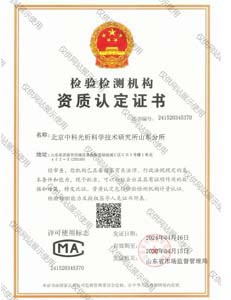
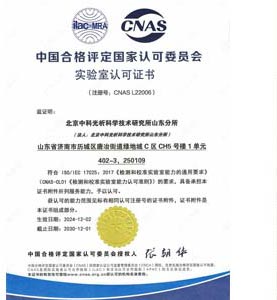
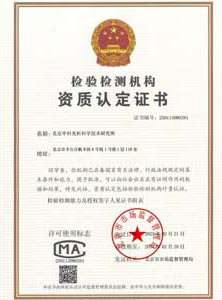
Commitment: Our testing process strictly follows international standards and specifications to ensure the accuracy and reliability of results. Our laboratory facilities are fully equipped with the latest instruments and leading analytical methods. We strictly control every step, from sample collection and processing to data analysis, to ensure clients receive trustworthy test results.


Pressure Relief Valve Hydraulic Burst Testing Service – Validating Overpressure Safety and Structural Integrity for Critical Systems
As an ISO/IEC 17025 accredited independent testing laboratory, we offer specialised hydraulic burst testing services for pressure relief valves (PRVs) used across Bulgarian and international oil and gas, petrochemical, power generation, pharmaceutical, and industrial process sectors. Pressure relief valves are critical safety devices that protect equipment and personnel from overpressure events. Hydraulic burst testing subjects the valve body, bonnet, and sealing components to a controlled internal pressure exceeding the maximum allowable working pressure (MAWP) to verify that the valve can withstand short‑term overpressure events without rupture or leakage. Our test protocols verify the structural integrity, burst pressure capacity, and leakage performance of the valve, ensuring compliance with design codes and safety standards. All methods are aligned with ASME Boiler and Pressure Vessel Code (BPVC) Section VIII, API 526 (Flanged Steel Pressure Relief Valves), API 527 (Seat Tightness of Pressure Relief Valves), ISO 4126‑1 (Safety devices for protection against excessive pressure – Part 1: Safety valves), EN 12266‑1 (Industrial valves – Testing of metallic valves), and BDS EN 12266 (Bulgarian implementation). Our inspection and test reports are recognised by IAМТН (Executive Agency for Metrological and Technical Surveillance), BDS (Bulgarian Institute for Standardisation), ANP (National Agency for Natural Resources), and international certification bodies for equipment registration, plant safety compliance, and quality assurance.
Pressure Relief Valve Types and Components We Test
Our hydraulic burst test facilities accommodate a wide range of pressure relief valve designs, sizes, and pressure ratings. Typical test articles include:
- Spring‑loaded safety valves – conventional, balanced, and pilot‑operated designs
- Pilot‑operated pressure relief valves (POPRVs) – for high‑pressure gas and liquid service
- Thermal relief valves – for liquid‑filled systems exposed to thermal expansion
- Diaphragm‑type pressure relief valves – for corrosive and high‑purity applications
- Rupture discs and bursting disc assemblies – with and without back‑up safety valves
- Valve sizes and pressure classes – from DN 15 to DN 600, and pressure classes 150 to 2500 (ANSI/ASME)
- Materials – carbon steel, stainless steel, duplex steel, nickel‑based alloys, and cast irons
- Refurbished and re‑qualified valves – for post‑repair or post‑service verification
Hydrostatic Shell Test – Pre‑Burst Integrity Verification
- Hydrostatic shell test – ASME BPVC Section VIII / API 527 / EN 12266‑1 – We conduct a preliminary hydrostatic shell test to verify the integrity of the valve body, bonnet, and end connections before the burst test. The valve is filled with water, all air is vented, and the pressure is gradually increased to 1.5× the design pressure (or MAWP) using a computer‑controlled hydraulic pump. The test pressure is maintained for a minimum of 5‑15 minutes (depending on the valve size and code requirement) while we monitor for leakage, pressure decay, and visual deformation. A pressure drop exceeding 2 % of the test pressure, or any visible leakage (weeping, dripping, or streaming), is recorded and evaluated.
- Leakage detection – visual inspection and pressure monitoring – During the shell test, we perform a comprehensive visual inspection of all joints – flanges, threaded connections, bonnet seal, and valve body welds. We also monitor the pressure decay using a high‑precision pressure transducer (accuracy ±0.1 % full scale) and record the pressure‑time profile. Any leakage is documented with photographs and measurements.
- Dimensional verification – pre‑test and post‑test measurements – We measure critical dimensions (face‑to‑face length, flange thickness, valve bore diameter, and bonnet height) before and after the shell test using calibrated callipers and micrometers. Any permanent deformation (e.g., bulging, ovality, or length change) exceeding the code‑allowable limit (typically ≤ 0.2 % of the dimension) is reported as a failure.
- Pressure‑time recording – for traceability and regulatory compliance – Our data acquisition system records the applied pressure versus time throughout the shell test, generating a detailed pressure profile. The chart is included in the final report as objective evidence of the valve's ability to hold pressure without deformation or seal failure.
Hydraulic Burst Test – Ultimate Pressure Capacity Determination
- Incremental pressure ramp to failure – ASME BPVC Section VIII / ISO 4126‑1 – After a successful shell test, we continue to increase the internal water pressure at a controlled rate (typically 1‑2 % of the expected burst pressure per second) until the valve either ruptures, develops a through‑wall leak, or reaches the maximum capacity of our test system (up to 500 MPa). The ultimate burst test determines the actual safety margin above the rated MAWP.
- Burst pressure and location documentation – We record the peak pressure achieved before failure (the burst pressure) and note the exact location and type of failure (e.g., body rupture, bonnet fracture, flange splitting, gasket extrusion, or seal extrusion). High‑speed video recording (frame rate 1 000 fps) is used to capture the failure event, enabling frame‑by‑frame analysis of fracture initiation and propagation.
- Minimum burst ratio calculation – ASME BPVC / ISO 4126 – We compute the burst ratio as: Burst Ratio = Burst Pressure / MAWP. For carbon steel valves, a burst ratio of ≥ 4.0 is typically required; for stainless steel and high‑alloy valves, a burst ratio of ≥ 3.0 is generally acceptable. Our report clearly states whether the valve meets or exceeds the required burst ratio, and we provide the actual measured value with its measurement uncertainty (±2 % of reading).
- Failure mode classification – We classify the failure as: (a) ductile rupture – yielding with visible necking; (b) brittle fracture – sudden fracture with minimal deformation; (c) gasket or seal extrusion – leakage through the seal; (d) flange separation – bolt failure or flange distortion; or (e) thread stripping – for threaded connections. For ductile failures, we measure the percentage of circumferential and axial elongation; for brittle failures, we examine the fracture surface using stereomicroscopy to identify any casting defects, inclusions, or weld flaws.
- Temperature‑conditioned burst testing – for elevated service temperatures – For valves intended for high‑temperature service (e.g., steam lines, hot oil systems), we perform burst testing with temperature‑conditioned test fluid (typically 100‑400 °C) using a heated pressure vessel. The test is performed according to the same procedure as the ambient‑temperature burst test, and the burst ratio at the elevated temperature is reported. A significant reduction in burst pressure (> 20 %) indicates that the material's creep strength or fracture toughness has degraded.
Post‑Burst Leakage and Seat Integrity Testing
- Pressure decay test after burst – API 527 / ISO 4126‑1 – In cases where the valve body does not rupture completely but develops a leak path, we perform a pressure‑decay leakage test to quantify the internal seat leakage. The valve is re‑pressurised to its rated pressure, and the pressure drop is measured over a 5‑minute period with the valve in the closed position (if closure is still possible). The leakage rate is expressed in bubbles per minute (for gas) or in mL/min (for liquid), and compared to the allowable limit specified by API 527 or the client's specification.
- Seat leakage measurement – API 527 / EN 12266‑2 – For valves that pass the shell and burst tests, we perform a seat leakage test using air or water at the specified test pressure. The leakage rate is measured using a calibrated flow meter, a bubble counter, or a graduated cylinder. The allowable leakage rate depends on the valve class, size, and the test medium; for metal‑seated valves, a leakage rate of ≤ 10 bubbles per minute is typically acceptable, while soft‑seated valves require ≤ 1 bubble per minute.
- Visual and microscopic inspection of the seat – After the burst test, we remove the bonnet and inspect the valve seat and the disc (or the plug) for any deformation, scratches, or erosion. The seat diameter and roundness are measured using a bore gauge, and any ovalisation or reduction in seat diameter greater than 0.1 mm is reported, as this would affect the sealing performance in service.
- Gasket and O‑ring inspection – For valves with soft‑seated seals, we inspect the gasket and O‑ring for any signs of extrusion, cold‑flow, or thermal degradation. Photographs are taken and the condition is rated as “intact”, “partially deformed”, or “failed”.
Dimensional and Material Verification
- Dimensional verification – ASME BPVC / API 526 – We measure the critical dimensions of the valve body and the internal components to ensure that they conform to the design specifications. The measurements include: wall thickness at critical sections, bore diameter, flange thickness, bolt circle diameter, and thread sizes. Any deviation from the specified dimensions is reported as a non‑conformity.
- Wall thickness measurement – ultrasonic testing – ASTM E797 / EN 12266 – We use a calibrated ultrasonic thickness gauge (accuracy ±0.01 mm) to measure the wall thickness of the valve body at multiple locations (typically 8‑12 points) to detect any thinning, corrosion, or casting defects. The minimum measured wall thickness is compared to the required minimum thickness for the pressure rating.
- Material verification – positive material identification (PMI) – ASTM E415 / ISO 14284 – Using portable X‑ray fluorescence (XRF) or optical emission spectrometry (OES), we verify that the valve material matches the specified grade (e.g., ASTM A216 WCB, A351 CF8M, A182 F316L). The chemical composition is compared to the material certificate and the grade requirements; any deviation beyond the specified tolerance is reported.
- Hardness testing – ASTM E18 / ISO 6508 – We measure the Rockwell hardness (HRB or HRC) of the valve body and the seat material (where accessible) to assess the material's mechanical properties. A hardness outside the specified range may indicate improper heat treatment or material substitution.
Test Standards and Specification Compliance – Supporting Regulatory and Contractual Requirements
Our hydraulic burst testing of pressure relief valves is performed in accordance with a wide range of national and international standards. The most commonly requested include:
- ASME BPVC Section VIII – Boiler and Pressure Vessel Code – the primary code for pressure vessel design and testing in North America and internationally
- API 526 – Flanged Steel Pressure Relief Valves – the standard for the dimensions and material requirements of flanged PRVs
- API 527 – Seat Tightness of Pressure Relief Valves – for leakage testing of PRV seats
- ISO 4126‑1 – Safety devices for protection against excessive pressure – Part 1: Safety valves – the international standard for safety valve design, testing, and compliance
- EN 12266‑1 / EN 12266‑2 – Industrial valves – Testing of metallic valves – for shell, seat, and burst testing of metallic valves
- BDS EN 12266 – Bulgarian implementation of the EN standard – for compliance with Bulgarian national requirements
- PED 2014/68/EU – Pressure Equipment Directive – for European market access and regulatory compliance
Report Acceptance and Regulatory Recognition
All pressure relief valve hydraulic burst tests are performed under our ISO/IEC 17025 accreditation and in accordance with the applicable codes and standards. Our final test reports include: a complete description of the valve (manufacturer, model, size, pressure class, material), a summary of the shell and burst test results (test pressure, hold time, burst pressure, burst ratio), a detailed description of any leakage, deformation, or failure, high‑speed video stills (where applicable), dimensional and material verification results, and a clear pass/fail verdict against the specified acceptance criteria or code requirement. These reports are accepted by IAМТН (Executive Agency for Metrological and Technical Surveillance), BDS (Bulgarian Institute for Standardisation), ANP (National Agency for Natural Resources), and international certification bodies for equipment registration, plant safety certification, and quality assurance. Bilingual (Bulgarian/English) versions are available to facilitate submissions to domestic and international regulatory authorities.
Note: Due to business adjustments, we do not accept individual client testing requests.
The above is an introduction about Pressure relief valve hydraulic burst testing service. For further questions, please consult our online engineer.
Laboratory Instruments


Partner Clients

Related Projects
 Hydrogen sulfide corrosion testing service
- Pressure relief valve hydraulic burst testing service
 Freezing experiment
 Ultimate impact torque testing service
 Corrosion resistance testing service
 20℃ impact energy testing service
 Pressure leak testing service
 AC dielectric testing service
 Vibration testing service
 Housing pressure testing service