
Ultimate impact torque testing service

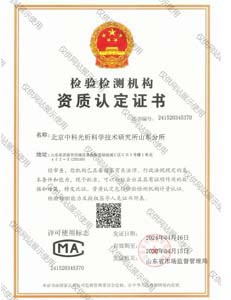
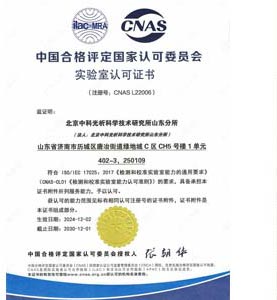
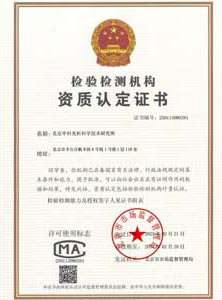
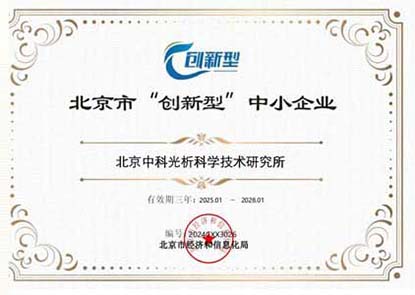
Commitment: Our testing process strictly follows international standards and specifications to ensure the accuracy and reliability of results. Our laboratory facilities are fully equipped with the latest instruments and leading analytical methods. We strictly control every step, from sample collection and processing to data analysis, to ensure clients receive trustworthy test results.


Ultimate Impact Torque Testing Service – Dynamic Overload Characterisation for Bolted Joints, Tools and Power Transmission Components
As an ISO/IEC 17025 accredited independent testing laboratory, we offer specialised ultimate impact torque testing services to manufacturers, engineering contractors, and maintenance providers across the automotive, aerospace, heavy machinery, oil and gas, and general industrial sectors. Ultimate impact torque – the maximum dynamic torque that a bolted joint, safety coupling, drive component, or torque tool can withstand before failure, slip, or permanent deformation – is a critical parameter for ensuring the reliability and safety of assemblies subjected to shock loads, impulse tightening, or sudden overload events. Unlike static torque testing, impact torque testing captures the instantaneous peak torque and the dynamic response of the joint or component under high‑strain‑rate loading, providing a realistic assessment of its performance under real‑world conditions. Our test protocols are executed in accordance with ISO 6513 (Impact torque testing of threaded fasteners), ISO 5393 (Rotary impact tools – Performance test), ASTM F606 (Standard test methods for determining the mechanical properties of externally and internally threaded fasteners), and GB/T 16823 (Torque‑clamp force testing of fasteners). Our inspection and test reports are recognised by the National Medical Products Administration (NMPA), the State Administration for Market Regulation (SAMR), the Ministry of Industry and Information Technology (MIIT), and international certification bodies for product registration, type approval, and quality assurance.
Test Articles and Component Types We Assess
Our impact torque test facilities accommodate a wide range of threaded fasteners, tools, safety devices, and drive components. Typical test articles include:
- Threaded fasteners – bolts, screws, studs, and nuts used in critical bolted joints
- Power and hand tools – impact wrenches, torque multipliers, pneumatic and electric nut runners
- Safety couplings and torque limiters – shear‑pin couplings, friction clutches, ball‑detent overload devices
- Rotary drive components – universal joints, drive shafts, splined shafts, and flexible couplings
- Pneumatic and hydraulic actuators – impact motors and torque‑controlled actuation systems
- Pipeline and valve actuators – gear operators for ball valves, butterfly valves, and gate valves
- Fastener assemblies – with specified lubrication, coatings, and tightening conditions
Test Equipment and Instrumentation – High‑Speed Torque and Data Acquisition
- Calibrated rotary torque transducers – capacity up to 5 000 N·m, accuracy ±0.2 % – We use high‑precision strain‑gauge‑based or piezoelectric torque transducers with a wide dynamic range to capture the instantaneous torque signal during impact loading. The transducers are calibrated using certified reference weights and lever arms, with calibration traceable to national standards (NIM, NIST).
- High‑speed data acquisition system – sampling rate up to 20 kHz per channel – To capture the millisecond‑duration impact torque pulse, we use a data acquisition system with a sampling rate of at least 10‑20 kHz, a 16‑bit resolution, and anti‑aliasing filters. The system records the torque‑time waveform, the peak torque, the rise time, and the impulse duration.
- Angular displacement measurement – optical encoder with 0.1° resolution – For assessing the rotation of the fastener or component during the impact, we mount a high‑resolution optical encoder (or a rotary potentiometer) on the test assembly. The encoder provides the angle‑torque data, which is essential for evaluating the degree of tightening or loosening, and for identifying any slip or permanent deformation.
- Impact generation systems – controlled impact drivers and pendulum impactors – We use a range of impact generation systems: (a) programmable impact drivers (pneumatic or electric) with controlled air pressure or voltage to deliver a defined impact energy; (b) pendulum impactors (falling‑mass or swinging‑arm) that provide a calibrated impact pulse; (c) hydraulic pulse generators for high‑energy impact testing.
- Force and displacement measurement – for complementary load and deflection data – For bolted joint testing, we also measure the axial load (using a load washer or strain‑gauged bolt) and the angular displacement to correlate the impact torque with the resulting clamp force and the joint rotation.
Test Procedures – Static, Dynamic and Endurance Impact Testing
- Static torque‑to‑failure test – for baseline reference – ASTM F606 / GB/T 16823 – Before performing dynamic impact tests, we measure the static ultimate torque (the torque required to strip the threads or fracture the fastener) by applying a steadily increasing torque (at 5‑10 °/min) using a torque wrench or a torque‑controlled driver. The static failure torque provides a reference for evaluating the impact torque capacity.
- Single‑impact torque test – for determining the peak impact torque – We apply a single, well‑defined impact pulse to the test assembly (or fastener) using a controlled impact driver (or a pendulum). The torque‑time waveform is recorded, and the peak impact torque is identified. The test is repeated on multiple specimens to determine the average peak impact torque and the standard deviation.
- Multiple‑impact test (impact fatigue) – for assessing the effect of repeated impacts – For components that experience multiple impact events (e.g., impact wrenches, safety couplings), we apply a series of impacts (e.g., 10, 50, 100, or 500 impacts) at a fixed input energy level. The torque‑time waveform is recorded for each impact, and we monitor the peak torque and the angle‑torque relationship to detect any degradation or stabilisation of the joint.
- Impact torque‑to‑failure test – for determining the ultimate impact torque – We apply a series of impacts with gradually increasing input energy (stepwise) until the fastener fails (stripping, fracture) or until the joint slips (for torque limiters). The peak torque recorded at the point of failure is defined as the ultimate impact torque. The failure mode (e.g., thread stripping, bolt fracture, coupling slip) is recorded.
- Reverse‑impact test – for evaluating loosening torque under impact – We apply impacts in the loosening direction (reverse) to a tightened fastener and measure the impact torque required to break the joint loose. This test is important for assessing the security of threaded fasteners in impact‑prone applications.
- Temperature‑conditioned impact testing – for simulating service temperatures – For components that operate at extreme temperatures, we condition the test assembly at the specified temperature (e.g., ‑40 °C, +100 °C, +150 °C) and then perform the impact torque test. The effect of temperature on the impact torque capacity is reported.
Data Analysis and Interpretation – Quantifying Impact Torque Performance
- Peak impact torque (Tpeak) – the maximum instantaneous torque during impact – We identify the peak value of the torque‑time waveform. The peak impact torque is compared to the static ultimate torque to assess the impact amplification factor (Tpeak / Tstatic). An amplification factor > 1.2 indicates a significant dynamic overload.
- Impact duration and impulse – the time integral of torque – We measure the total impact duration (from 10 % of peak to 10 % of peak on the decay side) and calculate the impulse (the time integral of torque). The impulse provides a measure of the total energy transferred to the joint during the impact.
- Rise time – the time to reach peak torque – The rise time (from 10 % to 90 % of peak torque) is a measure of the impact stiffness. A short rise time (< 2 ms) indicates a very high‑strain‑rate loading, which can cause brittle fracture in certain materials.
- Angle‑torque relationship – for assessing the degree of tightening or loosening – From the angular displacement data, we plot the torque‑angle curve during the impact. The curve reveals whether the fastener is being tightened (increasing angle) or loosened (decreasing angle) and whether any plastic deformation (permanent angle) occurs.
- Impact torque consistency – coefficient of variation (CV) of peak torque over multiple impacts – For repeated impact tests, we calculate the mean, standard deviation, and CV of the peak torque. A CV < 5 % indicates a very consistent impact performance; a CV > 10 % suggests that the tool or the joint is not stable.
- Failure mode analysis – identifying the cause of failure – After the test, we examine the failed components (bolts, threads, couplings) to determine the failure mode: (a) thread stripping (ductile or shear failure), (b) bolt fracture (ductile or brittle), (c) coupling slip (friction or shear pin), or (d) galling. The failure mode is correlated with the measured torque and the material properties.
Specialised Testing – For Safety Couplings, Torque Limiters and Impact Tools
- Dynamic slip torque of torque limiters – determining the release threshold under impact – For safety couplings and torque limiters, we apply an impact torque at increasing levels and measure the torque at which the coupling slips (disengages) or the clutch releases. The dynamic slip torque is compared to the static slip torque to assess the sensitivity of the device to dynamic loading.
- Impact wrench performance – torque‑time characterisation of power tools – We evaluate the performance of impact wrenches (pneumatic, electric, or battery‑powered) by measuring the peak impact torque, the number of impacts per minute, and the torque‑time profile for a series of impacts. The results are used to classify the tool and to ensure it meets the manufacturer’s specifications.
- Torque multiplier testing – verifying the amplification ratio under impact – For torque multipliers (gear‑type devices), we measure the output impact torque at the multiplier output and compare it to the input impact torque to verify the amplification ratio. We also assess the stiffness and backlash of the multiplier under impact loading.
- Lubrication and coating effects – evaluating the impact torque variation with different surface treatments – We test fasteners with different lubricants (oil, wax, dry‑film) and coatings (zinc plating, Dacromet, geomet) to determine the effect of friction on the impact torque capacity and the consistency. The results are reported as a friction‑adjusted impact torque.
Safety and Quality Assurance – Ensuring Reliable and Safe Testing
- Test fixture design – to simulate real‑world installation conditions – We design and fabricate custom fixtures that replicate the actual installation conditions (e.g., the clamped members, the joint stiffness, the fixture geometry). The fixture is designed to withstand the impact loading without deformation.
- Calibration and verification of instrumentation – traceable to national standards – The torque transducers, optical encoders, and data acquisition systems are calibrated and verified at regular intervals using certified reference standards (e.g., dead‑weight torque calibrators). The calibration records are maintained and included in the test reports.
- Test environment control – temperature and humidity monitoring – The test area is maintained at 20 ± 2 °C and 50 ± 10 % RH for standard tests. The test temperature is recorded and reported.
- In‑process quality control – monitoring of the test parameters and the instrument performance – We regularly check the system by performing a reference test with a standard reference tool or assembly before and after each test run to ensure the accuracy of the measurements.
Test Standards and Specification Compliance – Supporting Regulatory and Contractual Requirements
Our ultimate impact torque testing is performed in accordance with a wide range of national and international standards. The most commonly requested include:
- ISO 6513 – Impact torque testing of threaded fasteners – the international standard for assessing the impact torque performance of fasteners
- ISO 5393 – Rotary impact tools – Performance test – for characterising the performance of impact wrenches and tools
- ASTM F606 – Standard test methods for determining the mechanical properties of externally and internally threaded fasteners – for static and ultimate torque testing of fasteners
- GB/T 16823 – Torque‑clamp force testing of fasteners – the Chinese national standard for torque and clamp force testing of threaded fasteners
- VDI 2230 – Systematic calculation of high‑strength bolted joints – a key reference for the design of bolted joints under dynamic loading, often used for interpreting impact torque results
- DIN 5480 – Splined shafts and involute splines – for testing splined connections under impact torque
Report Acceptance and Regulatory Recognition
All ultimate impact torque testing is performed under our ISO/IEC 17025 accreditation and in accordance with the applicable national and international standards. Our final test reports include a complete description of the test article (material, size, lubrication, coating), the test method and conditions (input energy, number of impacts, temperature), the test equipment and instrumentation (with calibration records), the individual and average test results (peak impact torque, impact duration, rise time, angle‑torque data, failure mode), a statistical summary (mean, standard deviation, CV), and a clear pass/fail verdict against the specified acceptance criteria. These reports are accepted by NMPA, SAMR, MIIT, and international certification bodies for product registration, type approval, and quality assurance. Bilingual (Chinese/English) versions are available to facilitate submissions to domestic and international regulatory authorities.
Note: Due to business adjustments, we do not accept individual client testing requests.
The above is an introduction about Ultimate impact torque testing service. For further questions, please consult our online engineer.
Laboratory Instruments


Partner Clients

Related Projects
 Hydrogen sulfide corrosion testing service
 Pressure relief valve hydraulic burst testing service
 Freezing experiment
- Ultimate impact torque testing service
 Corrosion resistance testing service
 20℃ impact energy testing service
 Pressure leak testing service
 AC dielectric testing service
 Vibration testing service
 Housing pressure testing service