
Corrosion resistance testing service

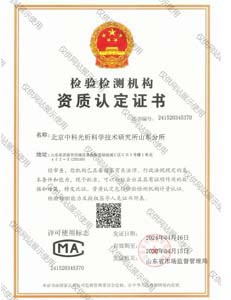
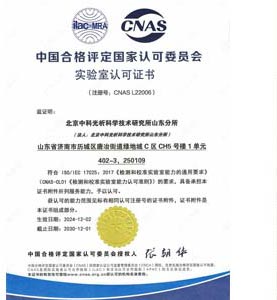
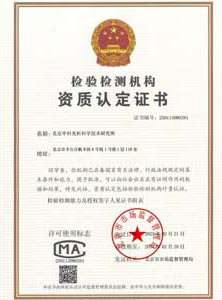

Commitment: Our testing process strictly follows international standards and specifications to ensure the accuracy and reliability of results. Our laboratory facilities are fully equipped with the latest instruments and leading analytical methods. We strictly control every step, from sample collection and processing to data analysis, to ensure clients receive trustworthy test results.


Corrosion Resistance Testing Service – Comprehensive Evaluation of Material Durability for Bulgarian Industrial, Marine and Infrastructure Applications
As an ISO/IEC 17025 accredited independent testing laboratory, we offer comprehensive corrosion resistance testing services to Bulgarian manufacturers, engineering contractors, and quality assurance teams across the oil and gas, petrochemical, marine, construction, automotive, and power generation sectors. Corrosion – the degradation of materials due to chemical or electrochemical reactions with the environment – is one of the leading causes of premature failure in metallic components, coatings, and protective systems. Our test protocols evaluate the resistance of materials to various corrosive environments, including salt spray, acidic solutions, alkaline media, humid atmospheres, and aggressive industrial gases. By simulating real‑world service conditions, we help you select the most suitable materials, validate protective coatings, and ensure compliance with regulatory standards. All methods are aligned with ISO, ASTM, and EN standards, as well as BDS (Bulgarian Institute for Standardisation) requirements, and are recognised by IAМТН (Executive Agency for Metrological and Technical Surveillance) and leading industrial and regulatory bodies in Bulgaria and the EU.
Materials and Components We Regularly Test
Our corrosion testing facilities accommodate a wide range of metallic materials, coatings, and protective systems. Typical test articles include:
- Carbon and low‑alloy steels – structural steels, pipeline steels, pressure vessel steels, and reinforcing bars
- Stainless steels – austenitic (304, 316), duplex (2205, 2507), ferritic, and martensitic grades
- Aluminium and its alloys – 5xxx, 6xxx, and 7xxx series for aerospace, marine, and construction
- Copper and copper‑based alloys – brass, bronze, and cupronickel for heat exchangers and marine fittings
- Nickel‑based and titanium alloys – for high‑performance and highly corrosive environments
- Protective coatings and surface treatments – paints, powder coatings, galvanising, anodising, and thermal spray coatings
- Welded joints and heat‑affected zones – to evaluate corrosion susceptibility in and around welds
- Fasteners, fittings, and small components – for testing under service‑simulated conditions
Salt Spray and Accelerated Atmospheric Corrosion Testing
- Neutral salt spray (NSS) – ISO 9227 / ASTM B117 / BDS EN ISO 9227 – We expose test specimens to a continuous 5 % sodium chloride (NaCl) fog at 35 °C for durations ranging from 24 hours to over 1 000 hours, depending on the specification. The test evaluates the corrosion resistance of coatings and metallic substrates under accelerated marine‑like conditions. After exposure, we assess the degree of rusting (per ASTM D610), blistering (per ASTM D714), and coating creepage from scribe marks (per ASTM D1654). For Bulgarian coastal infrastructure and marine equipment, a resistance of ≥ 480 hours without red rust is typically required for protective coatings.
- Acetic acid salt spray (AASS) – ISO 9227 / ASTM B117 – For testing electroplated coatings and decorative finishes, we use a salt spray solution acidified with acetic acid to pH 3.0‑3.2. This accelerated test provides more aggressive conditions than NSS and is used for evaluating copper‑nickel‑chromium (Cu‑Ni‑Cr) plating systems.
- Copper‑accelerated acetic acid salt spray (CASS) – ISO 9227 / ASTM B368 – For high‑performance decorative and functional coatings (e.g., automotive trim, aerospace components), we use the CASS test, which includes the addition of copper chloride to the acidified salt spray. This test is particularly effective for evaluating plated coatings on zinc‑based die‑castings and on aluminium substrates.
- Cyclic corrosion testing (CCT) – ASTM G85 / ISO 11997 / BDS EN ISO 11997 – We simulate real‑world atmospheric corrosion by cycling between salt spray, dry conditions, and humidity (e.g., 4 hours salt spray, 8 hours dry, 4 hours humidity, 8 hours dry). This test is more realistic than continuous salt spray and is widely used in the automotive industry (e.g., to meet GM, Ford, and European OEM specifications). The number of cycles and the exposure parameters are tailored to the client's field environment.
Immersion and Solution‑Based Corrosion Testing
- Full immersion corrosion test – ASTM G31 / ISO 11114 / BDS EN ISO 11114 – We immerse metallic specimens in a corrosive solution (e.g., synthetic seawater, 3.5 % NaCl, 10 % H₂SO₄, 5 % NaOH, or organic acids) for a specified period (typically 24 hours to 90 days) at controlled temperatures (ambient to 90 °C). The corrosion rate (in mm/year or mpy) is calculated from the weight loss of the specimen after cleaning. For Bulgarian chemical processing equipment, a corrosion rate of < 0.1 mm/year is typically required for long‑term service.
- Intergranular corrosion test – ASTM A262 (Practice E) / ISO 3651‑2 / BDS EN ISO 3651 – For austenitic stainless steels, we assess susceptibility to intergranular corrosion (sensitisation) using the copper‑copper sulfate‑sulfuric acid test (Practice E). The specimen is boiled in the test solution for 72 hours, then bent (or examined metallographically) to detect intergranular cracking. Any cracking indicates that the material has been sensitised and is unsuitable for service in corrosive environments – a critical test for Bulgarian chemical plants and heat exchangers.
- Pitting and crevice corrosion test – ASTM G48 (Method A) / ISO 17474 / BDS EN ISO 17474 – We evaluate the resistance of stainless steels and nickel‑based alloys to pitting and crevice corrosion using a 6 % ferric chloride solution at 22 °C, 40 °C, or 50 °C (depending on the alloy). The test duration is typically 72 hours, and the presence of pitting is assessed by weight loss and visual inspection. The critical pitting temperature (CPT) and critical crevice temperature (CCT) are determined for duplex and super‑austenitic grades, which are increasingly used in Bulgarian offshore and marine applications.
- Stress‑corrosion cracking (SCC) susceptibility – ASTM G36 / NACE TM0177 / ISO 7539 – For materials exposed to chloride environments under tensile stress, we perform SCC testing using U‑bend, C‑ring, or four‑point bent beam specimens. The specimens are immersed in a boiling 45 % magnesium chloride solution (ASTM G36) or in a 3.5 % NaCl solution with a cathodic potential (NACE TM0177), and the time to cracking is recorded. For Bulgarian oil‑field equipment, an SCC resistance of ≥ 720 hours is typically required.
- Galvanic corrosion test – ASTM G71 / ISO 17475 – For assemblies of dissimilar metals, we measure the galvanic current and potential between the two materials when coupled in a corrosive electrolyte. The test determines which material acts as the anode (and is preferentially corroded) and the magnitude of the galvanic corrosion rate. This information is used to design cathodic protection systems and to select appropriate insulating materials.
Electrochemical Corrosion Testing – Polarisation and Impedance Methods
- Potentiodynamic polarisation – ASTM G5 / ISO 17475 / BDS EN ISO 17475 – We perform potentiodynamic scans on metallic specimens in a three‑electrode cell (working, reference, and counter electrode) to determine the corrosion potential (Ecorr), the pitting potential (Epit), the passivation range, and the corrosion current density (icorr). The technique is used to evaluate the susceptibility of stainless steels to pitting, to optimise the composition of alloys, and to assess the quality of protective coatings.
- Electrochemical impedance spectroscopy (EIS) – ASTM G106 / ISO 16773 – EIS is used to characterise the electrochemical behaviour of coated and uncoated systems over a range of frequencies (typically 10⁵ to 10⁻² Hz). The impedance spectrum provides information on the coating resistance (pore resistance), the double‑layer capacitance, and the charge‑transfer resistance. For Bulgarian anti‑corrosion coatings, a pore resistance of > 10⁶ Ω·cm² is generally required to ensure long‑term protection.
- Cyclic polarisation (reverse scan) – ASTM G61 / ASTM G5 – We use cyclic polarisation to assess the pitting resistance of alloys by scanning the potential in the positive direction until pitting initiates, and then reversing the scan to observe the repassivation potential. The hysteresis between the forward and reverse scans indicates the susceptibility to pitting; a small hysteresis suggests good repassivation ability.
- Linear polarisation resistance (LPR) – ASTM G59 / ASTM G102 – For rapid corrosion rate determination, we measure the polarisation resistance (Rp) near the corrosion potential. The corrosion current (icorr) is calculated from the Stern‑Geary equation (icorr = B/Rp). This technique is used for routine corrosion monitoring and for quality control of protective coatings.
Corrosion Testing in Gaseous and Vapour Environments
- Humidity and condensation test – ASTM D2247 / ISO 6270‑1 / BDS EN ISO 6270 – We expose coated and uncoated specimens to a continuous condensation environment (100 % RH) at 38 °C or 40 °C for periods up to 1 000 hours. The test evaluates the resistance of protective coatings to blistering and adhesion loss in humid environments – a critical parameter for Bulgarian building materials and automotive components.
- SO₂ (sulfur dioxide) corrosion test – ISO 3231 / ASTM G87 / BDS EN ISO 3231 – We test the resistance of coatings and materials to sulfur dioxide‑rich atmospheres (10‑100 ppm SO₂) at 95‑100 % RH and 35‑40 °C. This is particularly relevant for Bulgarian industrial areas, mining operations, and power plants where SO₂ levels are elevated.
- Mixed flowing gas (MFG) test – IEC 60068‑2‑60 / ASTM B827 – For electronic and electrical components, we evaluate the corrosion resistance to mixed gas atmospheres containing H₂S, SO₂, NO₂, and Cl₂ at controlled concentrations and humidity levels. This test simulates the aggressive environments found in Bulgarian industrial and urban areas, and is essential for the qualification of electronic connectors and relays.
- Ammonia and hydrogen sulfide (H₂S) testing – NACE TM0284 / ISO 15156 – For sour service applications (oil and gas), we test the resistance of materials to sulphide stress cracking (SSC) and hydrogen‑induced cracking (HIC) using a solution saturated with H₂S and CO₂. The specimens are inspected for cracks after the test; for Bulgarian oil‑field equipment, an HIC resistance of ≥ 96 hours without cracking is typically required.
Evaluation and Assessment – Quantifying Corrosion Damage
- Corrosion rate calculation – from weight loss – ASTM G1 / ISO 8407 – After exposure, the specimens are cleaned of corrosion products (using chemical or electrolytic cleaning methods) and weighed. The corrosion rate is calculated using the formula: CR (mm/year) = (Weight Loss (g) × K) / (Density (g/cm³) × Area (cm²) × Time (hours)), where K = 8.76 × 10⁴. The rate is expressed in mm/year or mils per year (mpy).
- Pitting depth measurement – ASTM G46 / ISO 8407 – For pitting corrosion, we measure the depth of the deepest pits using a profilometer, a depth gauge, or by optical microscopy. The pitting factor (ratio of the deepest pit to the average corrosion penetration) is calculated.
- Visual assessment and rating – ASTM D610 / D714 / D1654 – for coated and uncoated systems – We rate the degree of rusting (ASTM D610, 0‑10 scale), blistering (ASTM D714, 0‑4 scale with size rating), and creepage from scribe marks (ASTM D1654, 0‑10 scale) on coated specimens. These ratings provide a quantitative measure of the coating's protective performance.
- Metallographic and microscopic examination – ASTM E3 / ISO 4496 – for failure analysis – We prepare cross‑sections of the corroded specimens and examine them under an optical microscope or SEM to characterise the corrosion morphology, to measure the depth of intergranular attack, and to identify the corrosion products (by EDS or XRD).
Report Acceptance and Regulatory Compliance
All corrosion resistance tests are conducted under our ISO/IEC 17025 accreditation, using calibrated environmental chambers, electrochemical workstations, and analytical instruments, all traceable to BDS and international reference standards. Our comprehensive test reports include: a full description of the test material and its preparation, the exposure conditions, the raw data (weight loss, corrosion rate, pitting depth, coating ratings), photographic and microscopic evidence of the corrosion damage, and a clear pass/fail verdict against your specified acceptance criteria or reference standard (e.g., ISO 9227, ASTM B117, NACE TM0177). We also provide an expanded uncertainty (k=2) for key measurements. These reports are widely accepted by BDS (Bulgarian Institute for Standardisation), IAМТН (Executive Agency for Metrological and Technical Surveillance), Bulgarian industrial, marine, and infrastructure operators, and regulatory authorities for material qualification, product certification, and quality assurance. Bilingual (Bulgarian/English) versions are available to facilitate submissions to national and EU regulatory bodies.
Note: Due to business adjustments, we do not accept individual client testing requests.
The above is an introduction about Corrosion resistance testing service. For further questions, please consult our online engineer.
Laboratory Instruments


Partner Clients

Related Projects
 Hydrogen sulfide corrosion testing service
 Pressure relief valve hydraulic burst testing service
 Freezing experiment
 Ultimate impact torque testing service
- Corrosion resistance testing service
 20℃ impact energy testing service
 Pressure leak testing service
 AC dielectric testing service
 Vibration testing service
 Housing pressure testing service