
ELISA kit testing service

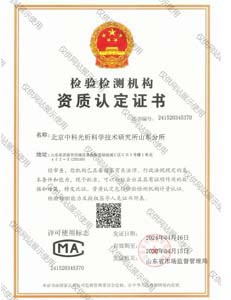
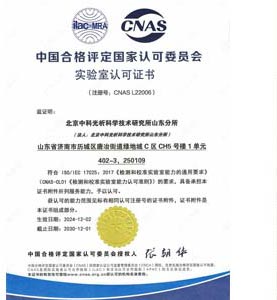
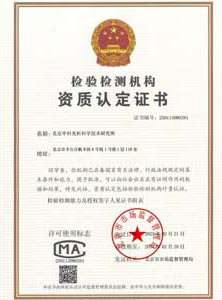

Commitment: Our testing process strictly follows international standards and specifications to ensure the accuracy and reliability of results. Our laboratory facilities are fully equipped with the latest instruments and leading analytical methods. We strictly control every step, from sample collection and processing to data analysis, to ensure clients receive trustworthy test results.


ELISA Kit Testing Service – Comprehensive Performance Verification, Quality Control and Batch Release for Immunoassay Manufacturers and Users
As an ISO/IEC 17025 accredited contract testing laboratory, we offer comprehensive ELISA (enzyme‑linked immunosorbent assay) kit testing and validation services to diagnostic manufacturers, pharmaceutical companies, contract research organisations, and clinical laboratories. ELISA kits are widely used for the detection and quantification of analytes – including cytokines, hormones, antibodies, antigens, and biomarkers – in research, clinical diagnostics, and quality control. However, the reliability and accuracy of ELISA results depend critically on the kit’s performance characteristics: sensitivity, specificity, precision, linearity, and stability. Our testing platform evaluates all key performance parameters according to international guidelines, ensuring that your ELISA kits meet the required specifications for research use, clinical diagnostics, or regulatory submission. All methods are aligned with CLSI (Clinical and Laboratory Standards Institute) guidelines, ICH Q2(R1), USP <1034>, FDA Guidance for Industry, and ISO 15189 (Medical laboratories – Requirements for quality and competence). Our reports are recognised by the National Medical Products Administration (NMPA), the U.S. Food and Drug Administration (FDA), the European Medicines Agency (EMA), and other international regulatory bodies for product registration, batch release, and quality assurance.
ELISA Kit Types and Formats We Test
Our immunoassay laboratory handles a wide variety of ELISA kit formats, target analytes, and sample matrices. Typical test articles include:
- Sandwich ELISA kits – for cytokines, growth factors, hormones, and large proteins
- Competitive ELISA kits – for small molecules, haptens, drugs, and hormones
- Indirect ELISA kits – for antibody detection (e.g., autoimmune antibodies, infectious disease antibodies)
- Quantitative and qualitative ELISA kits – for analyte concentration measurement or presence/absence determination
- Multiplex ELISA and array‑based immunoassays – for simultaneous detection of multiple analytes
- ELISA kits for various sample types – serum, plasma, tissue culture supernatant, urine, saliva, and cell lysates
- Research‑use only (RUO) and in‑vitro diagnostic (IVD) kits – for product development, validation, and lot release
- Custom and reference ELISA kits – for specialised analytes or rare biomarkers
Analytical Performance Parameters – Core Verification and Validation
We evaluate the key performance characteristics of your ELISA kit according to the relevant guidelines (CLSI EP17‑A, EP05‑A3, EP06‑A, and EP07‑A). The core parameters include:
- Standard curve performance – range, linearity, and goodness‑of‑fit – We prepare a full dilution series of the kit’s calibrators (typically 6‑8 concentration points) and fit the data to a 4‑parameter logistic (4‑PL) or 5‑parameter logistic (5‑PL) model. We report the working range (the concentration interval with acceptable accuracy, typically ± 15‑20 %), the lower limit of quantification (LLOQ), the upper limit of quantification (ULOQ), and the coefficient of determination (R²). A minimum R² of 0.98 is required for most quantitative ELISA kits.
- Sensitivity – limit of detection (LOD) and limit of quantification (LOQ) – CLSI EP17‑A – We determine the LOD (the lowest analyte concentration that can be distinguished from zero) by measuring the blank (zero calibrator) in 20 replicates and calculating the mean plus 2‑3 standard deviations. The LOQ (the lowest concentration that can be measured with acceptable precision, typically < 20 % CV) is determined from the precision profile. A low LOD (e.g., < 1 pg/mL for cytokines) is essential for high‑sensitivity applications.
- Precision – repeatability (intra‑assay) and intermediate precision (inter‑assay) – CLSI EP05‑A3 – We test the kit using multiple replicates (n ≥ 20) of at least 3 quality control (QC) samples (low, medium, and high concentrations) in a single run (intra‑assay) and across multiple runs (inter‑assay, ≥ 5 runs). The coefficient of variation (CV) is calculated for each QC level. A CV of ≤ 10 % for intra‑assay and ≤ 15 % for inter‑assay is considered acceptable for most ELISA applications.
- Accuracy – recovery and spike‑and‑recovery tests – CLSI EP07‑A – We perform recovery experiments by spiking known amounts of the analyte (typically 2‑3 concentrations) into a native sample matrix and measuring the percentage recovery. The acceptable recovery range is typically 80‑120 %. We also perform dilution linearity tests to ensure that the analyte concentration is proportional to the dilution factor; a linearity deviation of ≤ 15 % is acceptable.
- Specificity – cross‑reactivity and interference testing – CLSI EP07‑A – We test the cross‑reactivity of the kit antibodies with structurally related analytes (e.g., other cytokines, hormones, or drug metabolites). The cross‑reactivity is expressed as a percentage (the signal from a cross‑reactant divided by the signal from the target analyte at the same concentration). Acceptable cross‑reactivity is typically < 1‑5 %. We also test for interference from common endogenous substances (e.g., bilirubin, haemoglobin, lipids, and rheumatoid factor) by spiking them into the sample and assessing the recovery of the analyte.
- Calibration traceability – comparison to reference standards – ISO 15189 / ICH Q6B – We verify that the kit calibrators are traceable to an international or in‑house reference standard (e.g., WHO International Standard for cytokines). We perform a calibration verification test by comparing the kit’s results with a well‑characterised reference method.
Sample‑Specific Testing – Matrix Validation and Interference
ELISA kits are often used with diverse sample types, each with its own matrix effects. We offer matrix validation testing to ensure that the kit performs consistently across different sample matrices.
- Matrix interference – endogenous and exogenous factors – We test the effect of the sample matrix by comparing the standard curve prepared in the kit diluent with a standard curve prepared in the actual sample matrix (e.g., human serum, plasma, or urine). The matrix effect is expressed as the percentage recovery of the spike; a recovery of 80‑120 % indicates that the matrix does not interfere.
- Haemolysis, lipaemia, and icterus interference – for clinical samples – We prepare pooled samples with different levels of haemoglobin (haemolysed), triglycerides (lipaemic), and bilirubin (icteric) and measure the analyte concentration at each level. The interference is expressed as the percentage deviation from the baseline; a deviation of ≤ 20 % is considered acceptable.
- Carryover and cross‑contamination – automated ELISA platforms – For automated ELISA systems, we assess the carryover between high‑concentration and low‑concentration samples by placing low‑concentration samples immediately after high‑concentration samples and measuring the analyte concentration. The carryover is expressed as a percentage of the high‑concentration level; acceptable carryover is < 0.1 %.
Stability and Shelf‑Life – Long‑Term Performance Monitoring
- Accelerated stability testing – ICH Q1A / USP <1034> – We store the kit components (coated plates, calibrators, controls, conjugates, and substrates) at elevated temperatures (2‑8 °C, 25 °C, and 37 °C) for 1, 3, 6, and 12 months. At each time point, we perform a full performance evaluation (standard curve, precision, and recovery) to assess the stability of the kit. The shelf‑life is estimated using the Arrhenius equation; a shelf‑life of ≥ 12 months (at 2‑8 °C) is typical for commercial ELISA kits.
- Freeze‑thaw stability – for calibrators and controls – We subject the calibrators and controls to multiple freeze‑thaw cycles (e.g., 1, 3, and 5 cycles) and measure the analyte concentration after each cycle. A change of ≤ 10 % from the baseline is considered acceptable.
- In‑use stability – stability after opening the kit – We simulate the typical use of the kit (opening the plate, reconstituting the calibrators) and store the opened kit components under the recommended conditions (e.g., 2‑8 °C) for up to 30 days. The performance is re‑evaluated at intervals; a stability of ≥ 7 days after opening is typically required for clinical use.
- Shipping and transport stability – simulated thermal and mechanical stress – We perform shipping simulation studies (vibration, temperature cycling, and altitude changes) and measure the kit performance after the simulated shipment. A retention of ≥ 80 % of the initial performance is required for the kit to be transportable without degradation.
Batch‑to‑Batch Consistency – Lot Release Testing
For ELISA kit manufacturers, we provide lot‑release testing services to ensure that each production batch meets the performance specification.
- Acceptance criteria – based on the product specification – We test each batch against a set of pre‑defined acceptance criteria: (a) standard curve parameters – slope, intercept, and R²; (b) LOD and LOQ; (c) precision at three QC levels (low, medium, high); and (d) recovery of the spiked QC samples. The batch is released only if all criteria are met.
- Method transfer and bridging – for production scale‑up – We perform a method transfer study to demonstrate that the kit performs equivalently between the R&D batch and the production batch. The equivalence is verified by comparing the standard curves, precision, and recovery; a difference of ≤ 15 % is considered acceptable.
- Consistency monitoring – control chart analysis – We provide a control chart that tracks the key performance parameters (e.g., the OD of the top calibrator, the slope of the standard curve, and the CV of the QC samples) over multiple batches to detect any drift or trends.
Regulatory Compliance and Documentation – Supporting Submissions
All ELISA kit testing is performed under our ISO/IEC 17025 accreditation and in compliance with Good Laboratory Practice (GLP) principles and the relevant regulatory requirements.
- CLSI guidelines – EP05‑A3, EP06‑A, EP07‑A, EP17‑A – we follow the CLSI guidelines for precision, linearity, interference, and detection limit studies, ensuring that the validation data meets the requirements of clinical and regulatory laboratories.
- ICH Q2(R1) – validation of analytical procedures – we design and execute validation studies in accordance with ICH Q2(R1), covering accuracy, precision, specificity, linearity, range, and robustness.
- ISO 15189 – medical laboratories – requirements for quality and competence – for clinical diagnostic kits, we perform the validation according to ISO 15189 requirements, ensuring that the kit is suitable for clinical decision‑making.
- FDA 21 CFR Part 11 – electronic records and signatures – we maintain electronic records and audit trails for all test data, ensuring compliance with FDA requirements for electronic submissions.
Report Acceptance and Regulatory Recognition
All ELISA kit tests are performed under our ISO/IEC 17025 accreditation and, where applicable, in compliance with Good Laboratory Practice (GLP) principles. Our final validation reports provide a complete description of the kit, the test methods, the raw data (standard curves, precision profiles, recovery percentages), statistical summaries (mean, SD, CV, 95 % confidence intervals), and a clear conclusion on whether the kit meets the specified performance criteria. These reports are accepted by the National Medical Products Administration (NMPA), the U.S. Food and Drug Administration (FDA), the European Medicines Agency (EMA), and other international regulatory authorities for product registration, batch release, and quality assurance. Bilingual (Chinese/English) versions are available to facilitate submissions to national and international regulatory bodies.
Note: Due to business adjustments, we do not accept individual client testing requests.
The above is an introduction about ELISA kit testing service. For further questions, please consult our online engineer.
Laboratory Instruments


Partner Clients

Related Projects
 Hydrogen sulfide corrosion testing service
 Pressure relief valve hydraulic burst testing service
 Freezing experiment
 Ultimate impact torque testing service
 Corrosion resistance testing service
 20℃ impact energy testing service
 Pressure leak testing service
 AC dielectric testing service
 Vibration testing service
 Housing pressure testing service