
Oil-based source identification service

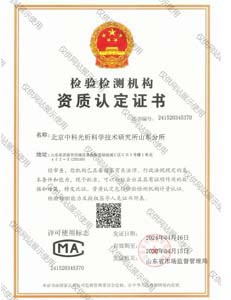
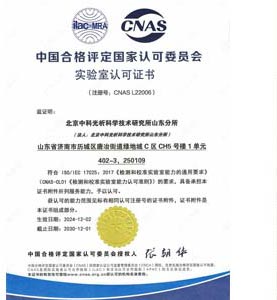
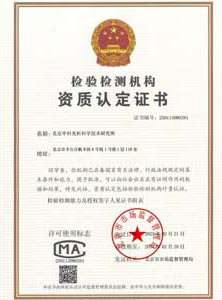

Commitment: Our testing process strictly follows international standards and specifications to ensure the accuracy and reliability of results. Our laboratory facilities are fully equipped with the latest instruments and leading analytical methods. We strictly control every step, from sample collection and processing to data analysis, to ensure clients receive trustworthy test results.


Oil Source Identification Service – Comprehensive Fingerprinting and Traceability for Petroleum, Lubricants and Edible Oils
As an ISO/IEC 17025 accredited independent testing laboratory, we offer specialised oil source identification services to clients across the petroleum, chemical, environmental, energy, and food sectors. Whether you are investigating the origin of a crude oil spill, resolving a fuel adulteration dispute, verifying the authenticity of a lubricant supply, or tracing the geographic origin of an edible oil, our analytical platform provides definitive, legally defensible answers. Using a multi‑parameter chemical fingerprinting approach – combining gas chromatography (GC), gas chromatography‑mass spectrometry (GC‑MS), isotope ratio mass spectrometry (IRMS), and inductively coupled plasma mass spectrometry (ICP‑MS) – we construct a unique “chemical passport” for each oil sample, enabling accurate differentiation between sources, detection of mixing or degradation, and identification of contamination events. All methods are aligned with ASTM, ISO, EN, and GB standards, and our reports are accepted by national and international regulatory authorities, environmental courts, insurance companies, and supply chain auditors for compliance, litigation, and quality assurance.
Oil Types and Sample Matrices We Analyse
Our laboratory handles a wide range of liquid hydrocarbon samples, covering the entire value chain from exploration to end‑use. Typical test articles include:
- Crude oils and condensates – light, medium, heavy, and extra‑heavy crude oils from diverse geographic regions
- Fuel oils and middle distillates – marine fuels (bunker), automotive diesel, aviation kerosene (Jet A‑1), gasoline, and biofuel blends
- Lubricants and base oils – engine oils, hydraulic fluids, transformer oils, gear oils, and industrial white oils
- Edible oils and vegetable fats – olive oil, soybean oil, palm oil, sunflower oil, rapeseed oil, and blended cooking oils
- Environmental samples – contaminated soil, sediment, water, and wipe samples from spill sites
- Unknown and forensic samples – for origin determination, authenticity verification, or criminal investigation
- Intermediate refinery streams – distillate fractions, blending components, and additive packages
Chemical Fingerprinting – Multi‑Dimensional Analytical Approach
We employ a suite of complementary analytical techniques to capture the full chemical complexity of each oil sample. The core methods include:
- Gas chromatography with flame ionisation detection (GC‑FID) – for hydrocarbon profiling – ASTM D6730 / EN 12916 – We analyse the complete hydrocarbon distribution, from n‑alkanes and isoprenoids (pristane and phytane) to polycyclic aromatic hydrocarbons (PAHs) and biomarkers. The chromatographic profile serves as the primary fingerprint, revealing the source rock type, thermal maturity, and degree of weathering or biodegradation.
- Comprehensive two‑dimensional gas chromatography (GC×GC) – enhanced resolution for complex mixtures – For highly complex oils (e.g., heavy crude, lubricants), we use GC×GC to resolve co‑eluting compounds and to detect trace‑level markers that are not visible in conventional one‑dimensional chromatography. This provides a high‑definition fingerprint with superior discrimination power.
- Gas chromatography‑mass spectrometry (GC‑MS) – biomarker and compound‑specific analysis – ASTM D5739 / ISO 18263 – We perform targeted and non‑targeted GC‑MS analysis to identify and quantify key biomarker compounds – including terpanes, steranes, hopanes, and aromatic steroids – which are diagnostic of source rock depositional environment (marine, lacustrine, terrestrial) and thermal maturity. The biomarker ratios (e.g., Pr/Ph, C27/C29 steranes, Ts/Tm) are used to calculate similarity indices and to differentiate oils from distinct families.
- Stable isotope ratio mass spectrometry (IRMS) – for δ¹³C and δ²H of individual compounds – ASTM D7219 / ISO 12960 – We determine the carbon and hydrogen isotopic composition (δ¹³C and δD) of selected compounds (e.g., n‑alkanes, isoprenoids, and aromatic hydrocarbons). The isotopic fingerprint reflects the source material (marine vs. terrestrial) and the thermal history, providing an independent dimension of discrimination that is largely unaffected by evaporation or biodegradation.
- Inductively coupled plasma mass spectrometry (ICP‑MS) – trace element and metal profiling – ASTM D7111 / ISO 17294 – We quantify a suite of trace metals (including nickel, vanadium, cobalt, molybdenum, lead, and cadmium) that are characteristic of specific crude oil families or refinery processes. The metal pattern (e.g., Ni/V ratio) is particularly useful for distinguishing oils that have similar hydrocarbon profiles.
- Sulphur and nitrogen chemiluminescence detection – for heteroatom profiling – ASTM D5453 / D5762 – We measure the total sulphur and nitrogen content, as well as the distribution of sulphur compounds (thiophenes, benzothiophenes, dibenzothiophenes), which are sensitive to source type and to the extent of biodegradation.
Data Interpretation – Statistical and Multivariate Analysis
Raw chemical data is transformed into actionable intelligence through advanced statistical and chemometric methods. Our data interpretation pipeline includes:
- Principal component analysis (PCA) – for dimensionality reduction and outlier detection – We project the multi‑dimensional chemical data into a lower‑dimensional space to visualise the relationships between samples, to identify groupings (clusters) corresponding to different sources, and to detect outliers (e.g., contaminated or mis‑identified samples).
- Hierarchical cluster analysis (HCA) – for grouping by similarity – We perform hierarchical clustering to group samples based on their chemical similarity, providing a dendrogram that illustrates the relative relatedness of the oils. This is used to confirm or refute alleged common sources in contamination cases.
- Linear discriminant analysis (LDA) – for source classification – When a reference database of known sources is available, we use LDA to build a classification model that assigns unknown samples to the most likely source with a quantifiable probability. The model’s accuracy is validated by cross‑validation.
- Similarity and distance metrics – for pair‑wise comparisons – We calculate the Euclidean distance, correlation coefficient, and the Tanimoto similarity index between the unknown sample and each reference oil, providing a straightforward measure of how closely the samples match. A similarity index ≥ 0.90 is generally considered a strong match; values between 0.75 and 0.90 indicate a close but not identical relationship.
- Weathering correction algorithms – for environmental and spill samples – For oils that have been exposed to the environment (evaporation, water‑washing, biodegradation), we apply correction models to account for the loss of light hydrocarbons and the relative enrichment of resistant compounds. This ensures that the source comparison is not compromised by weathering effects.
Application‑Specific Source Identification – Customised Solutions
Our service is tailored to the specific needs of your case. Typical applications include:
- Crude oil fingerprinting – upstream exploration and production – We characterise and compare crude oils from different exploration wells to identify sweet spots, to correlate production zones, and to detect commingling during production or transportation.
- Fuel adulteration detection – for quality assurance and forensic analysis – We identify the presence of illegal additives, the mixing of different fuel types (e.g., diesel with heating oil), or the contamination of premium products with lower‑grade components. The fingerprint is compared to the declared product specification and to reference fuels from the same supply chain.
- Lubricant and transformer oil source tracing – for equipment failure and warranty investigations – We verify the identity and origin of lubricants used in critical machinery, detect cross‑contamination from other oils, and trace the oil back to its production batch or manufacturer. This is vital for warranty claims and for root‑cause analysis of equipment failures.
- Edible oil geographic origin and adulteration – for food authenticity and safety – Using combined fatty acid profiles, sterol composition, trace elements, and stable isotopes, we determine the geographic origin (e.g., extra virgin olive oil from specific regions) and detect the presence of cheaper oils (e.g., soybean or sunflower) in high‑value products. The results support compliance with Protected Designation of Origin (PDO) and other food labelling regulations.
- Oil spill source identification – for environmental forensics and liability determination – In the event of an oil spill, we compare the spilled oil (from soil, water, or sediment) with suspected source oils (from vessels, pipelines, or storage tanks) using both the hydrocarbon profile and the biomarker ratios. The statistical similarity and the presence of unique markers provide the evidence needed to establish the source and to support legal or insurance proceedings.
- Supply chain verification – for due diligence and regulatory compliance – We provide independent verification that the oil product received matches the supplier’s certificate of analysis, and we detect any batch‑to‑batch inconsistencies that may indicate mixing, diversion, or substitution. This service is used by importers, refiners, and regulatory authorities to enforce product specifications and to prevent fraud.
Quality Control, Reference Database and Proficiency Testing
To ensure the accuracy, reliability, and legal defensibility of our source identification results, we implement rigorous quality control measures.
- Comprehensive reference database – over 1 000 oil samples – We maintain an in‑house reference database of crude oils, refined products, and edible oils from major producing regions and suppliers. The database includes full GC profiles, biomarker ratios, isotopic values, and metal contents, and is regularly updated with new sources.
- Positive and negative controls – in each analytical batch – For each run, we include a known reference oil (positive control) and a blank (solvent or clean matrix) to verify the instrument performance and to monitor for contamination.
- Inter‑laboratory proficiency testing – for method validation – We participate in international proficiency testing schemes (e.g., ASTM, NIST, and CONCAWE) to verify the accuracy of our fingerprinting methods and to benchmark our performance against other leading laboratories.
- Data traceability and archiving – for audit readiness – All raw data, processed chromatograms, and statistical files are stored in a secure, version‑controlled database with a complete audit trail, ensuring that our results can be independently verified and are admissible in court.
Reporting and Legal Defensibility – Clear, Evidence‑Based Documentation
Our final source identification report provides a comprehensive and transparent presentation of the analytical evidence. The report includes:
- Sample and source information – a complete description of the unknown sample, the suspected source(s), and the reference database used for comparison
- Analytical methods and instrumentation – a detailed summary of the GC, GC‑MS, IRMS, and ICP‑MS conditions, with calibration and validation data
- Chromatographic and spectral evidence – full‑scale chromatograms and mass spectra, overlaid with reference patterns for direct visual comparison
- Statistical analysis and similarity metrics – PCA score plots, dendrograms, similarity indices, and the probability of a common source (based on the classification model)
- Interpretation and conclusion – a clear statement on whether the unknown sample matches any of the suspected sources, the degree of confidence, and any caveats (e.g., weathering, degradation, or mixing)
- Statement of compliance and legal disclaimer – a declaration that the analysis was performed in accordance with ISO/IEC 17025 and applicable GLP principles, and that the report is suitable for submission to regulatory authorities, courts, or insurance companies
All oil source identification services are performed under our ISO/IEC 17025 accreditation and in compliance with Good Laboratory Practice (GLP) principles. Our reports are accepted by national environmental protection agencies, customs and trade authorities, and international courts for environmental liability, product fraud, and supply chain compliance. Bilingual (Chinese/English) versions are available to facilitate submissions to national and international regulatory bodies.
Note: Due to business adjustments, we do not accept individual client testing requests.
The above is an introduction about Oil-based source identification service. For further questions, please consult our online engineer.
Laboratory Instruments


Partner Clients

Related Projects
 Hydrogen sulfide corrosion testing service
 Pressure relief valve hydraulic burst testing service
 Freezing experiment
 Ultimate impact torque testing service
 Corrosion resistance testing service
 20℃ impact energy testing service
 Pressure leak testing service
 AC dielectric testing service
 Vibration testing service
 Housing pressure testing service