
Electron paramagnetic resonance testing service

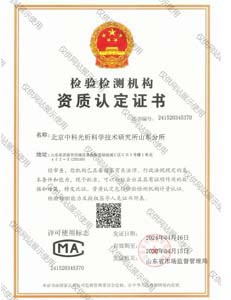
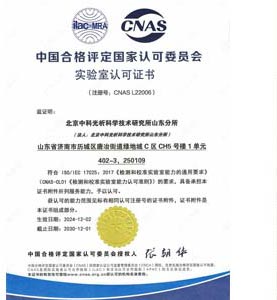
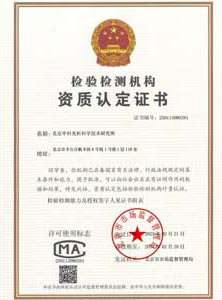
Commitment: Our testing process strictly follows international standards and specifications to ensure the accuracy and reliability of results. Our laboratory facilities are fully equipped with the latest instruments and leading analytical methods. We strictly control every step, from sample collection and processing to data analysis, to ensure clients receive trustworthy test results.


Electron Paramagnetic Resonance (EPR) Testing Service – Advanced Free Radical Detection, Material Characterisation and Dosimetry for Bulgarian Research and Industry
As an ISO/IEC 17025 accredited contract research laboratory, we offer specialised Electron Paramagnetic Resonance (EPR) testing services to Bulgarian and international clients in pharmaceutical, polymer, food, environmental, and radiation science sectors. EPR (also called Electron Spin Resonance – ESR) is a powerful spectroscopic technique that selectively detects unpaired electrons in paramagnetic species – such as free radicals, transition metal ions, and radiation‑induced defects. Our EPR platform provides quantitative and qualitative information on radical concentration, stability, reaction kinetics, and molecular environment, supporting applications from drug stability testing to dosimetry for radiation therapy. All methods are aligned with ASTM E170 (Terminology relating to radiation measurements and dosimetry), ISO 13437 (Radiation processing – Dosimetry for validation), and BDS (Bulgarian Institute for Standardisation) guidelines. Our reports are recognised by the Bulgarian Food Safety Agency (BFSA), the Executive Agency for Metrological and Technical Surveillance (IAМТН), and leading research institutes and regulatory bodies in Bulgaria and the EU.
Sample Types and Materials We Analyse
Our EPR laboratory accommodates a wide range of sample types and physical forms. Typical test articles include:
- Solid materials – polymers, powders, films, fibres, and crystalline solids
- Liquid samples – aqueous solutions, biological fluids (blood, urine), oils, and suspensions
- Gaseous samples – gas‑phase radicals and reactive species (e.g., using flow‑through cells)
- Biological tissues – plant and animal tissues, food products (spices, cereals, dried fruits)
- Radiation‑sensitive materials – irradiated foodstuffs, medical devices, and dosimetric materials (alanine, lithium formate)
- Catalysts and nanomaterials – supported metal catalysts, semiconductor particles, and carbon‑based materials
- Pharmaceutical formulations – active ingredients, excipients, and finished dosage forms (tablets, creams)
- Environmental samples – soil, sediment, aerosols, and water for detection of persistent free radicals
Radical Quantification – Concentration and Stability Assessment
- Quantitative free radical concentration measurement – ASTM E170 / ISO 13437 – We use a calibrated EPR spectrometer with a standard reference (e.g., 2,2‑diphenyl‑1‑picrylhydrazyl – DPPH, or a strong pitch standard) to determine the absolute concentration of unpaired electrons (spins/g or spins/mL) in the sample. The double integration of the first‑derivative EPR spectrum is compared to the reference standard, and the spin concentration is calculated using the comparative method. For Bulgarian pharmaceutical stability studies, a radical concentration below the detection limit (typically < 10¹² spins/g) is often required to demonstrate the absence of degradation‑related radical species.
- Radical decay kinetics – monitoring stability over time – We track the decrease in radical concentration over time (minutes to weeks) to determine the half‑life (t₁/₂) and the decay order (first‑order or second‑order). This is essential for predicting the shelf life of free‑radical‑sensitive materials (e.g., irradiated polymers, oxidized oils) and for evaluating the antioxidant capacity of food and pharmaceutical ingredients.
- Spin trapping – detection of short‑lived radicals – For highly reactive or transient radicals (e.g., hydroxyl radicals, superoxide), we use spin‑trapping agents (e.g., DMPO, PBN, TEMPO) to stabilise the radical as a longer‑lived spin adduct. The adduct's EPR spectrum is then recorded to identify the radical species and quantify its generation rate. This is used in Bulgarian oxidative stress research and in the testing of antioxidant efficacy.
- Spin counting – absolute quantification of stable radicals – For samples containing stable radicals (e.g., TEMPO, nitroxides, some carbonaceous materials), we perform a direct concentration measurement against a calibration curve prepared from known concentrations of a stable radical reference.
Material Characterisation – Structural and Electronic Properties
- g‑factor determination – identification of paramagnetic species – We measure the resonance position (g‑value) with high precision, using a field calibration standard (e.g., Mn²⁺/MgO or DPPH). The g‑value provides information on the electronic structure and the nature of the paramagnetic centre – for example, a g‑value of ~2.003 for organic free radicals, ~2.05 for transition metal ions (Cu²⁺, Fe³⁺), and ~2.00 for radiation‑induced defects in solids. The g‑factor, together with the hyperfine splitting pattern, allows for the identification of the radical species and the determination of its local environment.
- Hyperfine coupling constants – determination of molecular environment – We analyse the EPR spectrum to extract the hyperfine coupling constants (A‑values) between the unpaired electron and the surrounding nuclei (e.g., ¹H, ¹⁴N, ³¹P). The number of lines and their spacing provide information about the distribution of the unpaired electron over the molecular framework and can be used to assign radical identity and conformation.
- Linewidth and relaxation times – molecular dynamics information – We measure the peak‑to‑peak linewidth (ΔHpp) and the spin‑spin (T₂) and spin‑lattice (T₁) relaxation times using continuous‑wave (CW) and pulsed EPR techniques (e.g., inversion recovery, Hahn echo). These parameters reveal information about the mobility of the radical species, the viscosity of the environment, and the exchange interactions between spins.
- Angular dependence – single‑crystal analysis – For oriented samples (single crystals or aligned polymers), we record the EPR spectrum as a function of the angle between the magnetic field and the crystal axes. This allows the determination of the anisotropic g‑tensor and hyperfine tensor, providing detailed structural information about the paramagnetic centre.
Radiation Dosimetry – Dose Verification and Quality Assurance
- Alanine dosimetry – ISO 13437 / ASTM E170 – We use alanine/EPR as a transfer‑standard dosimeter for the calibration of radiation processing facilities and for the verification of absorbed dose in radiation therapy and industrial irradiation. The alanine pellets or films are irradiated to a known dose, and the EPR signal (amplitude or integrated intensity) is measured. The dose is determined from a calibration curve (dose vs. EPR signal) established using standard reference materials (e.g., NIST‑traceable alanine dosimeters).
- Lithium formate dosimetry – for low‑dose applications – For doses in the range of 0.1‑100 Gy (e.g., for medical radiation therapy), we use lithium formate as a sensitive EPR dosimeter. The signal intensity (at g ≈ 2.003) is proportional to the absorbed dose, with a sensitivity approximately 2‑3 times higher than alanine.
- Detection of irradiated foods – EN 1786 / EN 1787 / EN 1788 – We perform EPR screening of irradiated food products (e.g., spices, herbs, dried fruits, shellfish, meat containing bone) to detect the presence of radiation‑induced radicals (e.g., cellulose radicals in plant materials, hydroxyapatite radicals in bone). The method is used for the enforcement of European food irradiation regulations and for product authentication in the Bulgarian food market.
- Post‑irradiation stability – dose retention over time – For dosimetric materials used in long‑term applications (e.g., environmental monitoring, spacecraft dosimetry), we measure the fading of the EPR signal over time (months to years) to estimate the dose stability and the effective lifetime of the dosimeter.
Kinetic Studies – Reaction Monitoring and Radical Generation
- Time‑resolved EPR – monitoring fast radical reactions – Using a continuous‑flow or stopped‑flow EPR setup, we monitor the generation and decay of radicals on a millisecond to second timescale. This is used for the study of radical reaction mechanisms, the evaluation of antioxidant activity (scavenging of DPPH or ABTS radicals), and the characterisation of polymerisation initiation.
- Temperature‑dependent EPR – determination of activation energy – We record EPR spectra over a temperature range (‑150 °C to +150 °C) using a variable‑temperature accessory. The change in linewidth, intensity, and relaxation times with temperature is analysed to extract activation energies for radical motion or for the decay of paramagnetic species.
- Photochemical generation – in‑situ UV‑EPR – For photo‑sensitive materials, we perform in‑situ photolysis (UV or visible light) directly in the EPR cavity to generate and detect short‑lived radical intermediates. The time‑course of radical formation and decay is recorded to identify the primary and secondary photoproducts.
- Electrochemical EPR (EC‑EPR) – detection of electrogenerated radicals – We combine electrochemistry with EPR (using a specially designed flow‑cell electrode) to detect and characterise radicals generated by redox reactions on an electrode surface, which is useful for studying battery materials, electrocatalysts, and electro‑organic synthesis.
Environmental and Biological Applications – Detection of Persistent Free Radicals
- Detection of environmentally persistent free radicals (EPFRs) – We identify and quantify EPFRs in particulate matter (PM2.5, PM10), soil, and combustion residues (e.g., fly ash, biochar). The concentration of EPFRs (in spins/g or spins/m³) is correlated with the oxidative potential and the toxicity of the material, which is important for Bulgarian environmental health assessments.
- Detection of oxidative stress biomarkers – in biological fluids – We use spin trapping (e.g., with DMPO) to detect the presence of reactive oxygen species (ROS) – such as hydroxyl radicals, superoxide, and lipid peroxyl radicals – in human or animal blood, urine, and tissue extracts. The concentration and identity of the spin adducts provide a direct measure of oxidative stress, which is used in Bulgarian biomedical and clinical research.
- Analysis of melanin and other biological pigments – We use EPR to characterise paramagnetic centres in melanins, humic acids, and other biological pigments, which can provide information on their structural properties and their role in disease.
- Quality control of antioxidants – DPPH radical scavenging assay – We measure the decrease in the DPPH radical concentration (monitored by the intensity of its characteristic EPR signal at g ≈ 2.003) upon addition of the test antioxidant compound. The percent radical scavenging activity is calculated, and the IC₅₀ (concentration required to scavenge 50 % of the radical) is determined from a dose‑response curve.
Quality Control, Reference Standards and Data Analysis
To ensure the reliability and reproducibility of our EPR measurements, we implement rigorous quality control measures and use state‑of‑the‑art data analysis methods.
- Instrument calibration – the magnetic field is calibrated using a standard reference (e.g., a strong pitch sample or a DPPH standard), and the modulation amplitude, microwave power, and frequency are verified against certified reference materials.
- Reference standards – we maintain a library of certified EPR standards (including DPPH, TEMPO, pitch, and Mn²⁺/MgO) for daily performance verification and for quantitative spin counting. The standards are traceable to national metrology institutes (NIST, PTB).
- Signal processing – baseline correction and spectral simulation – we use advanced EPR simulation software (e.g., EasySpin, WINEPR) to deconvolute complex spectra, remove baseline drift, and extract accurate g‑values and hyperfine coupling constants. The simulation of the experimental spectra provides a best‑fit model that verifies the assignment of the paramagnetic species.
- Uncertainty estimation – measurement repeatability and reproducibility – we perform repeated measurements (n ≥ 5) on the same sample under identical conditions to estimate the measurement uncertainty (expanded uncertainty, k=2). The uncertainty budget includes contributions from sample preparation, instrument drift, and spectral fitting.
Report Acceptance & Compliance with Bulgarian and European Metrological Standards
All EPR tests are performed under our ISO/IEC 17025 accreditation and, where relevant, in accordance with Good Laboratory Practice (GLP) and ISO 13437 guidelines for dosimetry. Our final test reports provide a complete description of the sample and its preparation, the EPR measurement conditions, the raw and processed spectra, the calculated parameters (radical concentration, g‑value, linewidth, hyperfine constants, IC₅₀, dose), statistical analysis (mean, standard deviation, confidence intervals), and a clear conclusion regarding the radical content, stability, or dosimetric value of the sample. The reports are accepted by the Bulgarian Food Safety Agency (BFSA), the Executive Agency for Metrological and Technical Surveillance (IAМТН), the National Centre for Infectious and Parasitic Diseases (NCIPD), and by Bulgarian and international research institutes and industrial partners for product development, regulatory submissions, and quality assurance. Bilingual (Bulgarian/English) versions are available to facilitate international collaboration and submission to European and Bulgarian authorities.
Note: Due to business adjustments, we do not accept individual client testing requests.
The above is an introduction about Electron paramagnetic resonance testing service. For further questions, please consult our online engineer.
Laboratory Instruments


Partner Clients

Related Projects
 Hydrogen sulfide corrosion testing service
 Pressure relief valve hydraulic burst testing service
 Freezing experiment
 Ultimate impact torque testing service
 Corrosion resistance testing service
 20℃ impact energy testing service
 Pressure leak testing service
 AC dielectric testing service
 Vibration testing service
 Housing pressure testing service