
Dead and live insect egg identification service

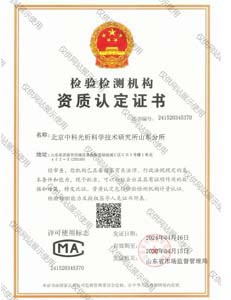
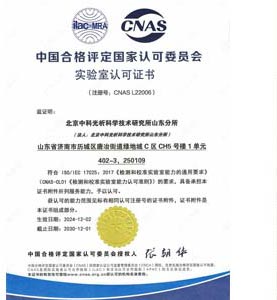
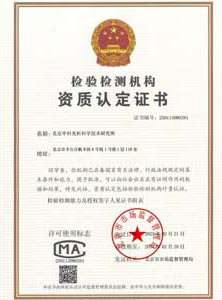

Commitment: Our testing process strictly follows international standards and specifications to ensure the accuracy and reliability of results. Our laboratory facilities are fully equipped with the latest instruments and leading analytical methods. We strictly control every step, from sample collection and processing to data analysis, to ensure clients receive trustworthy test results.


Dead and Live Insect Egg Identification Service – Comprehensive Viability Assessment for Pest Management, Quarantine and Biocontrol Quality Assurance
As an ISO/IEC 17025 accredited contract testing laboratory, we offer specialised dead and live insect egg identification and viability assessment services to agricultural producers, pest control operators, quarantine authorities, biocontrol product manufacturers, and research institutions. Accurately distinguishing between dead and viable insect eggs is critical for multiple applications: evaluating the efficacy of ovicidal treatments in pest management, verifying the quality of biological control agents (such as parasitoids and predators), ensuring compliance with phytosanitary regulations for imported and exported commodities, and monitoring pest population dynamics. Our multi‑method approach combines visual and stereomicroscopic morphological examination, vital dye staining, and molecular viability markers (such as RNA integrity and metabolic activity) to provide a definitive and quantitative assessment of egg viability. All methods are aligned with ISPM 27 (Diagnostic protocols for regulated pests), EPPO (European and Mediterranean Plant Protection Organization) standards, FAO guidelines for quarantine pest detection, and ISO 17025 requirements. Our reports are recognised by national plant protection organisations (NPPOs), customs authorities, and international biocontrol quality assurance schemes.
Insect Egg Samples and Sources We Analyse
Our entomology and molecular biology laboratories handle a wide variety of insect egg samples from diverse sources and host substrates. Typical test articles include:
- Agricultural and forestry pests – eggs of Lepidoptera (Helicoverpa armigera, Spodoptera frugiperda, Lymantria dispar), Hemiptera (Halyomorpha halys, Nezara viridula), Coleoptera (Diabrotica virgifera), and Diptera (Bactrocera dorsalis, Ceratitis capitata)
- Stored product pests – eggs of Plodia interpunctella, Ephestia kuehniella, Sitophilus granarius, Tribolium castaneum, and other beetles and moths infesting grains, flour, and dried goods
- Urban and public health pests – eggs of mosquitoes (Aedes, Anopheles, Culex), cockroaches (Blattella germanica), bed bugs (Cimex lectularius), and house flies (Musca domestica)
- Biocontrol agents and natural enemies – eggs of parasitoids (Trichogramma spp., Telenomus spp.), predatory mites, and other beneficial insects used in integrated pest management (IPM) programmes
- Quarantine and intercepted samples – eggs found on imported fresh produce, cut flowers, timber, and packaging materials during phytosanitary inspections
- Research and laboratory samples – eggs from controlled rearing experiments, insecticide bioassays, and environmental stress studies
- Environmental samples – eggs collected from soil, leaf litter, water, and other natural substrates for ecological monitoring
Morphological and Microscopic Examination – Determining Visual Viability
- Stereomicroscopic examination of external morphology – EPPO PM 7/129 / FAO diagnostic protocols – We examine insect eggs under high‑magnification stereomicroscopes (up to 200×) to assess key morphological indicators of viability: (a) egg shape and turgidity – viable eggs are typically plump, fully turgid, and show a uniform shape, while dead or desiccated eggs may appear shrunken, collapsed, or deformed; (b) colour – viable eggs often have a characteristic colour (e.g., cream, yellow, or pale green); dead eggs may show darkening, pigmentation changes, or the development of brown/black spots; (c) surface texture – the presence of cracks, fissures, or loss of the chorion's (outer shell) structural integrity are indicators of death; (d) eye spots (for later‑stage embryos) – the presence of distinct, dark eye spots (in Lepidoptera or Diptera eggs) indicates a viable, developing embryo; the absence or fading of eye spots suggests death or failed development.
- Internal morphological examination – clearing and mounting (for detailed diagnosis) – For eggs that are difficult to assess externally, we prepare cleared specimens using lactic acid or Hoyer's medium. The clearing agent renders the chorion transparent, allowing us to visualise the internal embryonic structures: (a) embryo formation – the presence of a well‑defined, segmented embryo with visible appendages (head, thorax, abdomen) indicates viability; (b) yolk distribution – viable eggs show a distinct, organised yolk mass; dead eggs often show degraded, disorganised yolk; (c) gas bubble formation – the presence of internal gas bubbles (under the chorion) is often associated with death and decomposition.
- Phase‑contrast and differential interference contrast (DIC) microscopy – For ultra‑small eggs (< 100 µm) or eggs with thick chorions, we use phase‑contrast or DIC microscopy to enhance the contrast of internal structures without clearing. The movement of internal organelles and cytoplasmic streaming is a positive indicator of viability; the absence of such movement suggests death.
- Fluorescence microscopy – FCR (Fluorescein Diacetate) staining for esterase activity – We incubate eggs in a solution of FCR (0.01‑0.05 % in phosphate‑buffered saline) for 10‑30 minutes. Viable eggs with active esterase enzymes will hydrolyse the non‑fluorescent FCR to produce green‑fluorescing fluorescein (excitation 488 nm, emission 515‑530 nm). The fluorescence intensity (quantified by image analysis) is proportional to metabolic activity and is used to determine the percentage of viable eggs in a sample. A fluorescence intensity of ≥ 50 % of the positive control is considered viable.
Vital Dye Staining – Rapid Viability Assessment
- Trypan blue exclusion test – for cell membrane integrity (in early‑stage embryos) – We incubate eggs in a 0.4 % solution of trypan blue in phosphate‑buffered saline (PBS) for 5‑15 minutes, then rinse them in PBS and examine them under a light microscope. Viable eggs with an intact cell membrane exclude the dye and appear clear (or with minimal blue staining of the chorion only); dead eggs, with a compromised membrane, will absorb the dye and appear blue throughout the embryo. This test is suitable for eggs at the early developmental stage (before the formation of a cuticle). The percentage of dead eggs is calculated from the number of blue‑stained eggs.
- Neutral red uptake – for lysosomal activity – We incubate eggs in a 0.01‑0.05 % neutral red solution in PBS for 15‑30 minutes. Viable eggs accumulate neutral red in their lysosomes, appearing red‑orange (or orange‑pink) under the microscope. Dead eggs, with non‑functional lysosomes, do not accumulate the dye and remain unstained. This method is particularly effective for late‑stage embryos and for distinguishing between recent and old death (old dead eggs will not stain).
- Hoechst 33342 – for nuclear integrity (DNA staining) – We incubate eggs with Hoechst 33342 (2‑5 µg/mL in PBS) for 5‑30 minutes and then examine them under a fluorescence microscope (excitation 350 nm, emission 460 nm). Viable eggs show uniform, distinct nuclear staining (indicating intact chromatin); dead eggs may show fragmented, aggregated, or absent nuclear staining (indicating DNA degradation). This method can be used to quantify the percentage of viable eggs by counting the number of intact nuclei per egg.
- FDA (fluorescein diacetate) – for esterase activity and membrane integrity (combined method) – We incubate eggs in a solution containing both FCR and propidium iodide (PI) for 10‑20 minutes. Viable eggs show green fluorescence (from FCR) and do not take up PI (red fluorescence); dead eggs show only red fluorescence (PI staining of the nucleus) or no fluorescence at all. The ratio of green‑only to red‑only eggs provides a reliable estimate of viability.
Molecular Viability Markers – RNA Integrity and Gene Expression Profiling
For cases where morphological and dye‑based methods are inconclusive (e.g., eggs with a thick, impermeable chorion, or eggs that have been chemically treated), we use molecular markers to assess viability at the biochemical level.
- RNA integrity and stability – total RNA extraction and gel electrophoresis – ISO 21570 / AOAC 2016.05 – We extract total RNA from a sample of eggs using a column‑based or TRIzol‑based method and assess the integrity by agarose gel electrophoresis (or by microfluidic electrophoresis, e.g., Bioanalyzer). Viable eggs contain intact 18S and 28S ribosomal RNA bands (with a clear 28S:18S ratio of 2:1); dead eggs show degraded RNA (smearing and loss of distinct ribosomal bands). The RNA Integrity Number (RIN) is calculated; a RIN ≥ 7 indicates good RNA integrity and, by inference, viable embryos; a RIN < 5 indicates extensive degradation and non‑viability.
- Quantitative reverse‑transcription PCR (RT‑qPCR) – for housekeeping gene expression – We measure the expression of a selected housekeeping gene (e.g., β‑actin, elongation factor 1α, or ribosomal protein S5) in the egg samples. The Ct (threshold cycle) value is determined; a Ct value comparable to that of a known viable control (or with a Ct difference < 2 cycles) indicates metabolic activity and viability; a Ct value > 5 cycles higher than the control (or undetectable) indicates non‑viability. The relative expression (2⁻ΔΔCt) is also calculated and compared to a standard curve.
- RT‑qPCR for stress‑response genes – detection of recent death – For samples where the time of death is important (e.g., in quality control of biocontrol products), we measure the expression of stress‑response genes (e.g., heat shock proteins – HSP70, apoptosis‑related genes – caspase, or autophagy genes) as markers of cell death. An elevated expression (> 2‑fold increase) of these genes compared to the viable control indicates recent or ongoing cell death.
- Quantitative PCR (qPCR) for mitochondrial DNA (mtDNA) integrity – We extract DNA from the eggs and quantify the copy number of a mitochondrial gene (e.g., cytochrome oxidase I – COI) by qPCR. The ratio of mtDNA copy number to nuclear DNA (nDNA) copy number is calculated; viable eggs show a stable mtDNA:nDNA ratio (typically > 100:1), while dead eggs show a reduced ratio (due to mitochondrial degradation). A ratio of < 50:1 (or a significant decrease from the control) is considered a marker of non‑viability.
- Metabolic activity markers – ATP quantification by bioluminescence – We use a luciferase‑based ATP assay to measure the ATP content of a known number of eggs. The relative light units (RLU) are compared to a standard curve (ATP standards) and to a viable control group. A significant reduction in ATP content (> 70 %) indicates that the eggs are dead or metabolically inactive.
Incubation and Hatching Experiments – Definitive Viability Assessment
For the most definitive and regulatory‑grade viability assessment, we perform controlled incubation and hatching experiments, particularly when the identity of the species is known and the incubation conditions are well‑defined.
- Standardised incubation conditions – species‑specific temperature, humidity, and photoperiod – We incubate a representative sub‑sample of eggs under optimal species‑specific conditions for hatching: temperature (typically 22‑30 °C), relative humidity (60‑80 %), and light conditions (e.g., 12:12 L:D photoperiod). The eggs are monitored daily for signs of hatching (e.g., the emergence of the first instar larva or nymph).
- Hatching rate determination – percentage and timing – We record the number of eggs that hatch (and the total number of eggs incubated) and calculate the hatching percentage, the median hatch time (the time to 50 % hatching), and the hatching window (the duration from the first to the last hatch). For quality control of biocontrol products, a hatching rate of ≥ 90 % is typically required for parasitoid or predator eggs.
- Time‑lapse video recording and image analysis – for early detection of hatching events – For small and rapid hatching events (e.g., in parasitoids), we use time‑lapse photography (1 frame per minute or per 2 minutes) to capture the exact moment of hatching and to identify any abnormal emergence patterns (e.g., unsuccessful emergence, failure to fully eclose).
- Correction for diapause and delayed hatching – For species known to have diapause (a period of developmental arrest), we implement a diapause termination protocol (e.g., chilling or photoperiod manipulation) before incubation. The hatching rate is assessed after the diapause termination period to ensure that the viability assessment is accurate.
Data Analysis and Interpretation – Quantitative Viability Assessment
We provide a comprehensive statistical analysis and a clear, quantitative conclusion on the viability of your sample. The core outputs include:
- Percentage viability – based on the most reliable method(s) – We calculate the percentage of viable eggs in the sample from the results of the microscopic, dye‑based, and/or molecular tests. The viability percentage is expressed as the mean ± standard deviation of replicate assays.
- Viability scoring system – based on the ISO 17025 quality framework – We use a 0‑4 scoring system to classify the sample: (0) no viable eggs detected – considered “dead”; (1) 1‑25 % viable – “low viability”; (2) 26‑50 % viable – “moderate viability”; (3) 51‑75 % viable – “good viability”; and (4) 76‑100 % viable – “excellent viability”. This scoring system is aligned with the quality requirements for biocontrol products and for quarantine purposes.
- Confidence interval and uncertainty – for regulatory reporting – We provide 95 % confidence intervals for the percentage viability (calculated from the binomial distribution) and the measurement uncertainty (based on the assay repeatability and the sampling error). This is particularly important for regulatory submissions (e.g., phytosanitary certificates).
- Correlation of results – if multiple tests were performed – When multiple methods are used (e.g., morphology, dye staining, and molecular markers), we correlate the results to provide a consensus assessment and to identify any inconsistencies or method‑specific artifacts.
Quality Control, Reference Material and Proficiency Testing
To ensure the accuracy and reliability of our dead/live egg identification, we implement rigorous internal quality controls and maintain a well‑characterised reference collection.
- Reference egg collections – for each target species – We maintain a collection of identified, viable eggs (from known, healthy laboratory colonies) and dead eggs (exposed to a validated killing method, e.g., heat treatment or freezing) for each major species we test. These reference samples are used as positive and negative controls in each test run.
- Internal validation of staining protocols – for each species and egg age – We validate the staining protocols (trypan blue, neutral red, FDA, etc.) for each species and for different egg ages (early, mid, and late development) to ensure that the staining pattern is interpretable and consistent. The validation data is documented in our standard operating procedures (SOPs).
- Inter‑laboratory comparison and proficiency testing – We participate in proficiency testing schemes (e.g., organised by the EPPO or by national plant protection organisations) for insect egg viability assessment to verify the accuracy and reproducibility of our results.
- Blind testing and observer training – We perform regular blind tests, where samples of known viability are submitted to our team, and the identification results are compared with the known values. The performance of each observer is monitored, and training is provided as needed.
Report Acceptance and Regulatory Compliance
All dead and live insect egg identification tests are performed under our ISO/IEC 17025 accreditation and in compliance with ISPM 27, EPPO PM 7, and Good Laboratory Practice (GLP) principles, where applicable. Our final reports provide a complete description of the sample, the methods used (morphology, staining, molecular markers, and/or incubation), the raw data (micrographs, images of staining, fluorescence images, qPCR results, hatching data), the statistical analysis, the viability percentage and classification, and a clear conclusion on the viability status of the eggs. These reports are accepted by national plant protection organisations (NPPOs), customs authorities, biocontrol quality assurance schemes, and agricultural research and regulatory bodies for pest management, quarantine decisions, and product quality certification. Bilingual (Chinese/English) versions are available to facilitate international trade, regulatory submissions, and scientific collaboration.
Note: Due to business adjustments, we do not accept individual client testing requests.
The above is an introduction about Dead and live insect egg identification service. For further questions, please consult our online engineer.
Laboratory Instruments


Partner Clients

Related Projects
 Hydrogen sulfide corrosion testing service
 Pressure relief valve hydraulic burst testing service
 Freezing experiment
 Ultimate impact torque testing service
 Corrosion resistance testing service
 20℃ impact energy testing service
 Pressure leak testing service
 AC dielectric testing service
 Vibration testing service
 Housing pressure testing service