
Cleanliness experiment of carbon dioxide incubator

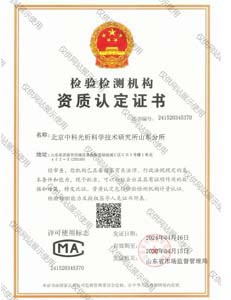
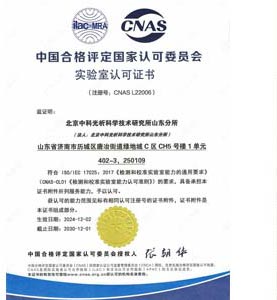
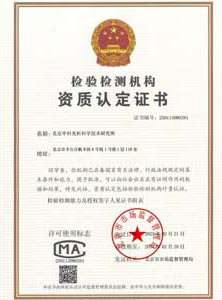
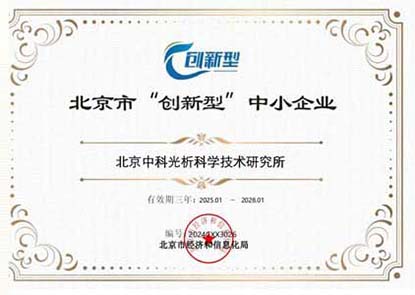
Commitment: Our testing process strictly follows international standards and specifications to ensure the accuracy and reliability of results. Our laboratory facilities are fully equipped with the latest instruments and leading analytical methods. We strictly control every step, from sample collection and processing to data analysis, to ensure clients receive trustworthy test results.


CO₂ Incubator Cleanliness Validation Service – Comprehensive Assessment of Microbial, Particulate and Chemical Contamination for Cell Culture and Pharmaceutical Applications
As an ISO/IEC 17025 accredited contract testing laboratory, we offer specialised cleanliness validation services for carbon dioxide (CO₂) incubators used in pharmaceutical manufacturing, biotechnology, clinical laboratories, and academic research institutions. CO₂ incubators are critical equipment for maintaining optimal cell culture conditions – regulating temperature, humidity, and CO₂ concentration. However, they are also susceptible to contamination by bacteria, fungi, mycoplasma, endotoxins, volatile organic compounds (VOCs), and airborne particulates, which can compromise experimental reproducibility, product quality, and patient safety. Our cleanliness assessment protocols combine microbiological sampling (settle plates, contact plates, and air sampling), particulate counting, VOC monitoring, and endotoxin detection to provide a comprehensive evaluation of incubator cleanliness. All methods are aligned with ISO 14644 (Cleanrooms and associated controlled environments), USP <797> (Pharmaceutical Compounding – Sterile Preparations), EU GMP Annex 1 (Manufacture of Sterile Medicinal Products), and GB/T 16292 (Test method for airborne particles in clean room). Our reports are recognised by the National Medical Products Administration (NMPA), the U.S. Food and Drug Administration (FDA), the European Medicines Agency (EMA), and other global regulatory authorities for equipment qualification, environmental monitoring, and quality assurance.
CO₂ Incubator Models and Components We Assess
Our validation services cover a wide range of CO₂ incubator types, sizes, and configurations. Typical test articles include:
- Direct‑heat and water‑jacketed CO₂ incubators – from major manufacturers (e.g., Thermo Fisher, Eppendorf, Panasonic, Binder, Memmert)
- Incubators with HEPA or ULPA filtration systems – for enhanced air quality and contamination control
- Multi‑gas incubators – with additional gas control (O₂, N₂) for hypoxic and physiological cell culture
- Incubators with active humidification and decontamination cycles – including UV, H₂O₂ vapour, and heat sterilisation
- Clean‑room and pass‑through incubators – for aseptic processing and material transfer
- Refurbished and re‑qualified incubators – after repair, relocation, or major maintenance
- Incubators for GMP‑grade cell therapy and vaccine production – with strict regulatory compliance requirements
Microbiological Contamination Assessment – Surface, Air and Water Sampling
- Surface sampling – contact plates and swab methods – ISO 14698 / USP <797> / GB/T 16294 – We use sterile contact plates (agar plates with a convex surface) pressed onto representative incubator surfaces (shelves, walls, door gaskets, water pans, and sensor ports) for 5‑10 seconds. The plates are incubated at 30‑35 °C for bacteria and at 20‑25 °C for fungi, and the colony‑forming units (CFU) per plate are counted. Swab sampling (with sterile cotton swabs) is also performed on irregular or hard‑to‑reach surfaces, followed by plating on appropriate agar media. The recovery efficiency (in % CFU/swab) is calculated for each surface.
- Air sampling – settle plates and active air samplers – ISO 14698‑1 / ISO 14644‑1 / GB/T 16293 – We deploy settle plates (90 mm agar plates) placed at multiple locations within the incubator chamber for 4‑6 hours (or during the cell culture cycle) to assess the deposition rate of airborne contaminants. We also use active air samplers (e.g., MAS‑100 or SAS) to draw a measured volume of air (typically 100‑500 L) over an agar plate, providing a quantitative measure of airborne microbial load (CFU/m³). For GMP‑grade incubators, the acceptance limit is typically ≤ 1 CFU/m³ for active air sampling.
- Water quality assessment – water pans and humidity reservoirs – We sample the water from the incubator’s humidification pan (or external reservoir) and test for: (a) total aerobic bacteria (TAC) by plate count, (b) yeast and mould count, and (c) endotoxin content by LAL assay. The TAC should be ≤ 100 CFU/mL, and endotoxin ≤ 0.5 EU/mL for pharmaceutical applications.
- Mycoplasma detection – PCR and culture methods – USP <63> / EP 2.6.7 – We perform mycoplasma testing on swab samples (from surfaces and water) using validated PCR (e.g., nested PCR targeting the 16S rRNA region) and conventional culture methods (using broth and agar media under anaerobic and aerobic conditions). A negative result is required for GMP compliance and cell therapy product safety.
Particulate and Air Quality Assessment – Non‑Viable Particle Counting
- Airborne particle counting – ISO 14644‑1 / GB/T 16292 – Using a handheld or portable particle counter (with a resolution of 0.3 µm and 0.5 µm), we measure the concentration of airborne particles (≥ 0.5 µm and ≥ 5.0 µm) at multiple locations within the incubator chamber, including the centre, corners, and areas near the door. The sampling volume is typically 1‑2 m³ (for ISO Class 5 classification). The results are compared to ISO 14644 cleanliness classes – for cell culture incubators, ISO Class 5 (< 3 520 particles ≥ 0.5 µm/m³) is typically required for GMP‑grade production.
- Particle deposition analysis – passive settling – We place pre‑weighed (or pre‑counted) glass slides or membrane filters in the incubator for 24‑48 hours, and then examine the particles under a microscope (or by image analysis) to identify and count the particle deposition rate (particles/cm²/day). The shape and composition of the particles are also characterised (by SEM‑EDS or FTIR) to identify the source of contamination (e.g., corrosion flakes, textile fibres, biofilm fragments).
- Inlet air filtration efficiency – HEPA/ULPA filter integrity testing – ISO 14644‑3 / IEST‑RP‑CC034 – We perform DOP (di‑octyl phthalate) or PAO (poly‑alpha‑olefin) aerosol challenge tests on the incubator’s air intake filters to verify their efficiency (≥ 99.97 % for HEPA, ≥ 99.999 % for ULPA) and to detect any bypass leakage or filter damage.
- Air velocity and airflow pattern – ISO 14644‑3 / GB/T 16292 – Using a hot‑wire anemometer or vane anemometer, we measure the air velocity at the supply grille and at the working level (typically 0.36‑0.54 m/s for laminar flow incubators). We also perform smoke‑pattern tests to visualise and document the airflow pattern, ensuring that the air does not stagnate or recirculate around contamination sources.
Chemical Contamination Assessment – Volatile Organic Compounds (VOCs) and Residue Testing
- VOC profiling – headspace GC‑MS – ISO 16000‑6 / EPA TO‑17 – Using a Tenax‑TA or Carbopack B sorbent tube, we sample the air from the incubator chamber (with the door closed for at least 2 hours) and then analyse the trapped VOCs by thermal desorption coupled with GC‑MS. We quantify and identify common VOCs (e.g., formaldehyde, acetaldehyde, benzene, toluene, xylene, styrene, hexane, ethanol, acetone, and isopropanol) and compare the total VOC (TVOC) concentration to the recommended limit for cell culture (< 50 µg/m³). A TVOC > 100 µg/m³ is considered a risk of cellular toxicity.
- Residual cleaning agent detection – HPLC‑UV / IC (ion chromatography) – For incubators that have been cleaned with chemical agents (e.g., quaternary ammonium compounds, bleach, or phenolics), we wipe a standard area (100 cm²) with a methanol‑moistened swab, extract the residue, and analyse it by HPLC‑UV or ion chromatography (IC) to quantify the residual concentration. A residual level of ≤ 0.1 mg/100 cm² is typically acceptable for cell culture applications.
- Endotoxin contamination – LAL (Limulus Amebocyte Lysate) assay – USP <85> / EP 2.6.14 – We sample the incubator surfaces by swabbing a defined area (e.g., 10×10 cm) and then extract the swab in endotoxin‑free water. The extract is tested for endotoxin content using a chromogenic or turbidimetric LAL assay. A result of ≤ 0.1 EU/surface (or ≤ 0.5 EU/mL for water samples) is required for GMP‑grade incubators used in cell therapy manufacturing.
- pH and conductivity of condensate – ASTM D1293 / ISO 10523 – We collect any condensate from the incubator (e.g., from the cooling coils or the door gasket) and measure its pH and conductivity. A pH range of 6.5‑7.5 and a conductivity of ≤ 5 µS/cm indicate that the condensate is free from corrosive and ionic contaminants.
Sterilisation and Decontamination Effectiveness – Verifying Cleaning Cycles
- UV sterilisation efficacy – biological indicator (BI) testing – ISO 11138‑2 / USP <1229> – We place biological indicators (BIs) – typically spore strips of Bacillus atrophaeus (for UV) or Geobacillus stearothermophilus (for heat) – at multiple locations within the incubator (including shadowed areas) and then run the incubator’s standard UV or heat sterilisation cycle. After exposure, the BIs are incubated in growth medium at 37 °C for 7 days; any growth indicates a failure of the sterilisation cycle. We also measure the UV intensity at each location using a radiometer to verify that the dose is ≥ 40 mJ/cm² (for 90 % kill).
- Hydrogen peroxide vapour (HPV) decontamination – chemical indicator (CI) and BI testing – For incubators equipped with HPV decontamination systems, we place CIs and BIs (Geobacillus stearothermophilus) at critical locations and monitor the colour change of the CIs (indicating proper exposure) and the kill rate of the BIs. The HPV system is considered effective if the BIs show no growth after incubation.
- Alcohol and detergent cleaning verification – ATP bioluminescence testing – We use ATP (adenosine triphosphate) bioluminescence swabs to measure the residual organic matter on surfaces before and after routine cleaning procedures. A reduction of ≥ 3 log (99.9 %) in relative light units (RLU) between pre‑cleaning and post‑cleaning indicates adequate cleaning.
- Thermal sterilisation (high‑temperature cycles) – temperature mapping – ISO 17665 / EN 285 – For incubators that have a heat‑sterilisation cycle (e.g., 120‑140 °C), we deploy multiple thermocouples (validated and calibrated) at different points within the chamber to measure the temperature profile during the cycle. We verify that all points reach the target temperature for the required holding time (≥ 121 °C for 15 minutes). The temperature uniformity is also assessed; a ΔT of ≤ 3 °C is considered acceptable.
Environmental Conditions and Stability – Temperature, CO₂ and Humidity
- Temperature uniformity and stability – ISO 14644‑3 / USP <1118> – We map the temperature distribution in the incubator using a multi‑channel data logger with thermocouples (±0.2 °C accuracy). The sensors are placed at 9‑12 points (including corners, centre, and near the door), and the temperature is recorded for 24‑48 hours under normal operating conditions. The uniformity is expressed as the maximum difference between the highest and lowest recorded temperature (ΔT ≤ 0.5 °C is acceptable).
- CO₂ concentration stability – ISO 14644‑3 / USP <1118> – We measure the CO₂ concentration (by an infrared sensor) at multiple points in the chamber at 5‑minute intervals for 24 hours. The recovery time (to reach 5 % CO₂ after door opening) and the stability (drift ≤ ±0.2 % CO₂) are reported. The CO₂ levels are also correlated with the pH of the culture medium (if applicable).
- Relative humidity (RH) uniformity and stability – ISO 14644‑3 / USP <1118> – Using calibrated hygrometers (or dew‑point sensors), we measure the RH at multiple locations. A stable RH (within ±2 % of the set point) and a uniform distribution (ΔRH ≤ 3 %) are required for optimal cell growth and to prevent medium evaporation.
- Air exchange rate and recovery time – ISO 14644‑3 / GB/T 16292 – We measure the air change rate (ACH) by introducing a tracer gas (e.g., CO₂ or SF₆) into the chamber and monitoring its decay. The ACH should be ≥ 20/hour for clean‑room grade incubators, and the recovery time after a door opening should be ≤ 5 minutes for CO₂ and ≤ 10 minutes for temperature and humidity.
Quality Control and Standardisation – Ensuring Reproducibility and Compliance
To ensure the reliability and comparability of our cleanliness validation results, we implement strict quality control measures:
- Calibration and validation of all instruments – particle counters, thermocouples, hygrometers, CO₂ sensors, GC‑MS, and LAL readers are calibrated against certified reference standards at regular intervals, and the calibration records are traceable to national or international standards.
- Sterility and recovery validation of sampling materials – all contact plates, swabs, and filters are pre‑validated for sterility and for their recovery efficiency (by spiking with known CFU counts) to ensure that the sampling method is quantitative and reproducible.
- Positive and negative controls for each test – for each microbiological test, we include a positive control (e.g., a known bacterial strain) and a negative control (sterile water or buffer) to verify the growth medium and the test procedure.
- Blind testing and inter‑operator validation – we conduct internal blind tests and inter‑operator comparisons to ensure that the sampling and analysis procedures are consistent and operator‑independent.
- Proficiency testing – participation in external quality assessment (EQA) schemes – we regularly participate in EQA schemes for environmental monitoring (e.g., for microbial counts and endotoxin detection) to verify the accuracy of our methods and to benchmark our performance against other laboratories.
Report Acceptance and Regulatory Compliance
All CO₂ incubator cleanliness validations are performed under our ISO/IEC 17025 accreditation and in compliance with Good Laboratory Practice (GLP) principles, USP <797>, EU GMP Annex 1, and GB/T 16292 guidelines. Our final reports include a complete description of the incubator, the test methods used, the sampling locations, the raw data (CFU counts, particle counts, VOC concentrations, temperature profiles, etc.), a statistical summary (mean, standard deviation, 95 % confidence intervals), a comparison with the acceptance criteria (e.g., ISO Class 5, ≤ 1 CFU/m³, TVOC ≤ 50 µg/m³), and a clear conclusion on the cleanliness status of the incubator. These reports are accepted by the National Medical Products Administration (NMPA), the U.S. Food and Drug Administration (FDA), the European Medicines Agency (EMA), and other global regulatory authorities for equipment qualification, environmental monitoring, and quality assurance. Bilingual (Chinese/English) versions are available to facilitate submissions to national and international regulatory bodies.
Note: Due to business adjustments, we do not accept individual client testing requests.
The above is an introduction about Cleanliness experiment of carbon dioxide incubator. For further questions, please consult our online engineer.
Laboratory Instruments


Partner Clients

Related Projects
 Hydrogen sulfide corrosion testing service
 Pressure relief valve hydraulic burst testing service
 Freezing experiment
 Ultimate impact torque testing service
 Corrosion resistance testing service
 20℃ impact energy testing service
 Pressure leak testing service
 AC dielectric testing service
 Vibration testing service
 Housing pressure testing service