
Fruit and vegetable preservation experiment

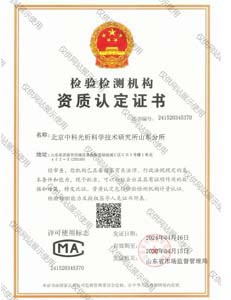
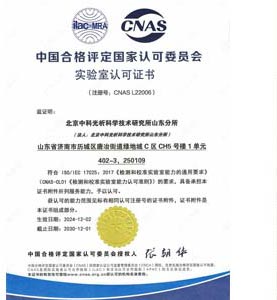
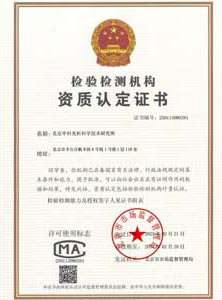

Commitment: Our testing process strictly follows international standards and specifications to ensure the accuracy and reliability of results. Our laboratory facilities are fully equipped with the latest instruments and leading analytical methods. We strictly control every step, from sample collection and processing to data analysis, to ensure clients receive trustworthy test results.


Fruit and Vegetable Preservation Experiment Service – Comprehensive Shelf‑Life Extension, Quality Retention and Food Safety Assessment for Fresh Produce
As an ISO/IEC 17025 accredited contract research laboratory, we offer specialised fruit and vegetable preservation experimentation services to producers, distributors, retailers, packaging companies, and food technology researchers. Fresh fruits and vegetables are highly perishable, and extending their shelf‑life while maintaining nutritional quality, sensory attributes, and microbiological safety is a critical challenge for the food industry. Our experimental platform evaluates a wide range of preservation interventions – including modified atmosphere packaging (MAP), active packaging, edible coatings, antimicrobial washes, temperature management, ethylene control, and novel processing technologies – to identify the most effective strategies for specific produce types and supply chain conditions. Our test protocols combine controlled‑environment storage trials, accelerated shelf‑life testing, quality attribute measurements (colour, texture, weight loss, soluble solids, acidity), respiration rate analysis, and microbiological safety assessments. All methods are aligned with ISO, ASTM, FAO/WHO Codex Alimentarius guidelines, and national food safety standards. Our reports are recognised by regulatory bodies, retailers, and industry partners for product development, process optimisation, and quality assurance.
Produce Types and Preservation Interventions We Test
Our laboratory and controlled‑environment facilities handle a broad range of fresh produce and preservation technologies. Typical test articles include:
- Leafy greens – lettuce, spinach, kale, cabbage, fresh herbs (basil, coriander, parsley)
- Berries and soft fruits – strawberries, blueberries, raspberries, blackberries, grapes
- Stone fruits – peaches, nectarines, plums, cherries, apricots
- Pome fruits – apples, pears, quinces
- Citrus fruits – oranges, lemons, grapefruits, limes
- Root and tuber vegetables – potatoes, carrots, onions, garlic, ginger
- Tomatoes, peppers, and other solanaceous fruits
- Cucurbits – cucumbers, melons, watermelons, squash
- Tropical fruits – bananas, mangoes, papayas, pineapples, avocados
- Preservation interventions – modified atmosphere packaging (MAP), vacuum packaging, edible coatings (chitosan, alginate, carrageenan, cellulose derivatives), antimicrobial washes (chlorine dioxide, ozonated water, electrolysed water, organic acids), ethylene scavengers (potassium permanganate, activated carbon, TiO₂), 1‑methylcyclopropene (1‑MCP) treatment, controlled atmosphere storage, temperature management (cold chain, supercooling), high‑pressure processing (HPP), pulsed light, and UV‑C irradiation
Experimental Design – Storage Trials and Shelf‑Life Assessment
- Controlled‑environment storage – temperature, humidity, and gas composition management – We use precision environmental chambers to simulate commercial storage conditions (0‑20 °C, 85‑95 % RH) and dynamic temperature regimes that mimic supply chains (including temperature abuse). The chambers are equipped with CO₂, O₂, and ethylene sensors for real‑time monitoring.
- Accelerated shelf‑life testing – elevated temperature and abusive conditions – For rapid screening of preservation interventions, we conduct accelerated tests at higher temperatures (e.g., 15‑30 °C) to predict shelf‑life at normal conditions using the Arrhenius model. The acceleration factor and the predicted shelf‑life are calculated based on the temperature‑dependent deterioration rate.
- Replication and statistical design – Each treatment group includes a minimum of 3‑5 replicate storage units per sampling point, and the experiment is repeated over at least two independent produce batches. The design is fully randomised to eliminate systematic bias.
- Control groups – untreated produce (no intervention) is stored under the same conditions to serve as a baseline; a positive control (e.g., commercial MAP or commercial coating) is also included where applicable.
Quality Attribute Measurements – Physical, Chemical and Sensory Parameters
- Weight loss percentage – measured gravimetrically at regular intervals; weight loss correlates with moisture loss and wilting, and is a key indicator of freshness.
- Colour measurement – CIELAB coordinates (L*, a*, b*) – ISO 11664 / ASTM D2244 – We use a portable or bench‑top colorimeter to measure skin and/or flesh colour at each sampling time. Changes in colour (ΔE*) indicate ripening, senescence, or browning; for many fruits, a ΔE* > 3.0 indicates significant quality degradation.
- Texture and firmness – penetration and compression tests – ASTM D790 / ISO 6601 – Using a texture analyser (e.g., TA.XT Plus), we measure the force required to penetrate (e.g., for tomatoes, apples) or compress (e.g., for berries, soft fruits) the produce. The loss of firmness (in N or kPa) is a critical parameter for storage quality and consumer acceptance.
- Soluble solids content (SSC) – refractometer – ISO 2173 / AOAC 932.14 – We measure the Brix value (°Brix) of the juice or pulp, which indicates the sugar content and is directly correlated with sweetness and consumer preference. A decrease in Brix during storage is a sign of respiration and sugar consumption.
- Titratable acidity (TA) – AOAC 942.15 / ISO 750 – We measure the total acidity (expressed as citric acid, malic acid, or other major organic acids) by titration with NaOH. The SSC/TA ratio is a widely used maturity and quality index for many fruits.
- pH measurement – ISO 1842 / AOAC 981.12 – We record the pH of the juice or homogenate, as pH influences microbial growth and enzyme activity.
- Respiration rate – CO₂ production measurement – We place a known weight of produce in a sealed container and measure the CO₂ accumulation over time (e.g., by gas chromatography or an infrared CO₂ sensor). The respiration rate (mg CO₂/kg·h) is a key indicator of metabolic activity and is influenced by temperature, maturity, and preservation treatment.
- Ethylene production rate – gas chromatography – For climacteric fruits, we measure ethylene production (µL C₂H₄/kg·h) as a marker of ripening and to assess the effectiveness of ethylene‑suppressing interventions.
Microbiological Quality and Safety Assessment
- Total aerobic bacteria count (TAC) – ISO 4833 / GB 4789.2 – We measure the total viable count (CFU/g) to assess the general microbiological quality and to detect early spoilage.
- Yeast and mould count – ISO 21527 / GB 4789.15 – Yeasts and moulds are common spoilage organisms on fresh produce; we quantify them and compare the counts to established limits (e.g., < 10³ CFU/g for fresh‑cut produce).
- Psychrotrophic bacteria count – ISO 17410 / GB 4789.2 – We enumerate psychrotrophic bacteria (which grow at 5‑7 °C) as they are often the principal spoilage organisms in refrigerated produce.
- Pathogen screening – Salmonella spp., Listeria monocytogenes, E. coli O157:H7 – ISO 6579 / ISO 11290 / ISO 16654 – For safety assessment, we screen for the presence of major foodborne pathogens using standardised methods; a negative result is required for compliance.
- Surface disinfectant efficacy – log reduction testing (for antimicrobial interventions) – For preservation interventions involving antimicrobial washes, we measure the reduction in initial microbial load (log CFU reduction) at time zero and during storage.
Advanced Preservation Assessment – Modified Atmosphere, Edible Coatings and Active Packaging
- Modified atmosphere packaging (MAP) – evaluation of optimal gas composition – We test different initial gas mixtures (e.g., 5‑10 % O₂, 5‑15 % CO₂, balance N₂) and assess their effect on respiration rate, colour retention, and microbial growth. We also measure the change in headspace composition over time to determine the gas‑permeability requirements for the packaging film.
- Edible coating efficacy – weight loss reduction and quality preservation – We apply edible coatings (e.g., chitosan, sodium alginate, carnauba wax, zein) at different concentrations and assess their ability to reduce weight loss, delay senescence, and improve appearance (gloss). The coating’s water‑vapour transmission rate (WVTR) and oxygen transmission rate (OTR) are also measured to predict their barrier properties.
- Ethylene scavenging and 1‑MCP treatment – for climacteric fruit ripening delay – We evaluate the efficacy of ethylene scavengers (e.g., KMnO₄, activated carbon, TiO₂) and the ethylene action inhibitor 1‑MCP (1‑methylcyclopropene). The treatment is applied at various concentrations and exposure times; the effects on firmness, colour, and SSC/TA ratio are monitored to determine the optimal dose for specific varieties.
- Controlled atmosphere (CA) storage – long‑term storage simulation – For large‑scale commercial storage, we simulate CA conditions (e.g., 1‑3 % O₂, 1‑5 % CO₂) in sealed chambers and monitor the produce quality over periods of up to 12 months for apples and pears, or 2‑4 months for other fruits.
- Novel technologies – UV‑C, pulsed light, ozone, and plasma treatment – We evaluate the effect of physical processing technologies on surface microbial load and product quality. The treatment parameters (intensity, exposure time, frequency) are optimised to maximise safety while minimising quality loss.
Pre‑harvest and Harvest Factors – Influence on Storage Potential
For clients interested in the full supply chain, we also assess the impact of pre‑harvest and harvest practices on the storage potential of fresh produce.
- Maturity at harvest – assessment of optimal harvest time – We evaluate the relationship between harvest maturity (measured by colour, firmness, SSC, TA) and subsequent storage life. The optimal harvest window is determined for each variety and growing season.
- Post‑harvest handling – effect of washing, brushing, and sorting – We simulate commercial handling processes (washing with/without sanitisers, brushing, sizing) and assess their effect on the incidence of bruising, microbial contamination, and subsequent storage quality.
- Impact of pre‑harvest treatments – growth regulators, fertilisers, and irrigation – For research projects, we correlate field treatment data (fertiliser regimen, irrigation, application of growth regulators) with the storage performance, helping growers to adopt practices that improve the shelf‑life of their produce.
Data Interpretation, Modelling and Shelf‑Life Prediction
- Kinetic modelling of quality deterioration – Arrhenius and other models – We fit the deterioration data (e.g., colour change, firmness loss, weight loss) to first‑order or zero‑order kinetic models. The temperature dependence of the rate constant is modelled using the Arrhenius equation to predict shelf‑life under different storage temperatures.
- Weibull and logistic models for microbial growth – prediction of spoilage and pathogen growth – We fit microbial growth data to the Weibull or logistic models to estimate the lag phase duration, growth rate, and maximum population density. This information is used to set safety limits and to establish an appropriate shelf‑life.
- Respiration rate modelling – for MAP optimisation – We use non‑linear regression to model respiration rate as a function of O₂ and CO₂ concentration, and to predict the equilibrium gas composition in a given packaging configuration, allowing for the design of optimal MAP conditions.
- Multivariate analysis – PCA and clustering for classification of preservation treatments – For high‑dimensional datasets (multiple quality parameters), we perform principal component analysis (PCA) and cluster analysis to visualise the differences among preservation treatments and to identify the most effective combinations of interventions.
Quality Control and Standardisation – Ensuring Reliable Experimental Results
To ensure the reproducibility and accuracy of our experiments, we implement rigorous internal quality controls:
- Reference produce and baseline data – we maintain a database of quality parameters for the most common varieties (e.g., the variation in colour, firmness, and SSC) to normalise results and to detect batch‑to‑batch variability.
- Environmental monitoring and calibration – all environmental chambers and sensors are calibrated at regular intervals, and the temperature, humidity, and gas concentrations are logged continuously to ensure the stability of experimental conditions.
- Standardised sample handling – produce is handled according to a strict protocol (e.g., specific knife types, cutting patterns, packaging procedures) to minimise variability caused by the experimental process.
- Proficiency testing – we participate in inter‑laboratory comparison studies (e.g., for microbial counts and chemical analyses) to verify the accuracy of our analytical methods.
Report Acceptance and Compliance with National and International Food Safety Regulations
All fruit and vegetable preservation experiments are performed under our ISO/IEC 17025 accreditation and in compliance with Good Laboratory Practice (GLP) principles and HACCP guidelines where applicable. Our final reports include a complete description of the produce and its origin, the preservation interventions tested, the storage conditions, the quality and safety parameters measured at each time point, the statistical analysis and kinetic modelling results, and a clear conclusion on the effectiveness of the tested intervention for extending shelf‑life and maintaining quality. These reports are accepted by national regulatory bodies, retailers, and industry partners for product development, process validation, and quality assurance. Bilingual (Chinese/English) versions are available to facilitate submissions to national and international authorities.
Note: Due to business adjustments, we do not accept individual client testing requests.
The above is an introduction about Fruit and vegetable preservation experiment. For further questions, please consult our online engineer.
Laboratory Instruments


Partner Clients

Related Projects
 Hydrogen sulfide corrosion testing service
 Pressure relief valve hydraulic burst testing service
 Freezing experiment
 Ultimate impact torque testing service
 Corrosion resistance testing service
 20℃ impact energy testing service
 Pressure leak testing service
 AC dielectric testing service
 Vibration testing service
 Housing pressure testing service