
Calcitonin bioassay service


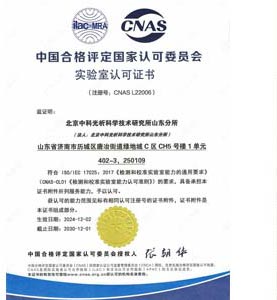
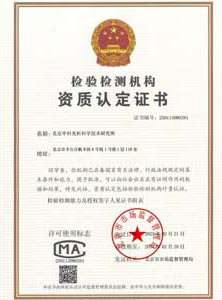

Commitment: Our testing process strictly follows international standards and specifications to ensure the accuracy and reliability of results. Our laboratory facilities are fully equipped with the latest instruments and leading analytical methods. We strictly control every step, from sample collection and processing to data analysis, to ensure clients receive trustworthy test results.


Calcitonin Bioassay Service – Comprehensive Cell‑Based Potency Determination for Quality Control and Regulatory Compliance
As an ISO/IEC 17025 accredited contract testing laboratory, we offer specialised calcitonin bioassay services to pharmaceutical manufacturers, biotechnology companies, contract research organisations, and regulatory authorities. Calcitonin is a peptide hormone used therapeutically for the treatment of osteoporosis, Paget's disease, hypercalcaemia, and bone pain associated with osteolytic lesions. The potency of calcitonin‑containing products must be accurately determined to ensure clinical efficacy, batch‑to‑batch consistency, and compliance with pharmacopoeial and national regulatory standards. Our validated cell‑based bioassay platform provides a reliable measure of calcitonin biological activity, offering a physiologically relevant alternative to animal‑based assays. All procedures are performed in compliance with USP <81>, Ph. Eur. 2.7.4, JP 4.06, ICH Q2(R1), and Chinese Pharmacopoeia (ChP) guidelines. Our reports are recognised by the National Medical Products Administration (NMPA), the European Medicines Agency (EMA), the U.S. Food and Drug Administration (FDA), and other international regulatory authorities for product registration, batch release, and quality assurance.
Calcitonin Product Types and Samples We Test
Our bioassay laboratory handles a wide range of calcitonin‑containing products and dosage forms. Typical test articles include:
- Calcitonin injection solutions – ready‑to‑use or concentrate forms for parenteral administration
- Nasal spray formulations – for intranasal delivery of calcitonin
- Calcitonin drug substance and bulk materials – synthetic or recombinant calcitonin active pharmaceutical ingredients (APIs)
- Stability samples – from accelerated and long‑term stability studies
- Reference standards – pharmacopoeial calcitonin reference standards (USP, Ph. Eur., ChP) for assay calibration
- Biosimilar and generic calcitonin products – for comparability and equivalence studies
- Formulated calcitonin products – with excipients and preservatives
- Batch‑to‑batch comparison samples – for process validation and consistency assessment
Bioassay Methodology – Cell‑Based Potency Determination
We employ a validated, robust cell‑based bioassay that measures the biological activity of calcitonin based on its ability to activate the calcitonin receptor. The key features of our assay system include:
- Cell line selection – we use a stable cell line (such as T47D human breast cancer cells or a recombinant cell line expressing the human calcitonin receptor) that responds to calcitonin stimulation with a quantifiable signal (e.g., cAMP production, luciferase reporter activity, or calcium mobilisation). The cell line is authenticated and tested for receptor expression and stability.
- Standard curve preparation – a series of dilutions of a validated pharmacopoeial reference standard (e.g., USP Calcitonin Reference Standard) is used to generate a standard curve (typically 6‑8 concentration points in duplicate or triplicate). The standard curve range is determined by preliminary experiments and covers the linear region of the dose‑response relationship.
- Sample preparation and dilution – test samples are diluted in assay buffer to a concentration within the linear range of the standard curve. For formulated products, the dilution factor is adjusted to account for the excipient composition, and a placebo control is included to assess interference.
- Assay procedure – cells are seeded in 96‑well or 384‑well plates and allowed to adhere. The cells are then treated with standard or sample dilutions and incubated for a defined period (typically 30‑60 minutes for cAMP‑based assays, or 4‑24 hours for reporter gene assays). The cellular response (e.g., intracellular cAMP accumulation) is measured using a homogeneous time‑resolved fluorescence (HTRF), enzyme‑linked immunosorbent assay (ELISA), or luminescence‑based detection system.
- Data acquisition and quality control – the signal is measured using a plate reader with appropriate filters. Quality control checks include the assessment of the Z' factor, the signal‑to‑background ratio, the coefficient of variation (CV) within plates, and the coefficient of variation between plates. The assay is accepted if the Z' factor > 0.5, the signal‑to‑background ratio > 3, and the inter‑plate CV < 15 %.
Potency Calculation and Data Analysis
- Parallel‑line or 4‑parameter logistic (4PL) model fitting – we fit the standard curve and sample response data to a parallel‑line model (for pharmacopoeial compliance) or a 4‑parameter logistic model (for general potency estimation). The model is selected based on the data distribution and the pharmacopoeial requirements (e.g., USP <81> specifies a parallel‑line model).
- Relative potency estimation – the potency of the test sample is expressed as the relative potency (in International Units, IU) compared to the reference standard. The relative potency is calculated from the horizontal distance between the sample and standard curves (for parallel‑line models) or from the EC₅₀ values (for 4PL models). The result is reported as IU/mL or IU/mg, with 95 % confidence intervals.
- Statistical validation – validity tests for assay acceptance – we perform statistical validation tests according to pharmacopoeial requirements: (a) linearity test (regression significance), (b) parallelism test (no significant deviation from parallel lines), (c) non‑linearity test (no significant curvature), and (d) equal slope test. The assay is considered valid if all tests are met at p > 0.05.
- Outlier detection and rejection – we use statistical criteria (e.g., Grubbs' test or the Thompson Tau test) to identify and, where justified, reject outliers. Rejection of more than one replicate per dose level or more than 10 % of the data points requires a detailed justification in the report.
Quality Control and Assay Validation – Ensuring Reliability and Compliance
- Assay specificity and selectivity – we verify that the assay is specific to calcitonin and does not respond to other hormones or structurally related peptides (e.g., calcitonin gene‑related peptide – CGRP, amylin). The assay is tested with placebo, excipients, and degradation products to confirm that the response is solely due to the active ingredient.
- Accuracy and recovery – spike‑and‑recovery experiments – we perform spike‑and‑recovery experiments by adding known amounts of calcitonin reference standard to placebo or formulated matrix. The recovery (measured concentration/expected concentration × 100 %) is typically within 80‑120 % of the expected value.
- Precision – repeatability and intermediate precision – we assess repeatability (intra‑assay precision) by measuring the same sample multiple times within a single run (CV ≤ 10 %), and intermediate precision (inter‑assay, inter‑day, inter‑analyst) by measuring the same sample in multiple runs (CV ≤ 15 %).
- Linearity and range – the linearity of the assay is established by testing a series of dilutions of the standard and samples. The assay range is defined as the concentration range over which the response is linear (typically 80‑120 % of the target concentration).
- Ruggedness – robustness to minor variations in assay parameters – we evaluate the effect of minor variations in cell number, incubation time, temperature, and reagent lot numbers to ensure that the assay is robust and reproducible under routine laboratory conditions.
Application‑Specific Testing – Batch Release, Stability and Comparability
- Batch‑to‑batch potency testing – for routine quality control – we perform bioassay testing on each production batch to verify that the potency is within the specified limits (typically 90‑110 % of the labelled potency). The results are used to support batch release and to ensure product consistency.
- Stability monitoring – potency retention over time – we measure the bioactivity of calcitonin in stability samples (from accelerated and long‑term stability studies) to determine the shelf‑life and to establish storage conditions. A significant decrease in potency (> 10 % from the initial value) is reported as a stability alert.
- Comparability and biosimilarity studies – for biosimilar development – we compare the potency of a test product (e.g., a biosimilar) to a reference product using our bioassay platform. The relative potency and the 90 % confidence intervals are compared to determine whether the test product is equivalent to the reference (typically requiring the 90 % CI to be within 80‑125 %).
- Forced degradation studies – for method development and validation – we subject calcitonin samples to stress conditions (heat, light, oxidation, pH extremes) and evaluate the effect on bioactivity. The degradation profile is used to develop stability‑indicating methods and to establish the degradation pathway.
- Reference standard calibration – for in‑house standards – we calibrate in‑house working standards against the official pharmacopoeial reference standard, ensuring traceability and compliance with regulatory requirements.
Advanced Assay Development – Customisation and Optimisation
For clients with specific needs, we offer custom assay development and optimisation services. Typical projects include:
- Development of cell‑based bioassays for novel calcitonin analogues or fusion proteins – we develop and validate a bioassay specific to the new molecule, including cell line selection, condition optimisation, and full validation.
- High‑throughput screening (HTS) of calcitonin variants – we adapt the bioassay to a 384‑well or 1536‑well format for screening large libraries of calcitonin analogues, with fully automated liquid handling and detection.
- Multi‑mode detection (fluorescence, luminescence, absorbance) integration – we develop and implement multi‑mode detection methods that combine cAMP measurement with cell viability, enabling simultaneous assessment of potency and cytotoxicity.
- Optimisation for formulation compatibility – we test the effect of different excipients, preservatives, and delivery systems (e.g., liposomes, nanoparticles) on the bioassay response, and we adjust the assay protocol to minimise interference.
- Implementation of new technologies – reporter gene assays, TR‑FRET, and AlphaLISA – we implement advanced detection technologies to improve sensitivity, throughput, and assay robustness, as required by client needs or regulatory trends.
Regulatory Compliance and Documentation – Supporting Submissions
All bioassay work is performed in compliance with applicable regulatory requirements and guidelines, including:
- USP <81> – Calcitonin Bioassay – we follow the procedures and statistical methods specified in the USP monograph, ensuring that the assay is compliant with US regulatory requirements.
- Ph. Eur. 2.7.4 – Bioassay of Calcitonin – we follow the European Pharmacopoeia method for calcitonin bioassay, with the appropriate statistical validation and reporting.
- ChP – Calcitonin Bioassay – we also perform the assay according to the Chinese Pharmacopoeia guidelines, ensuring acceptance for NMPA submissions.
- ICH Q2(R1) – Validation of Analytical Procedures – we validate the bioassay method according to ICH guidelines for accuracy, precision, specificity, linearity, range, and robustness.
- ICH Q5C – Stability Testing of Biotechnological Products – we design stability studies in accordance with ICH guidelines, ensuring that the stability data are acceptable to global regulatory authorities.
- 21 CFR Part 11 – Electronic Records and Signatures – we maintain electronic records and audit trails for all bioassay data, ensuring compliance with FDA requirements for electronic submission.
Report Acceptance and Regulatory Recognition
All calcitonin bioassays are performed under our ISO/IEC 17025 accreditation and in compliance with Good Laboratory Practice (GLP) principles and pharmacopoeial requirements. Our final bioassay reports include a complete description of the sample, the test method, the reference standard, the assay performance parameters, the raw data, the statistical analysis (including validity tests, relative potency, 95 % confidence intervals), and a clear conclusion on the potency of the sample. These reports are accepted by the National Medical Products Administration (NMPA), the European Medicines Agency (EMA), the U.S. Food and Drug Administration (FDA), the World Health Organization (WHO), and other national and international regulatory authorities for product registration, batch release, and quality assurance. Bilingual (Chinese/English) versions are available to facilitate submissions to national and international regulatory bodies.
Note: Due to business adjustments, we do not accept individual client testing requests.
The above is an introduction about Calcitonin bioassay service. For further questions, please consult our online engineer.
Laboratory Instruments


Partner Clients

Related Projects
 Hydrogen sulfide corrosion testing service
 Pressure relief valve hydraulic burst testing service
 Freezing experiment
 Ultimate impact torque testing service
 Corrosion resistance testing service
 20℃ impact energy testing service
 Pressure leak testing service
 AC dielectric testing service
 Vibration testing service
 Housing pressure testing service